
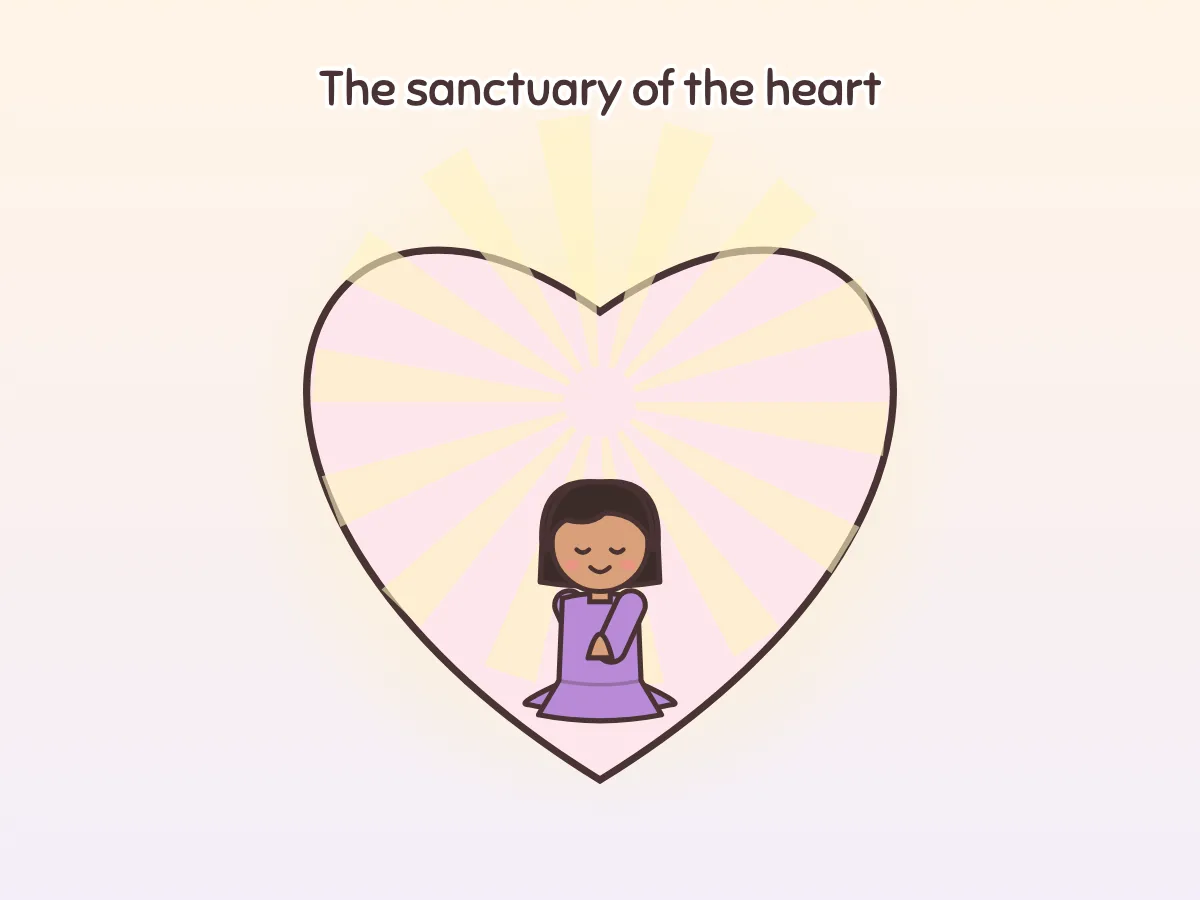
Deep within, every person discovers a law they did not write, calling them to love good and avoid evil. The Second Vatican Council called conscience a person's “most secret core and sanctuary,” where they are alone with God, whose voice echoes in their depths.
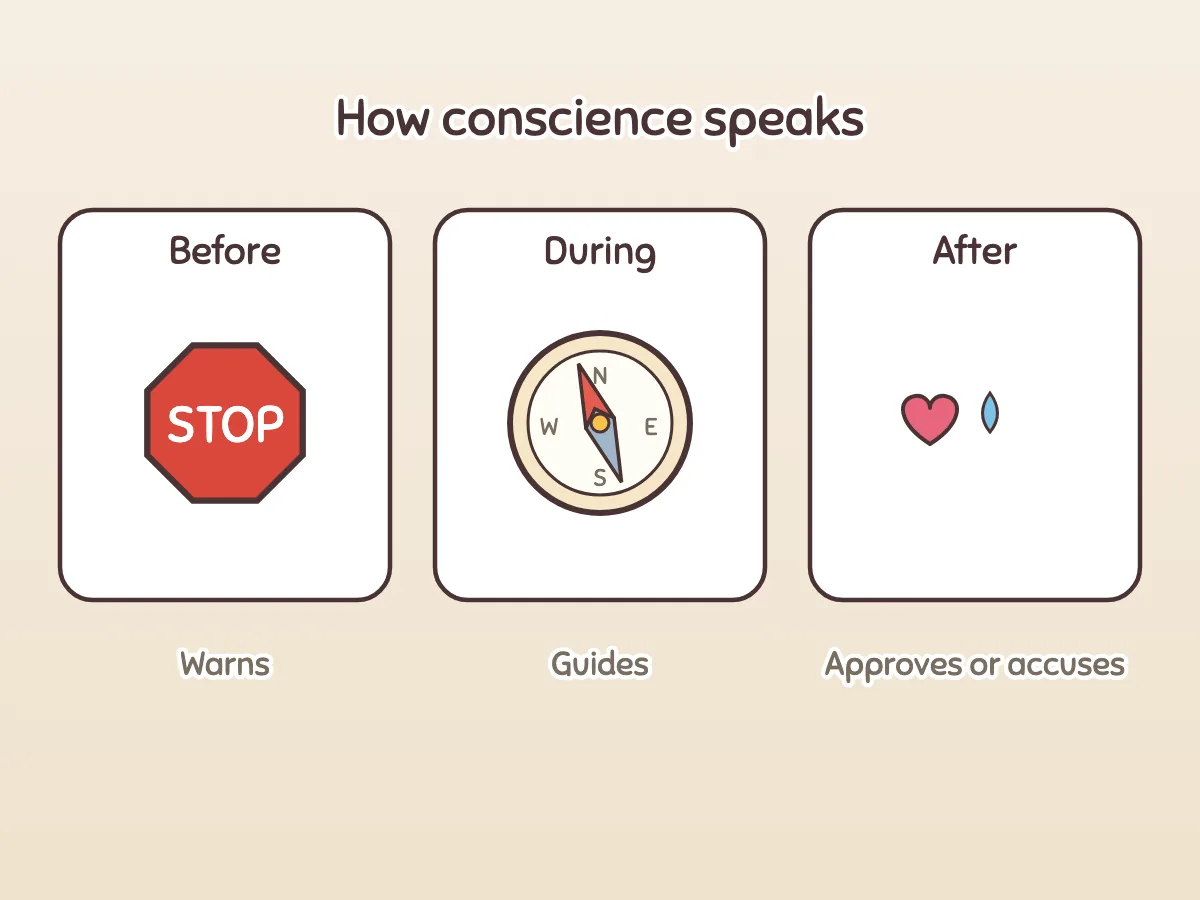
Conscience is a judgment of reason by which we recognize whether an act is good or evil. It speaks before we act, urging or warning us; while we act; and afterward, approving or accusing. That uncomfortable feeling after doing wrong is a gift: it calls us back to God.
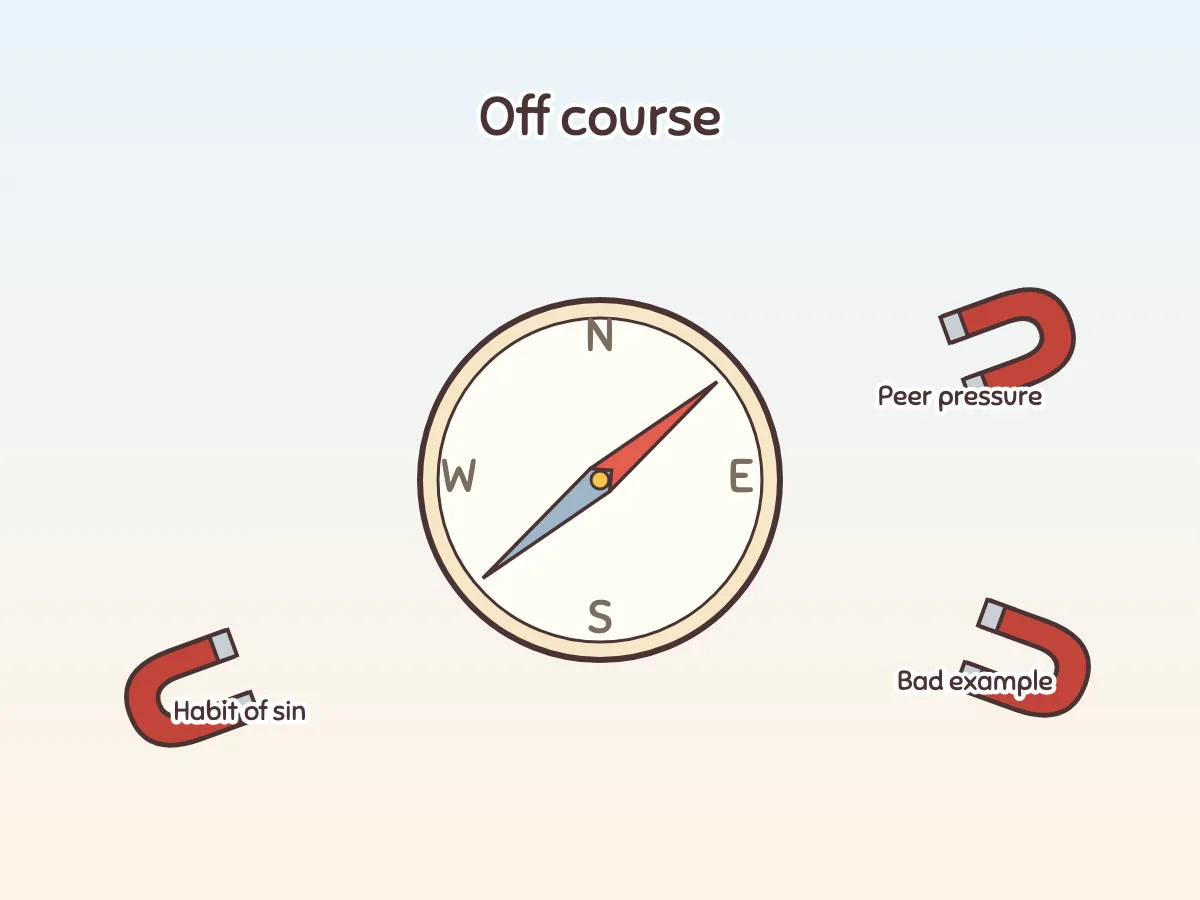
We must always follow a sure conscience. But conscience can be wrong. It can be badly formed through ignorance, bad example, pressure or repeated sin. When the ignorance is our own fault, because we did not bother to look for the truth, we are still responsible for the wrong we do.
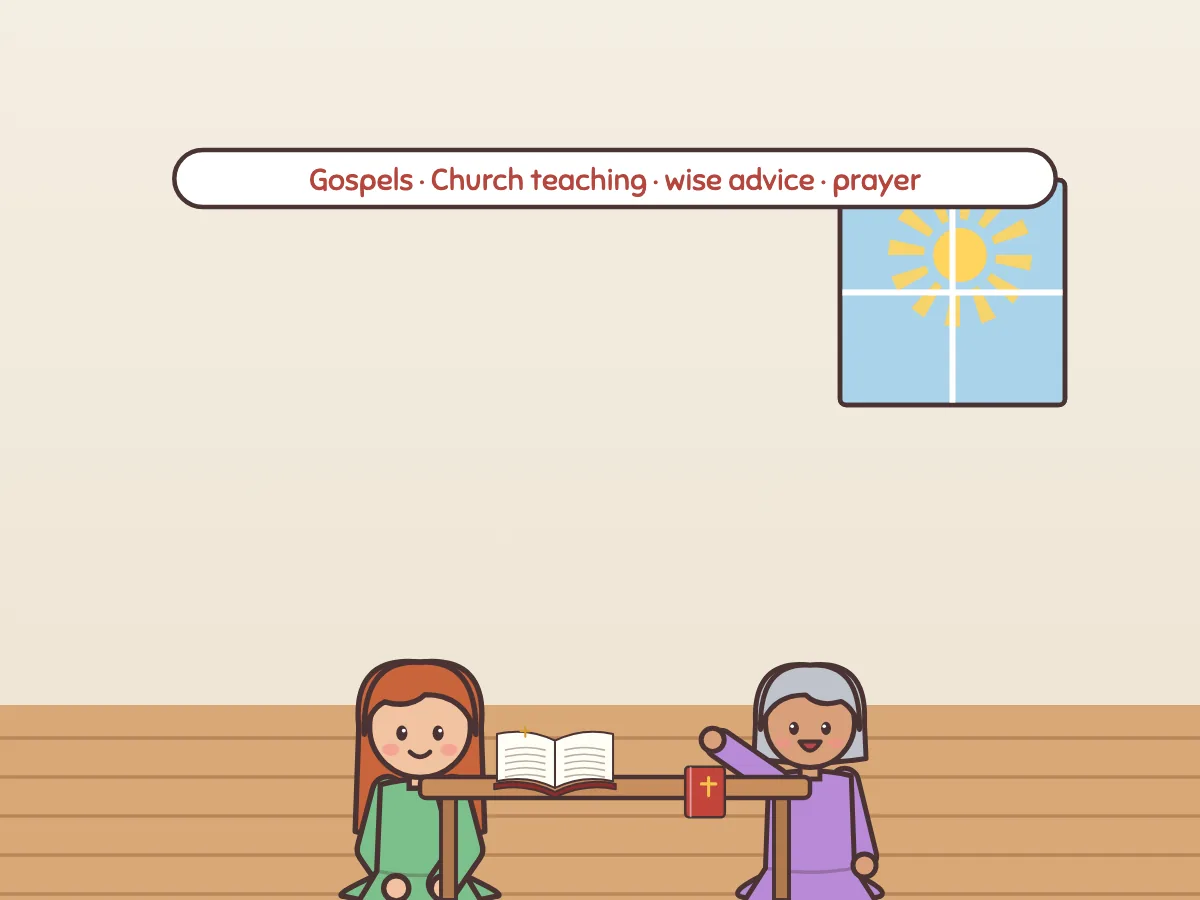
That is why forming conscience is a lifelong task. We form it through:
- Prayer and an honest look at our lives.
- The word of God, especially the Gospels.
- The teaching of the Church.
- The advice of wise, faith-filled people.
- The gifts of the Holy Spirit and the virtues.
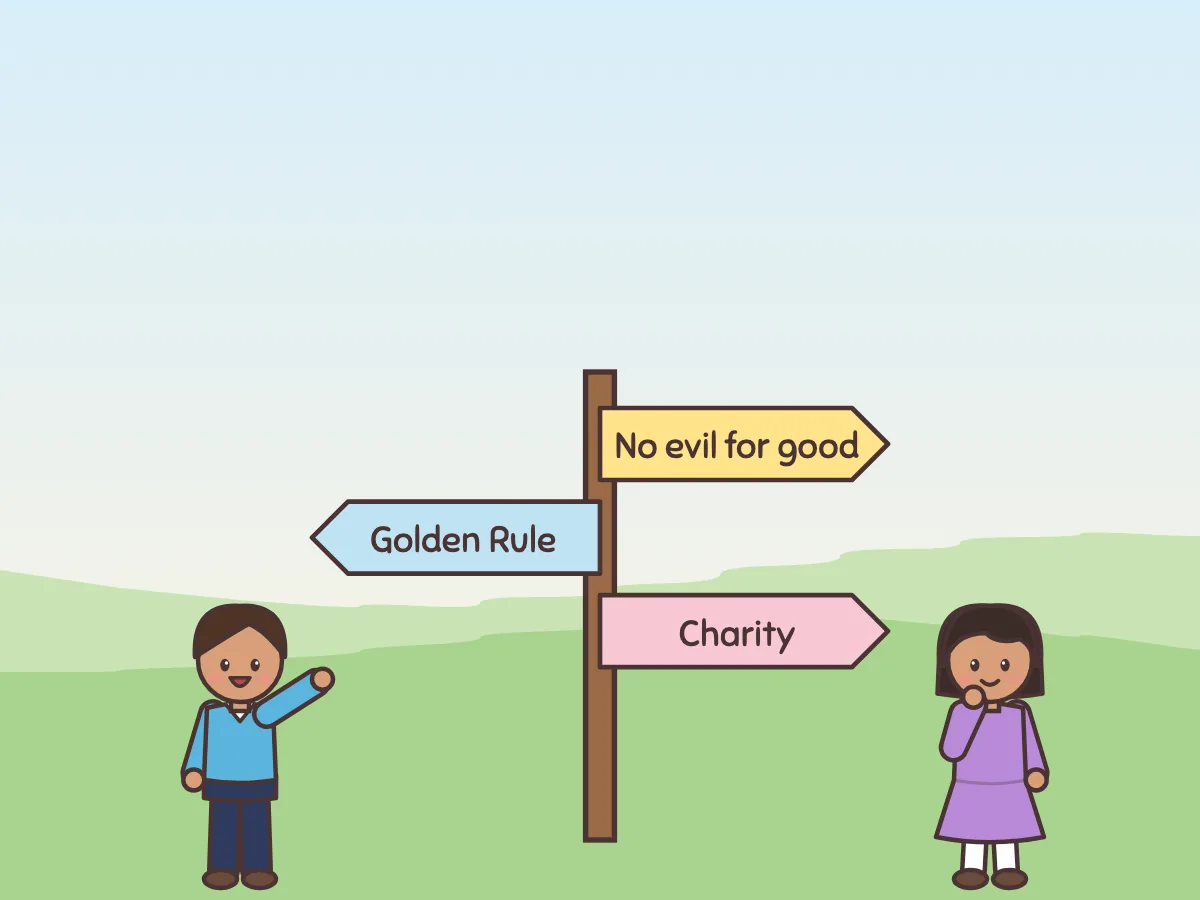
Some rules always apply:
- We may never do evil so that good may result.
- The Golden Rule: do to others what you would want them to do to you.
- Charity: respect your neighbor and their conscience, without ever pretending that evil is good.
Freedom of conscience does not mean that whatever I feel is right is right. It means that no one may force me to act against my conscience, and that I must seek the truth and follow it. Saint John Henry Newman called conscience “the aboriginal Vicar of Christ”: God's messenger within us, not permission to do as I please.