Sacraments of Initiation

Baptism, Confirmation and the Eucharist lay the foundation of Christian life: we are born anew, strengthened and fed.

Celebrate 15 minutes CCC 1212–1419

Read the story

Reading voice

Speed

Hello! I will read the story to you.

Voices come from your device. If one sounds odd, choose another.

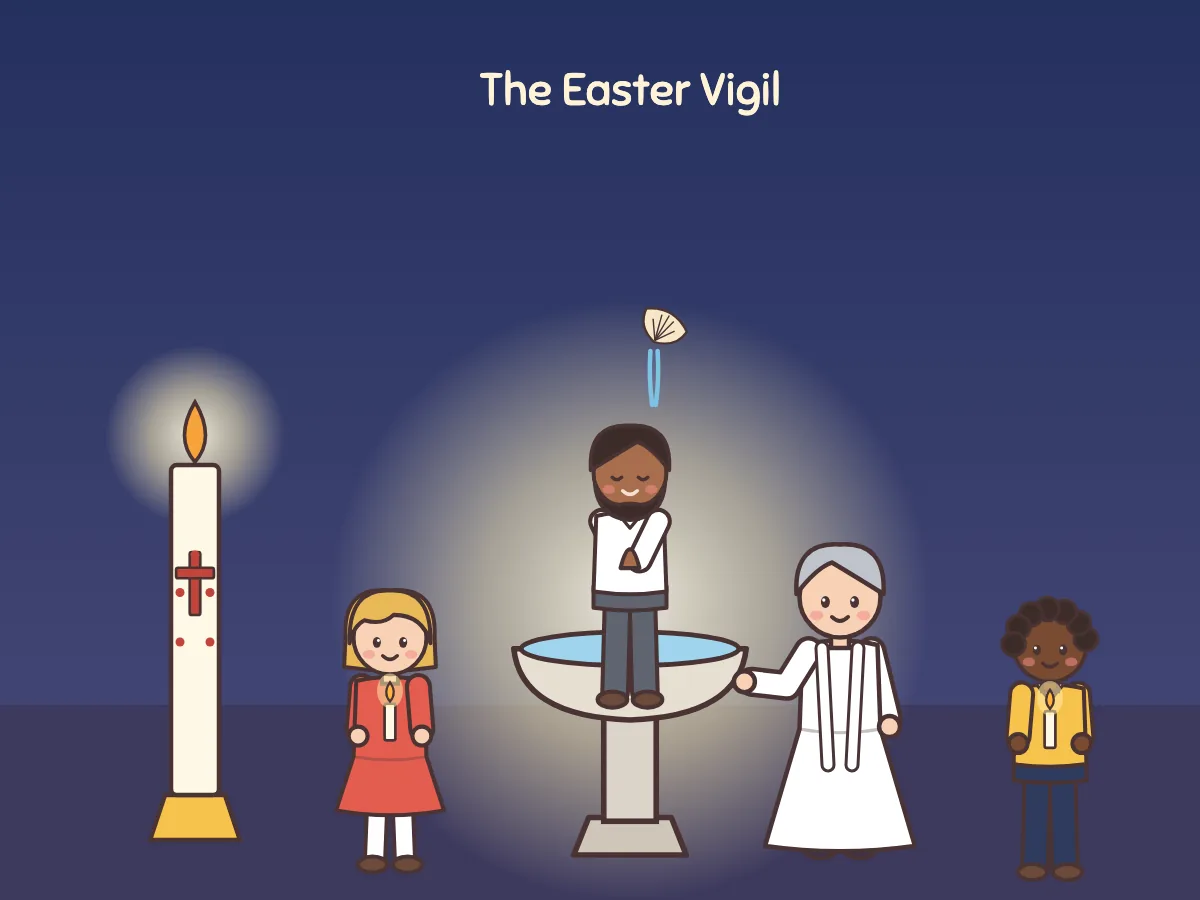
An adult being baptized at the Easter Vigil in a dark church lit by the tall Easter candle, as godparents hold lit candles.

Christian initiation is like natural life: we are born, we grow and we need food. Baptism gives new birth, Confirmation strengthens and the Eucharist feeds. In the early Church, and still today for adults through the Order of Christian Initiation of Adults, all three are received together, often at the Easter Vigil.
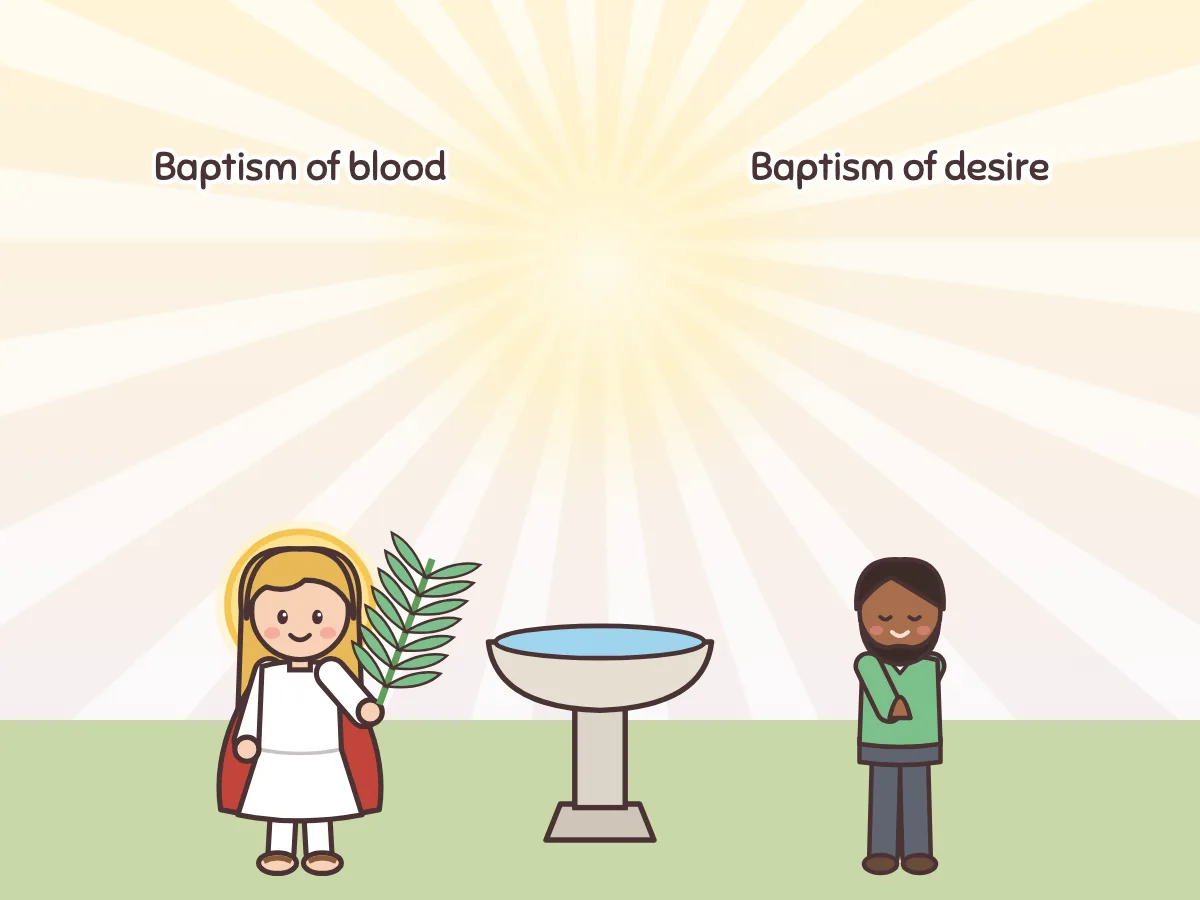
A young martyr holding a palm branch and a catechumen praying with longing, both bathed in light beside a baptismal font: God is not limited by His sacraments.

Baptism is necessary for salvation for those who have heard the Gospel and are able to ask for it. But God is not limited by His sacraments. The Church teaches that those who die for the faith before Baptism (baptism of blood), and those who sincerely seek God and would want Baptism if they knew of it (baptism of desire), can be saved. Children who die without Baptism are entrusted to God's mercy.
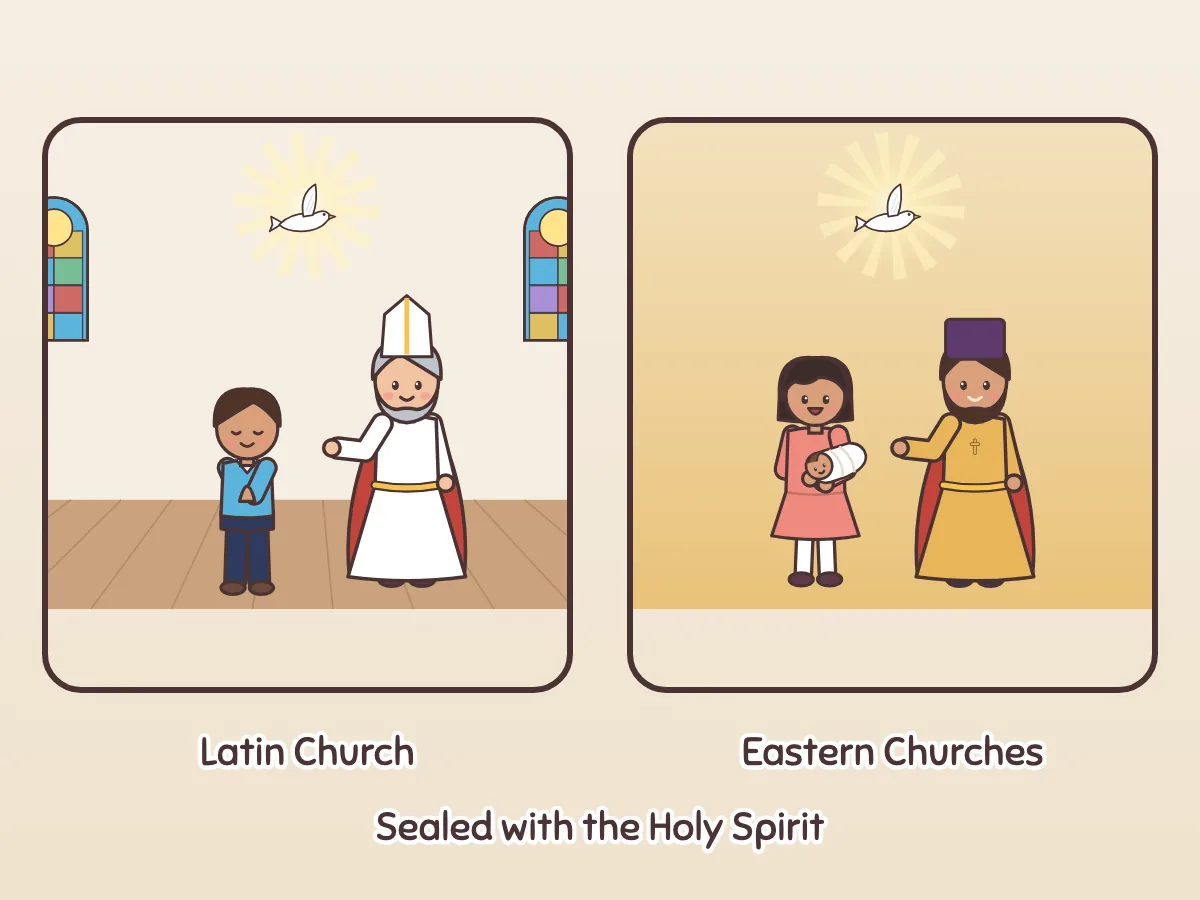
Two ways of Confirmation: a bishop anointing a teenager in the Latin Church, and an Eastern Catholic priest anointing a baby right after Baptism with chrism blessed by the bishop.

Baptism and Confirmation each leave a permanent spiritual mark, called a character. Confirmation completes the grace of Baptism: it roots us more deeply in God's family, unites us more firmly to Christ, increases the gifts of the Spirit and strengthens us to be witnesses. In the Latin Church the bishop usually confirms; in the Eastern Churches, a priest confirms infants right after Baptism, using chrism blessed by the bishop.
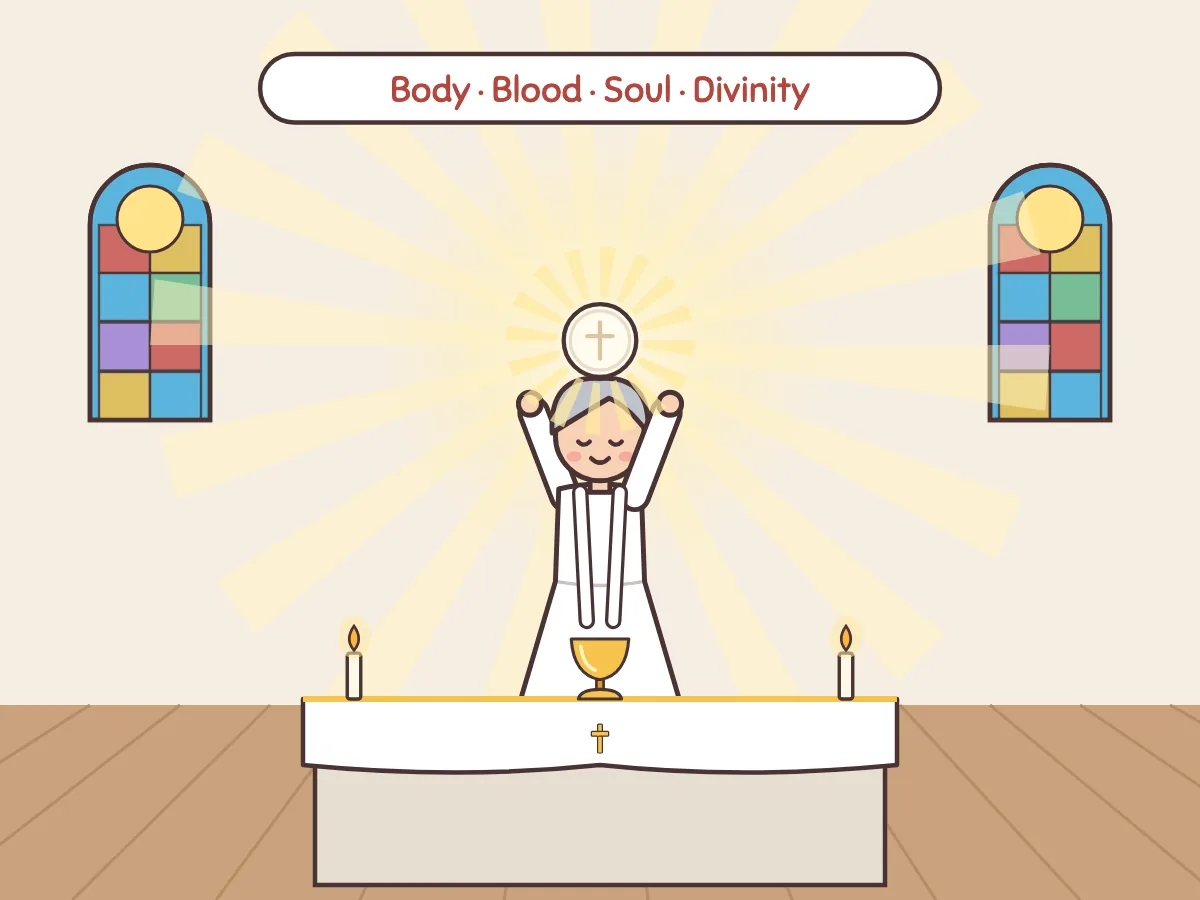
A priest raising the Host high at the consecration, with the words Body, Blood, Soul and Divinity: Jesus truly present in the Eucharist.

The Eucharist is the source and summit of Christian life. It is a memorial that makes Christ's one sacrifice present, a sacred banquet, and the real presence of Christ, Body, Blood, Soul and Divinity, by transubstantiation. All the other sacraments are directed toward it.
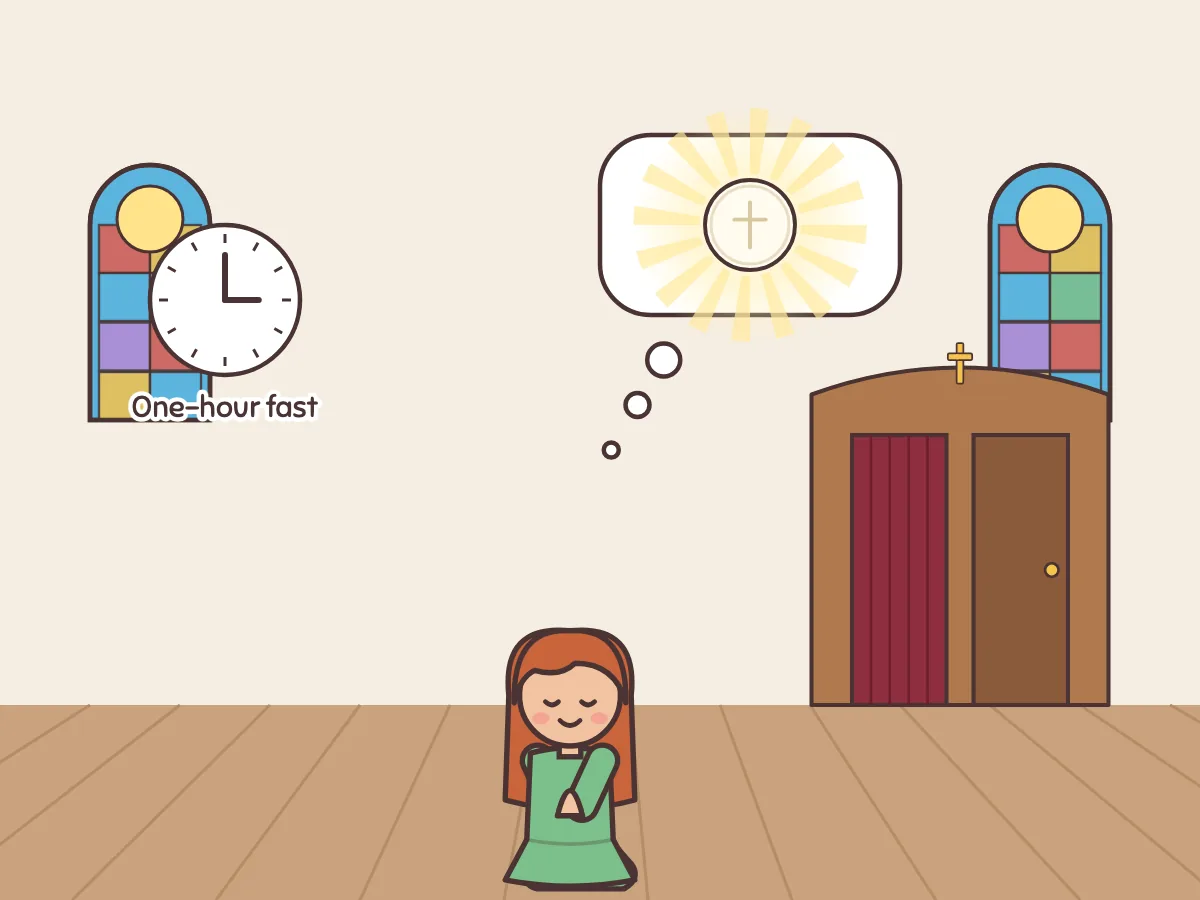
A teenager kneeling in prayer before Communion, with a clock showing an hour's fast and a confessional nearby: receiving the Eucharist worthily.

To receive Communion worthily, we must be in the state of grace: anyone aware of mortal sin must first go to Confession. Catholics fast for one hour before Communion, except for water and medicine. Christians who are not Catholic do not normally receive, not because they are unwelcome, but because Communion is a sign of a full unity that does not yet exist.
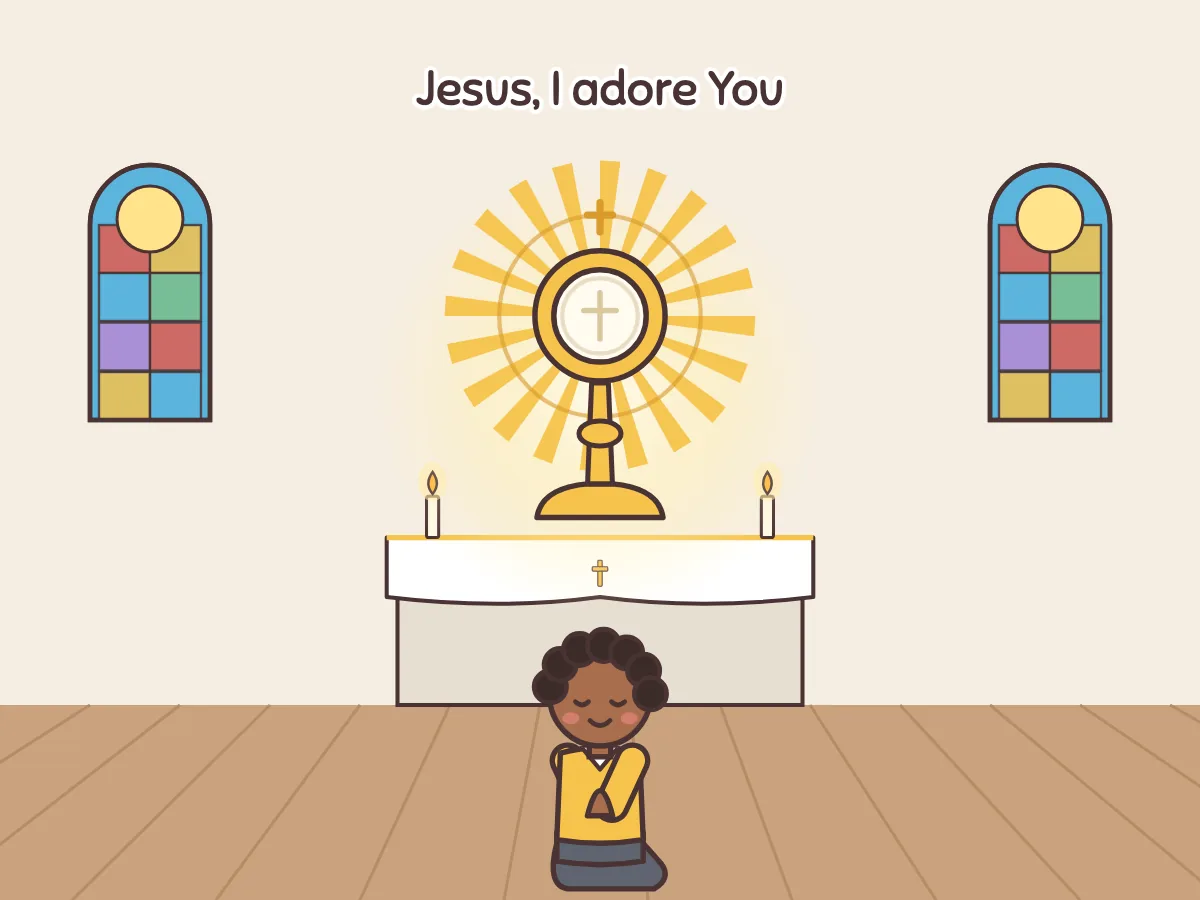
A teenager kneeling before the monstrance in Eucharistic adoration in a quiet chapel.

Communion changes us. It unites us closely with Christ, wipes away venial sins, protects us from future sin, strengthens our love, makes the Church one and commits us to the poor. The Church urges us to receive often, and to visit Jesus in the tabernacle and adore Him.

Catechism: CCC 1212–1419Scripture: John 3:5 · Acts 8:14–17 · John 6:53–58 · 1 Corinthians 11:27–29

Words to know

Tap a card to flip it
Keep this in your heart
Born in Baptism, sealed in Confirmation, fed by the Eucharist: I am fully initiated into Christ.

Say it out loud three times. Tap a circle each time!

Quiz

  1. What are the three sacraments of initiation?
    Answer: Baptism, Confirmation and the Eucharist
  2. What is baptism of blood?
    Answer: Salvation for someone who dies for the faith before being baptized
  3. Who usually confirms in the Latin Church?
    Answer: The bishop
  4. How long do Catholics fast before Communion?
    Answer: One hour
  5. Why don't Christians who are not Catholic normally receive Communion at Mass?
    Answer: Communion is a sign of a full unity that does not yet exist

Pray & do

My Jesus, I believe that You are present in the Most Holy Sacrament. I love You above all things, and I desire to receive You into my soul. Since I cannot at this moment receive You sacramentally, come at least spiritually into my heart. I embrace You as if You were already there and unite myself wholly to You. Never permit me to be separated from You. Amen.

Activity

Watch an Easter Vigil, or read about the Order of Christian Initiation of Adults. List the symbols used for each of the three sacraments and what they mean.

Family corner

Share your initiation stories: where and when each person was baptized, confirmed and received First Communion, and who was there. Look at photos if you have them.

Lesson complete!

Today's big idea: Baptism, Confirmation and the Eucharist lay the foundation of Christian life: we are born anew, strengthened and fed.