
The Gospels: Reliable Witnesses

The Gospels are trustworthy testimonies that faithfully hand on what Jesus did and taught, written so that we may believe.

Believe 15 minutes CCC 124–127, 514–515

Read the story

Reading voice

Speed

Hello! I will read the story to you.

Voices come from your device. If one sounds odd, choose another.

A teenager researching at a library table with a laptop and history books, a big question mark floating above: did Jesus really live?

Some people say Jesus never existed, or that the Gospels are myths. Historians of every belief disagree: nearly all scholars accept that Jesus of Nazareth really lived, preached in Galilee and was crucified under Pontius Pilate. The real question is not whether Jesus lived, but who He is.
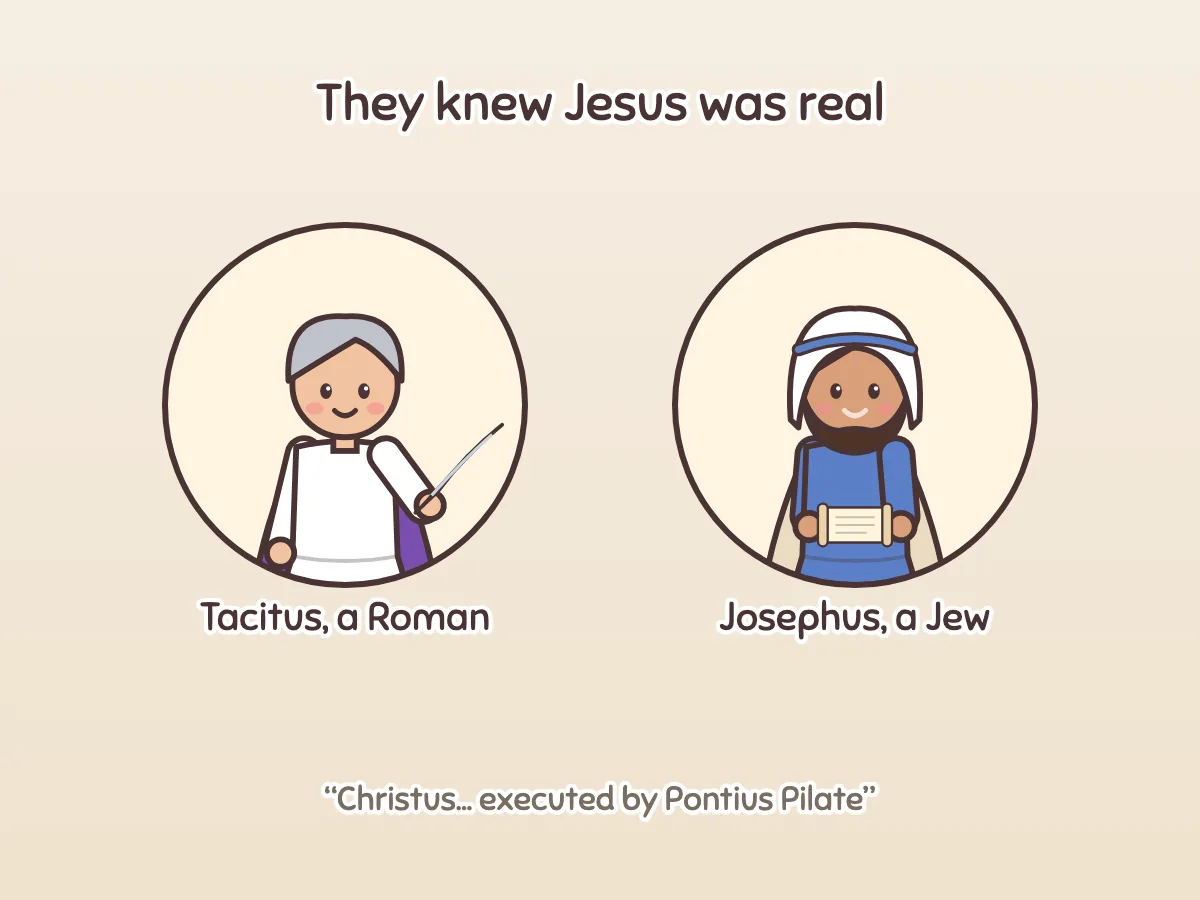
Two round portraits of ancient historians who were not Christians: the Roman Tacitus writing at his desk, and the Jewish historian Josephus with a scroll.

Writers who were not Christians mention Him too. The Roman historian Tacitus, writing around the year 116, said that “Christus” had been executed by Pontius Pilate while Tiberius was emperor. The Jewish historian Josephus mentioned Jesus and His relative James. These writers did not believe in Jesus, but they knew He was real.
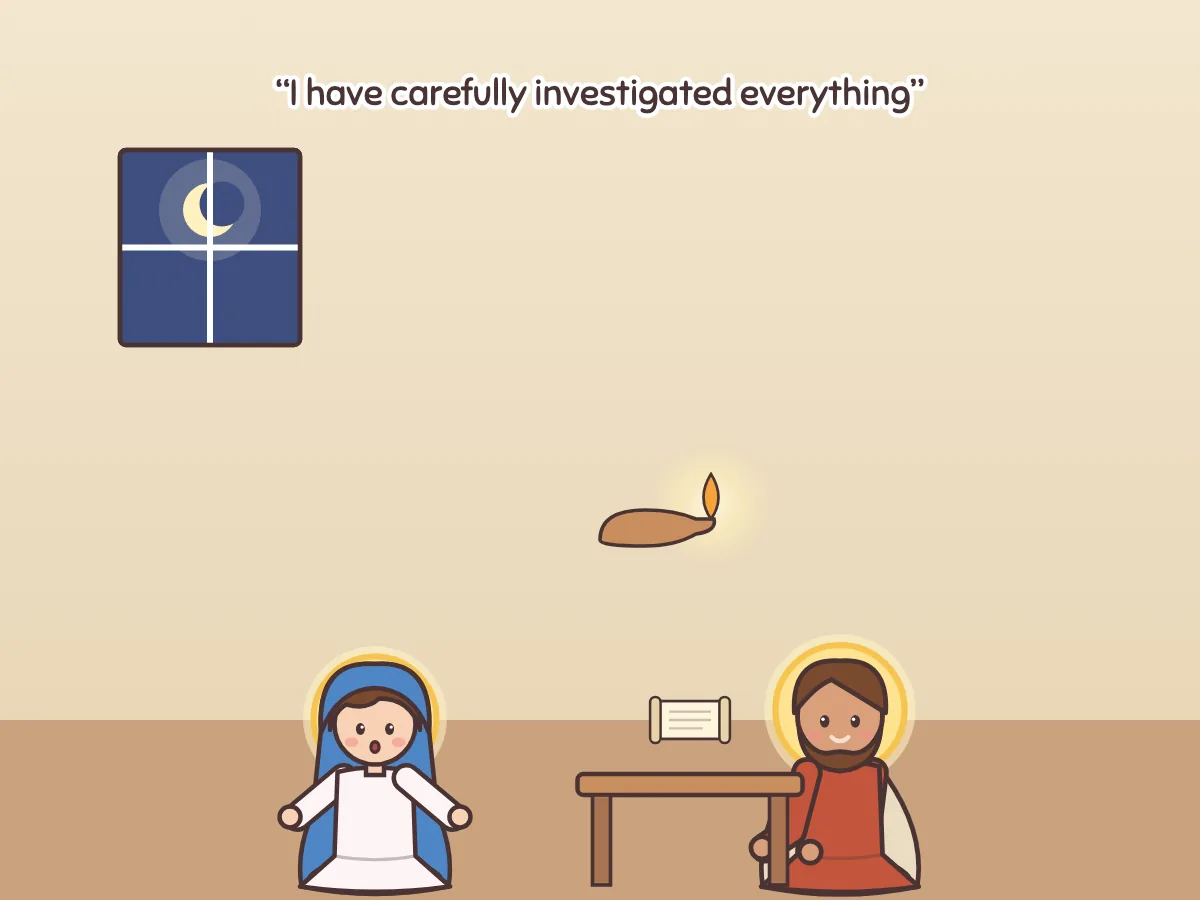
Saint Luke writing his Gospel by lamplight as Mary, the mother of Jesus, tells him what she remembers.

The Gospels were written within living memory of Jesus: Mark around the years 65 to 70, Matthew and Luke in the decades after, and John near the end of the first century. Luke says he carefully investigated everything, drawing on eyewitnesses. People in that culture were trained to remember teachings accurately, and the apostles were still alive to correct mistakes.
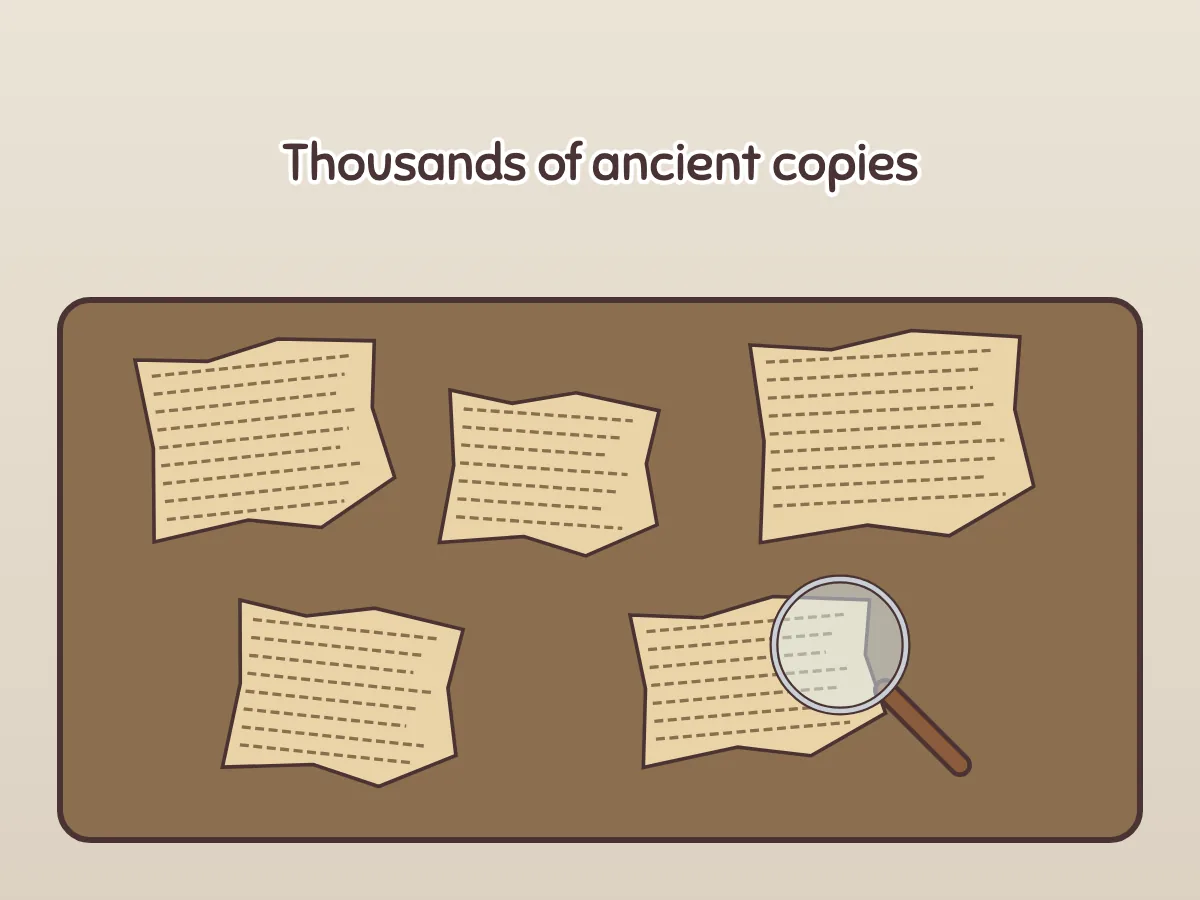
Ancient papyrus fragments and handwritten copies of the New Testament spread on a table under a magnifying glass.

Thousands of ancient handwritten copies of the New Testament survive, some fragments from the second century. No other ancient book comes close. By comparing them, scholars can recover the original text with great confidence.
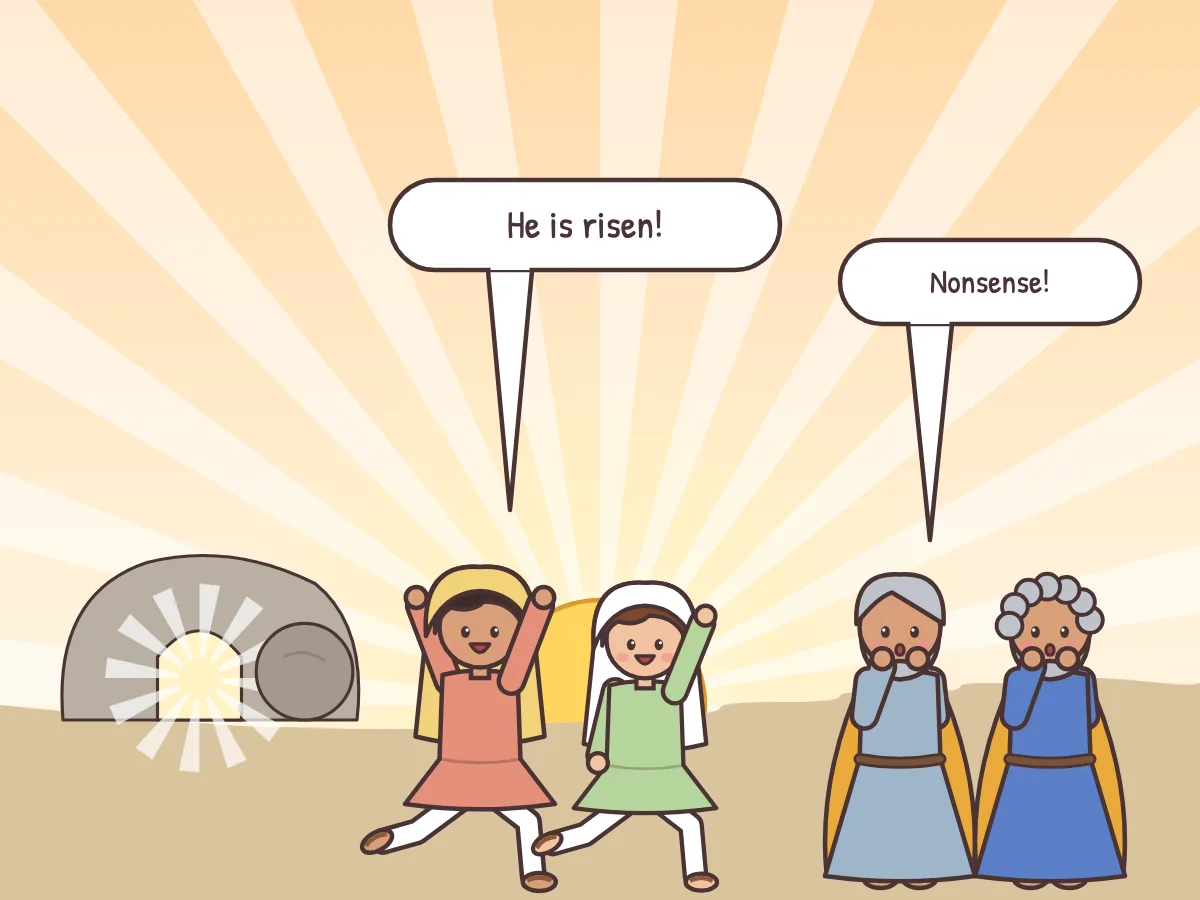
The women running from the empty tomb to tell the apostles, who fold their arms and doubt them: the Gospels tell the truth even when it is embarrassing.

The Gospels also include details that someone making up a story would have left out: the apostles misunderstanding Jesus, Peter denying Him, and women, whose word carried little weight in court at that time, being the first witnesses of the Resurrection. They tell the truth even when it is embarrassing.
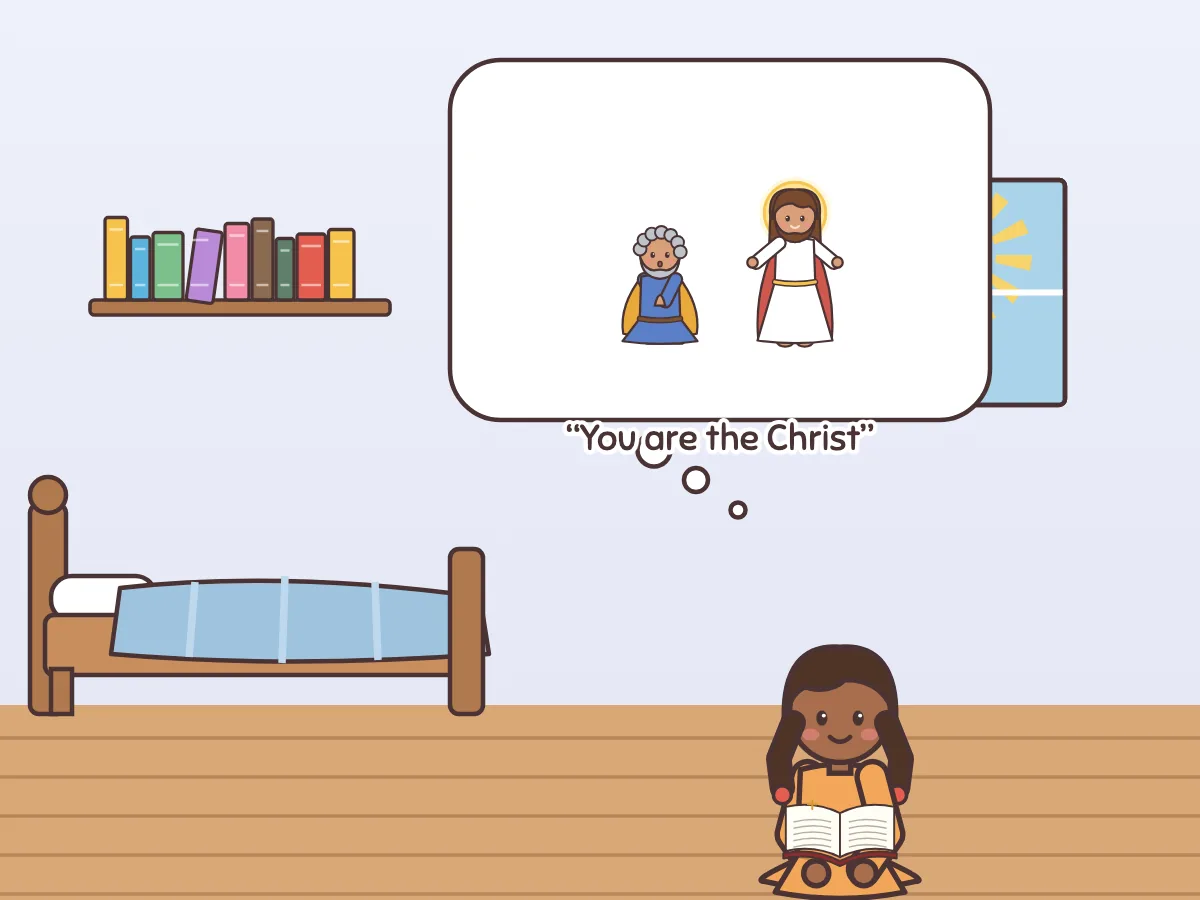
A teenager reading the Gospel, with a thought bubble showing Peter kneeling before Jesus and saying, “You are the Christ.”

Still, the Gospels are more than history. They are testimonies of faith, written by believers so that others would believe, and the Church holds that they faithfully hand on what Jesus really did and taught. History can bring you to the question; only faith, which is God's gift, can answer it with Peter: “You are the Christ.”

Catechism: CCC 124–127, 514–515Scripture: Luke 1:1–4 · 1 John 1:1–3 · John 20:30–31

Words to know

Tap a card to flip it
Keep this in your heart
The Gospels are trustworthy witnesses to the real Jesus, written so that I may believe.

Say it out loud three times. Tap a circle each time!

Quiz

  1. Do historians accept that Jesus really lived?
    Answer: Yes, nearly all scholars do
  2. Which Roman historian wrote that Christus was executed by Pontius Pilate?
    Answer: Tacitus
  3. Why does Luke's Gospel matter as history?
    Answer: He says he carefully investigated eyewitness accounts
  4. Why are embarrassing details in the Gospels important?
    Answer: Someone inventing a story would have left them out
  5. What can history alone not do?
    Answer: Give us faith that Jesus is the Son of God

Pray & do

Lord Jesus, the apostles saw You, heard You and touched You, and they handed on what they had seen. Strengthen my faith, and give me the words to share it with gentleness and respect. Amen.

Activity

Research one ancient source about Jesus by a writer who was not Christian (Tacitus, Josephus or Pliny the Younger). Write a paragraph: who wrote it, when, what it says and why it matters.

Family corner

Ask everyone: If a friend said, “Jesus is just a legend,” how would you answer kindly? Practice answering in two or three sentences.

Lesson complete!

Today's big idea: The Gospels are trustworthy testimonies that faithfully hand on what Jesus did and taught, written so that we may believe.