Reading the Bible as a Catholic

The Bible is truly God's word in human words; we read it in context, as a whole, and within the Church's living faith.

Pray 15 minutes CCC 101–120, 2708

Read the story

Reading voice

Speed

Hello! I will read the story to you.

Voices come from your device. If one sounds odd, choose another.

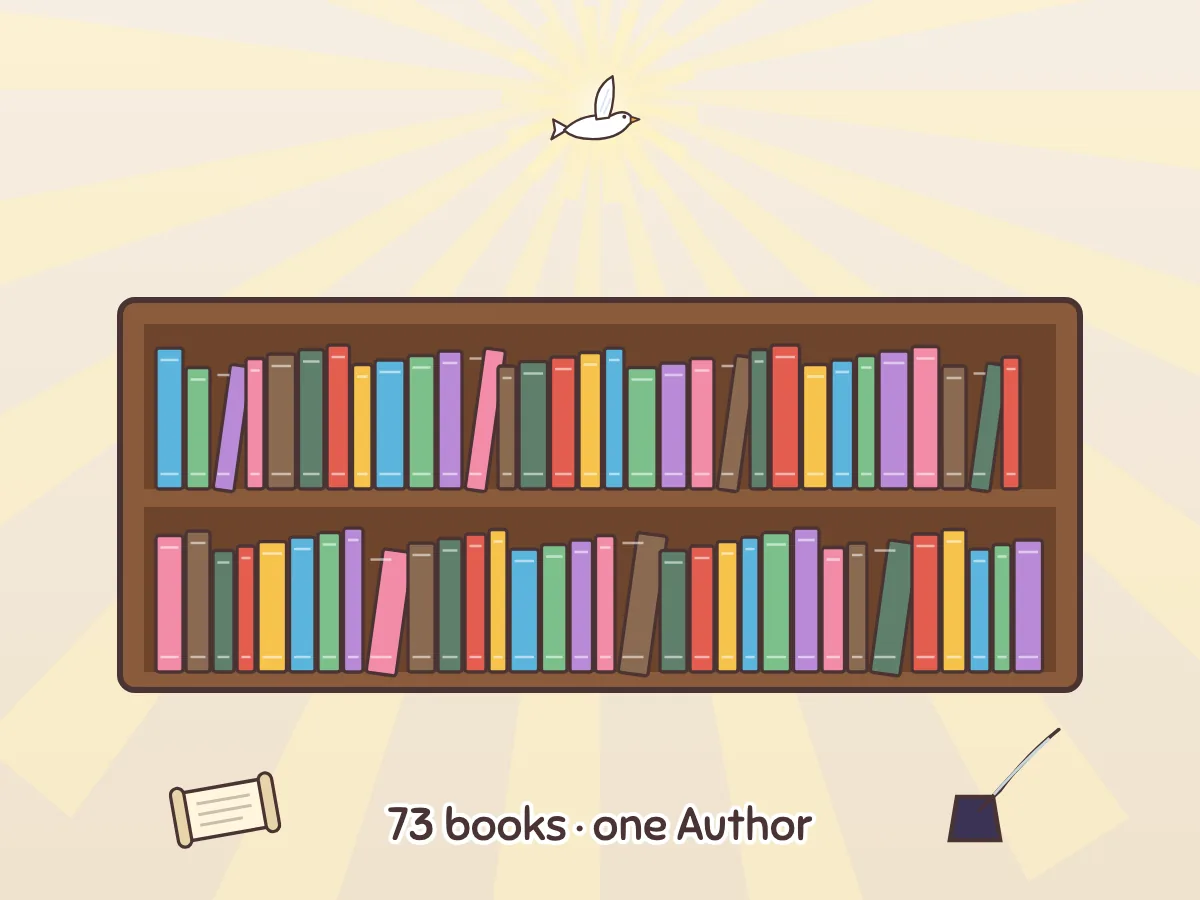
A library of 73 books of many colours with scrolls and a quill, lit by a beam of light from the dove of the Holy Spirit: many human authors, one divine Author.

The Bible is not one book but a library of 73 books, written over about a thousand years in Hebrew, Aramaic and Greek, by kings, shepherds, priests, prophets, fishermen and a doctor. Yet it has one divine Author. Inspiration means that God worked through human authors, with their own gifts and styles, so that they wrote everything He wanted written, and only that.
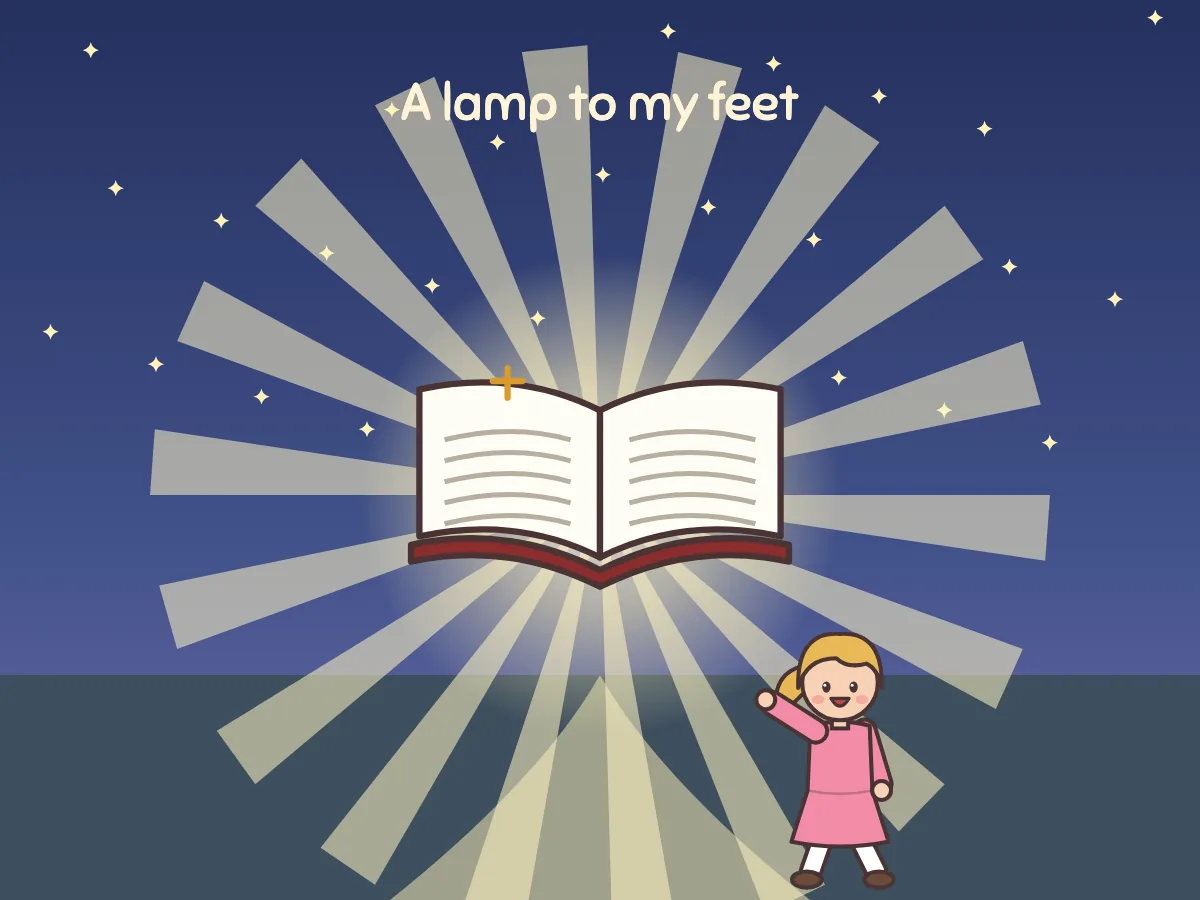
An open Bible shining like a lantern over a path through the dark: Scripture teaches without error the truth God wants for our salvation.

Because God is its author, the Bible teaches “firmly, faithfully and without error” the truth God wanted written down for our salvation. This is called inerrancy. It does not mean the Bible is a science or history textbook in the modern sense, but that what God intends to teach through it is true.
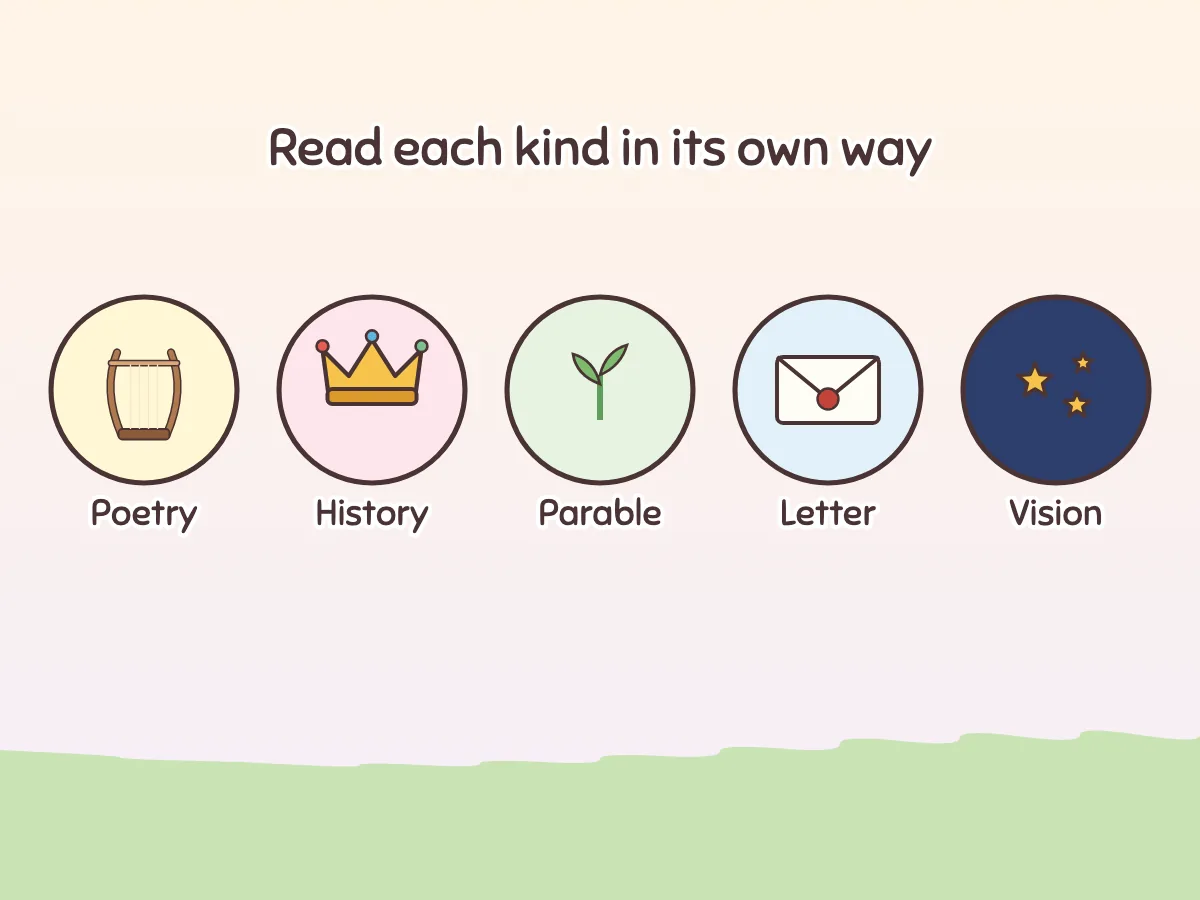
Five labelled kinds of writing found in the Bible: poetry with a harp, history with a crown, a parable with a seed, a letter with an envelope, and a vision with stars.

To understand what God is saying, we first ask what the human author meant. That means paying attention to literary forms: poetry, history, parable, prophecy, letters and apocalyptic visions are each read differently. A psalm calling God a rock is poetry; a parable is not a news report; the creation accounts teach real truths through symbolic language.
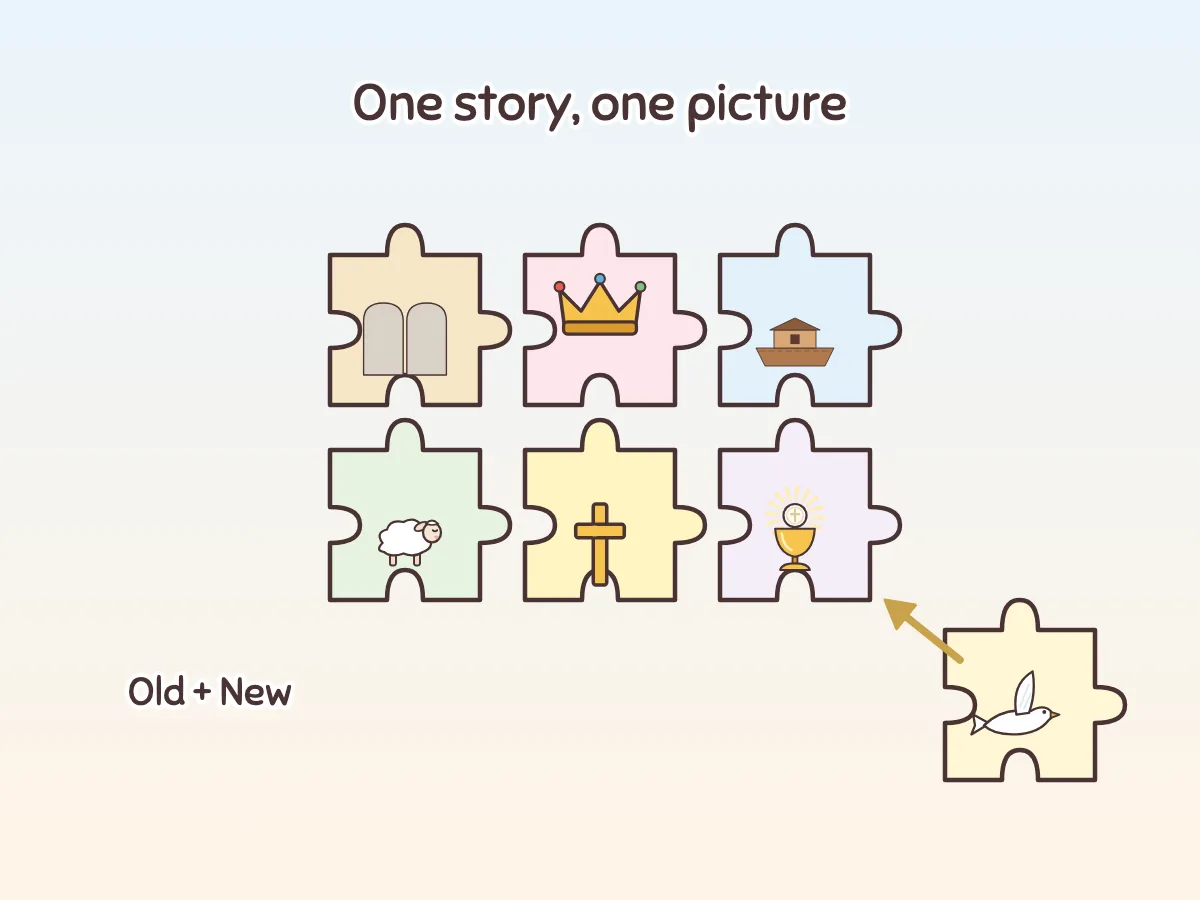
Puzzle pieces from the Old and New Testaments fitting together into one picture, with the cross at its centre: read the Bible as a whole.

The Church gives three more guidelines for reading Scripture well:

  • Read the Bible as a whole: one part sheds light on another.
  • Read it within the living Tradition of the whole Church.
  • Keep in mind the harmony of the faith: the truths of faith never contradict each other.
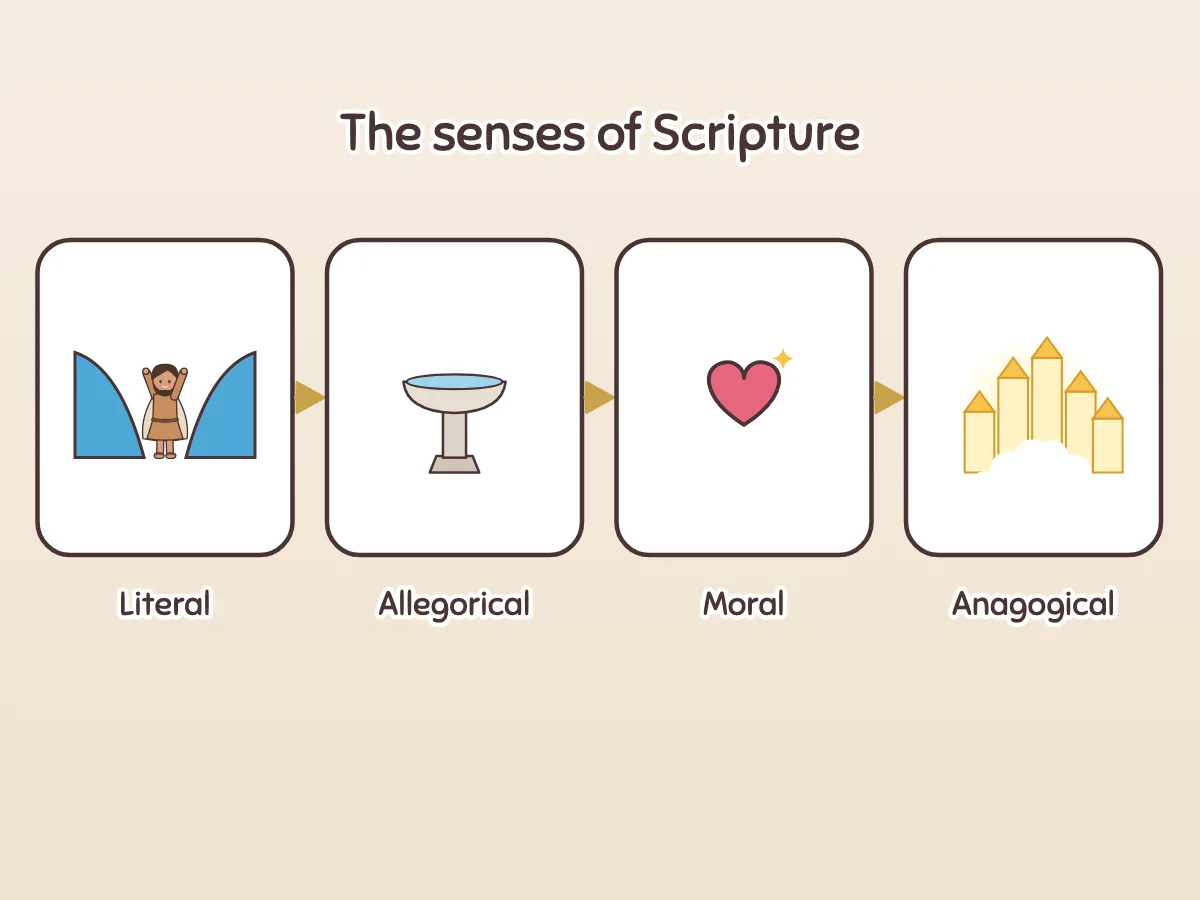
Four cards for the senses of Scripture: the Red Sea crossing (literal), which points to a baptismal font (allegorical), to a heart that acts rightly (moral) and to the shining heavenly city (anagogical).

Scripture has two senses. The literal sense is what the words mean as the author intended, and everything else builds on it. The spiritual senses see how the things in the text are themselves signs:

  • The allegorical sense: how it points to Christ. The crossing of the Red Sea points to Baptism.
  • The moral sense: how it teaches us to act.
  • The anagogical sense: how it points to our final goal. Jerusalem points to the heavenly city.
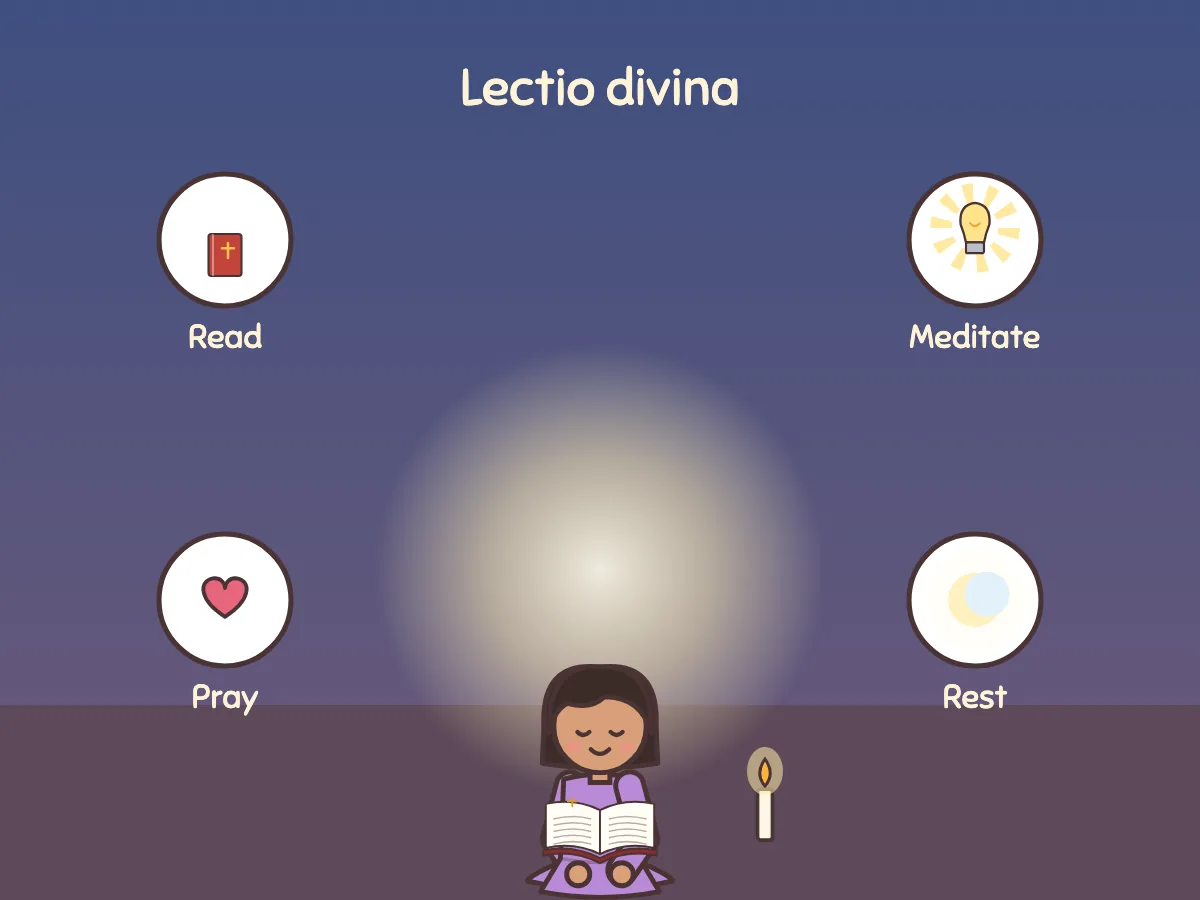
A teenager praying lectio divina with an open Bible by candlelight, with the four steps around her: read, meditate, pray and rest in God.

Catholics have always treasured Scripture: monks prayed it day and night, and the Mass is full of it. Saint Jerome said that ignorance of Scripture is ignorance of Christ. A great way to pray with it is lectio divina: read a passage slowly, meditate on a word or phrase, talk to God about it, and rest silently in His presence.

Catechism: CCC 101–120, 2708Scripture: 2 Peter 1:20–21 · Luke 24:44–45

Words to know

Tap a card to flip it
Keep this in your heart
The Bible is God's word in human words; I read it in context, as a whole, with the Church.

Say it out loud three times. Tap a circle each time!

Quiz

  1. How many books are in the Catholic Bible?
    Answer: 73
  2. What does inerrancy mean?
    Answer: The Bible teaches without error the truth God intended for our salvation
  3. Why do literary forms matter?
    Answer: Different kinds of writing are read in different ways
  4. Which sense of Scripture do all the others build on?
    Answer: The literal sense
  5. What is lectio divina?
    Answer: Praying slowly with a Scripture passage

Pray & do

Speak, Lord, for Your servant is listening. Holy Spirit, You inspired the Scriptures: open my mind to understand them and my heart to live them. Amen.

Activity

Try lectio divina with Mark 10:17–22 (the rich young man). Read it three times slowly, write down the word or phrase that stands out, talk to God about it, then sit silently for two minutes. Journal what happened.

Family corner

Read next Sunday's Gospel together before Mass. Ask: What kind of writing is this? What did it mean then? What might God be saying to us now?

Lesson complete!

Today's big idea: The Bible is truly God's word in human words; we read it in context, as a whole, and within the Church's living faith.