Scripture, Tradition and the Magisterium

God's Revelation is handed on through Sacred Scripture and Sacred Tradition, and faithfully taught by the Church's Magisterium.

Believe 15 minutes CCC 74–100

Read the story

Reading voice

Speed

Hello! I will read the story to you.

Voices come from your device. If one sounds odd, choose another.

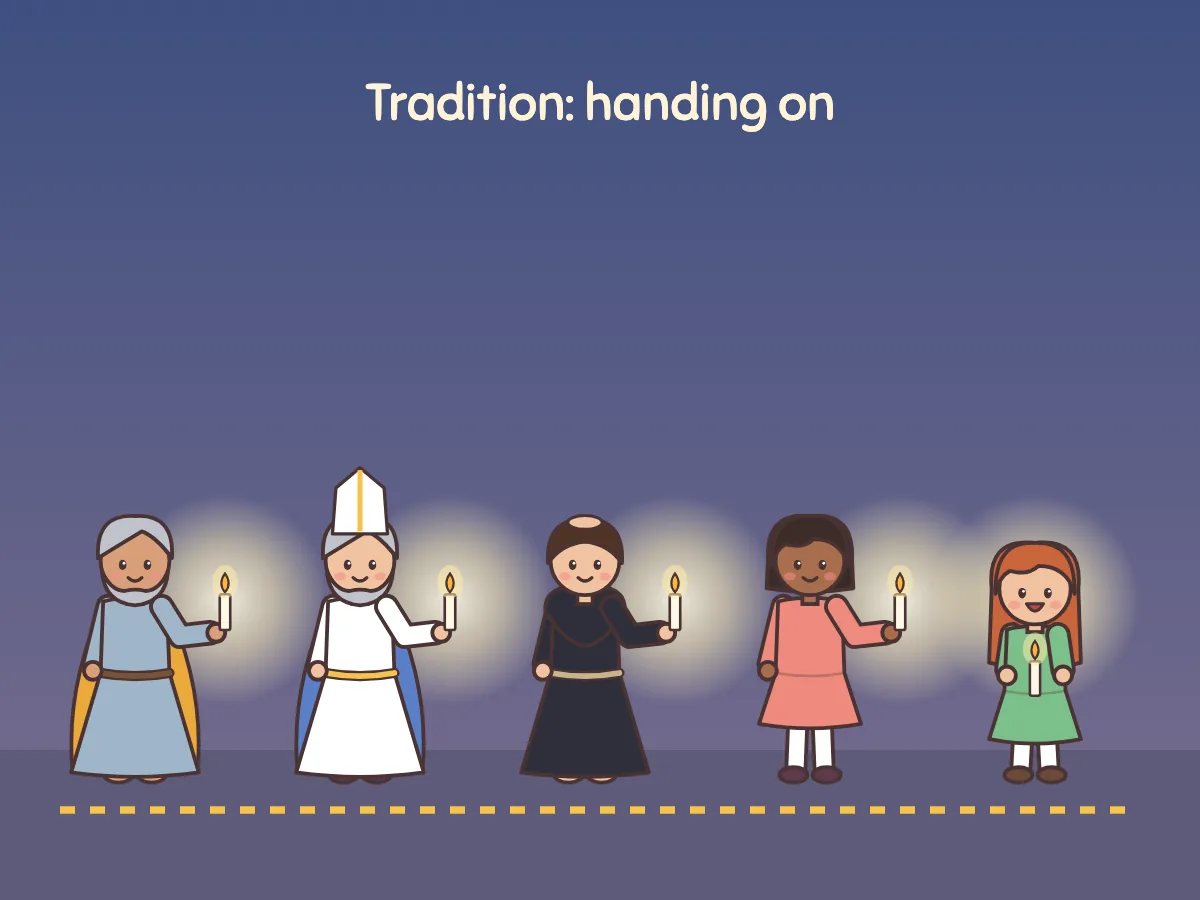
A lit candle passed from hand to hand down the centuries: from an apostle to a bishop, a monk, a mother and a teenager of today.

Jesus did not write a book. He formed apostles and sent them to preach. Because God wants all people to be saved and to come to the knowledge of the truth, He made sure His Revelation would be handed on, complete and alive, to every generation. This handing on is called Tradition, from the Latin tradere, “to hand over.”
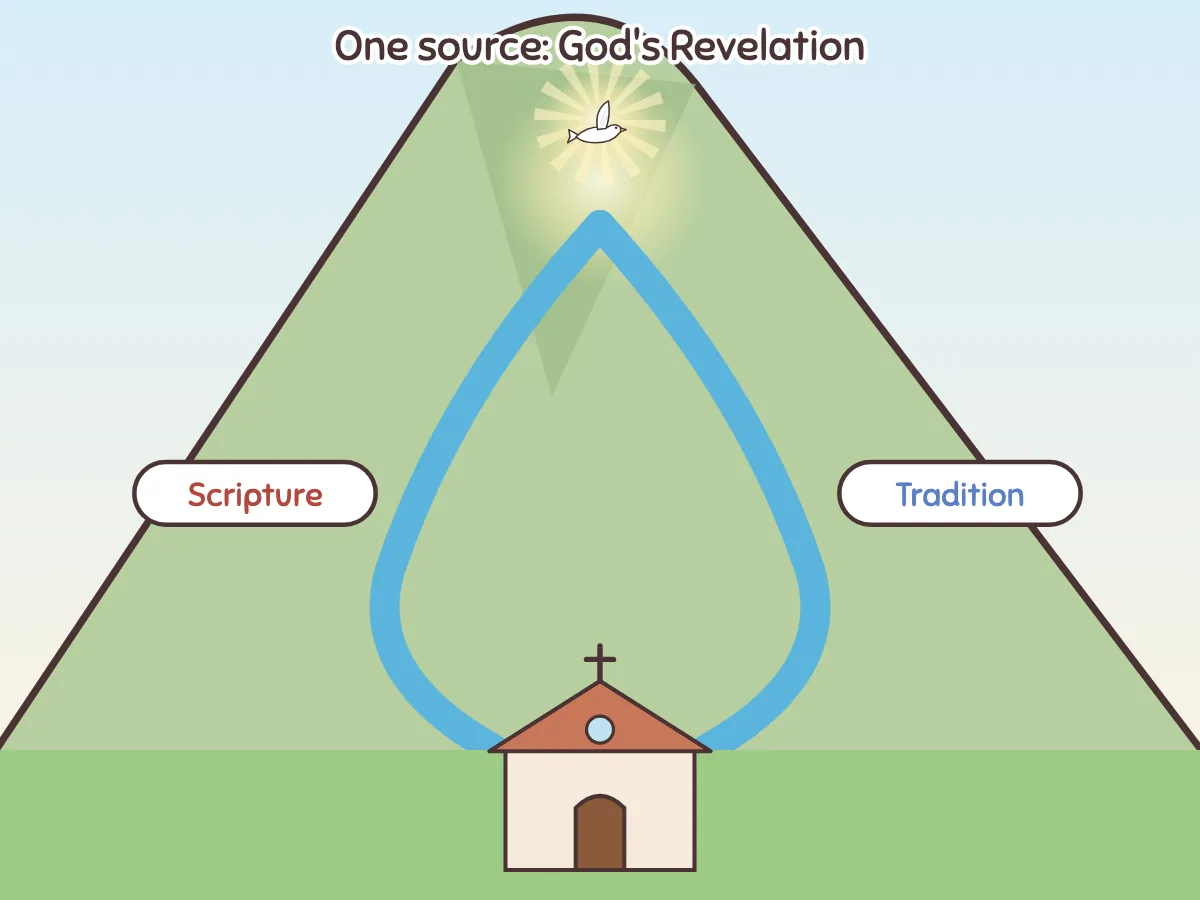
One spring of water high on a mountain dividing into two streams, Scripture and Tradition, which flow down together into the Church.

Revelation is handed on in two ways, like two streams flowing from one spring:

  • Sacred Scripture: the word of God put down in writing under the inspiration of the Holy Spirit.
  • Sacred Tradition: the living handing on of the apostles' teaching through the Church's life, worship and teaching, including what was never written down.
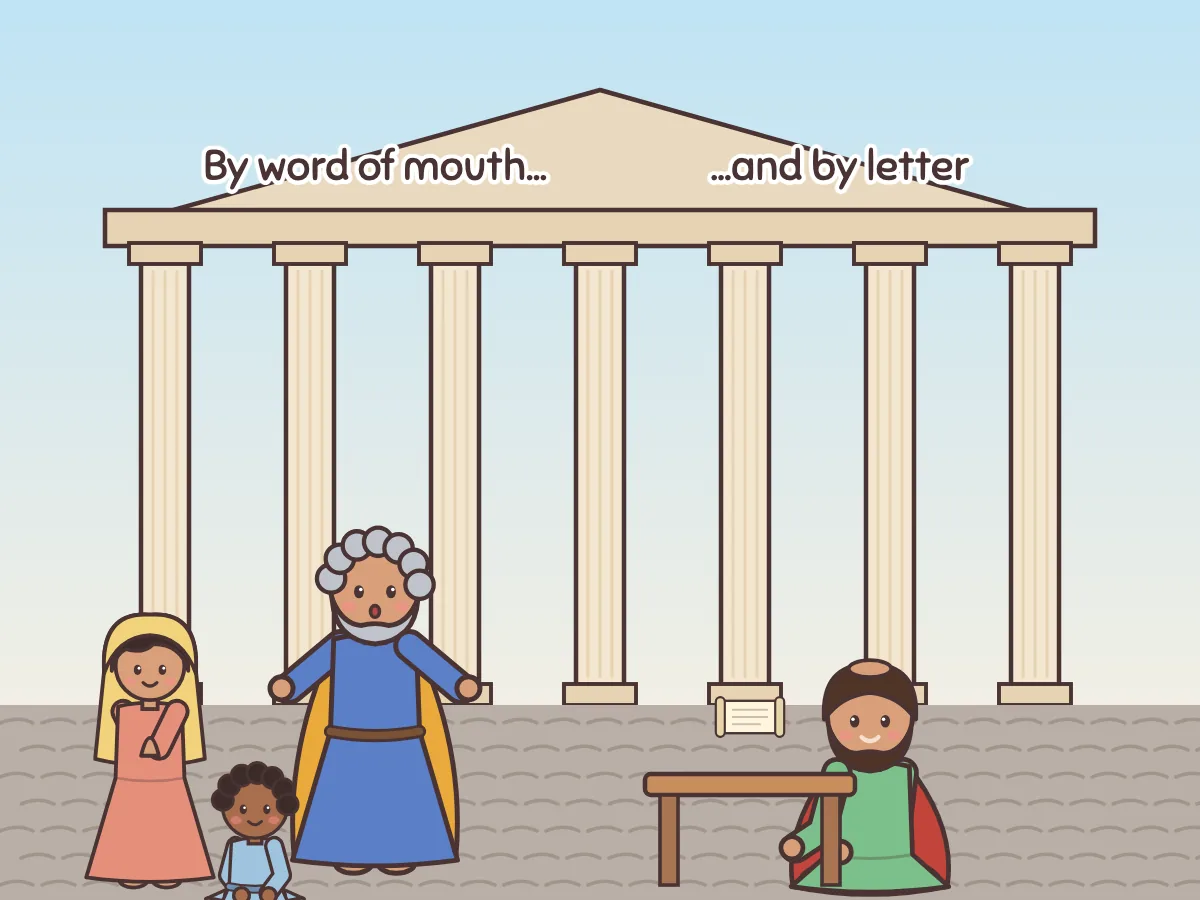
An apostle preaching to a crowd while another writes a letter on a scroll: the Church handed on the faith by word of mouth and by letter.

Tradition came first. The Church preached and celebrated the Eucharist for decades before the New Testament was written, and it was the Church, guided by the Spirit, that recognized which books belong in the Bible. Saint Paul told the Thessalonians to hold fast to the traditions they had been taught, “either by word of mouth or by letter.”
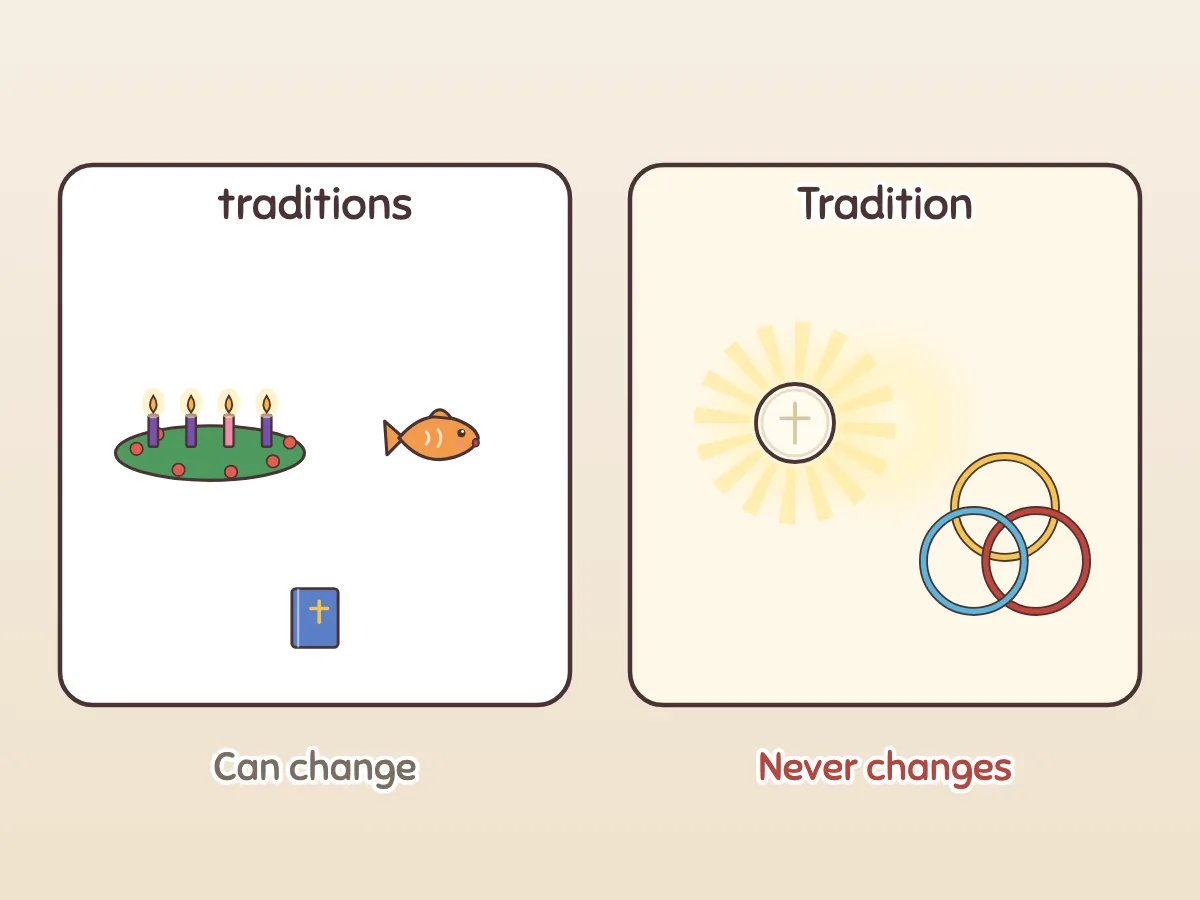
Two cards compared: traditions that can change, like an Advent wreath, fish on Friday and a hymn book, and Sacred Tradition that never changes, like the Eucharist and the Holy Trinity.

Sacred Tradition, with a capital T, is different from traditions with a small t. Customs such as fish on Fridays, Advent wreaths or particular hymns are good traditions, but they can change. Sacred Tradition, such as the Real Presence of Christ in the Eucharist or the Trinity, belongs to the deposit of faith and never changes, though the Church's understanding of it deepens over time.
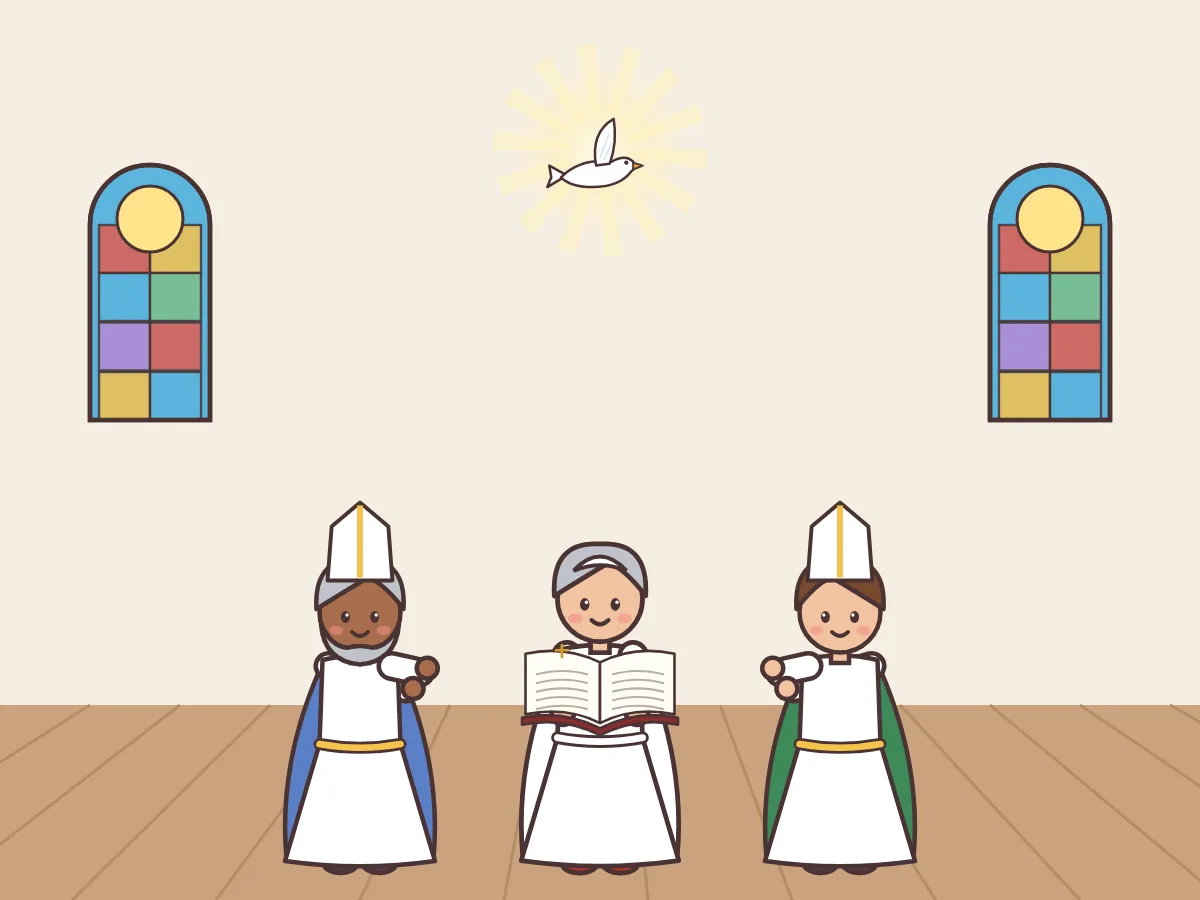
The Pope and two bishops holding up an open Bible together beneath the dove of the Holy Spirit: the Magisterium serves the word of God.

Who interprets Scripture and Tradition? Jesus entrusted that task to the apostles and their successors, the bishops in communion with the Pope. This teaching office is called the Magisterium. It is not above the word of God but serves it, teaching only what has been handed on. Without it, every person would read the Bible their own way, and Christians would split into ever more groups.
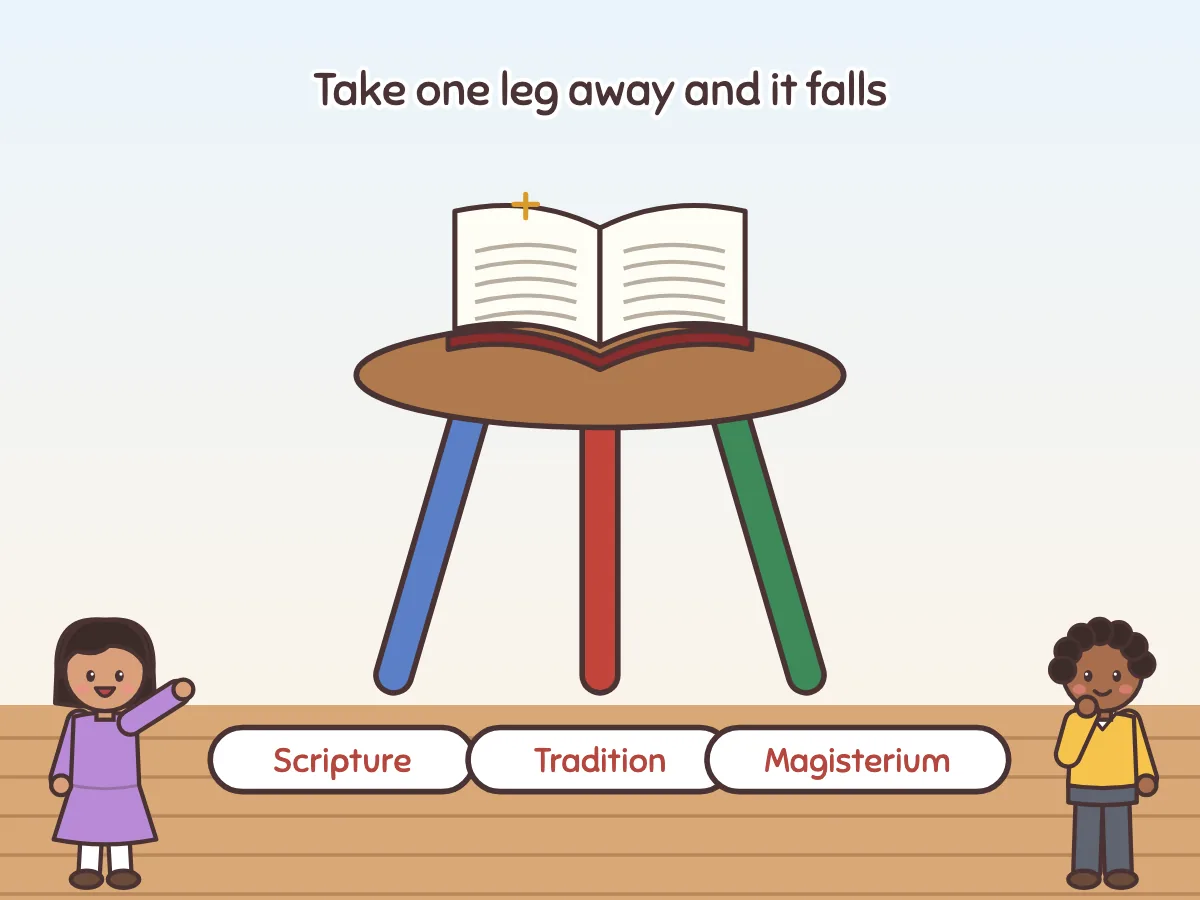
A sturdy three-legged stool with a Bible on its seat, its legs labelled Scripture, Tradition and Magisterium, as two teenagers look on.

Scripture, Tradition and the Magisterium work together like the legs of a three-legged stool: take one away and the stool falls over. Together, under the action of the Holy Spirit, they keep the faith of the apostles alive and whole for us today.

Catechism: CCC 74–100Scripture: 2 Thessalonians 2:15 · 2 Timothy 2:2; 3:14–17 · John 21:25

Words to know

Tap a card to flip it
Keep this in your heart
God's word reaches me through Scripture and Tradition, faithfully taught by the Church.

Say it out loud three times. Tap a circle each time!

Quiz

  1. What does “Tradition” mean?
    Answer: Handing on
  2. What are the two ways Revelation is handed on?
    Answer: Sacred Scripture and Sacred Tradition
  3. Which came first?
    Answer: Tradition: the Church preached before the New Testament was written
  4. What is the Magisterium?
    Answer: The teaching office of the Pope and bishops
  5. Is the Magisterium above the word of God?
    Answer: No, it serves the word of God

Pray & do

Lord Jesus, You promised that the Holy Spirit would guide Your Church into all truth. Thank You for handing on Your word through Scripture and Tradition. Give our Pope and bishops wisdom and courage, and give me a heart that listens. Amen.

Activity

Make a two-column chart: “Sacred Tradition” and “traditions.” List five examples of each. Then name one thing Catholics know mainly through Tradition, such as which books belong in the Bible.

Family corner

Ask an older relative which family traditions matter most to them and why. Then talk about which parts of the faith you most want to hand on to the next generation.

Lesson complete!

Today's big idea: God's Revelation is handed on through Sacred Scripture and Sacred Tradition, and faithfully taught by the Church's Magisterium.