Reformation and Renewal

The Protestant Reformation divided Western Christians; the Council of Trent and great saints renewed the Catholic Church.

Believe 10 minutes CCC 817–822, 838, 1113–1114

Read the story

Reading voice

Speed

Hello! I will read the story to you.

Voices come from your device. If one sounds odd, choose another.

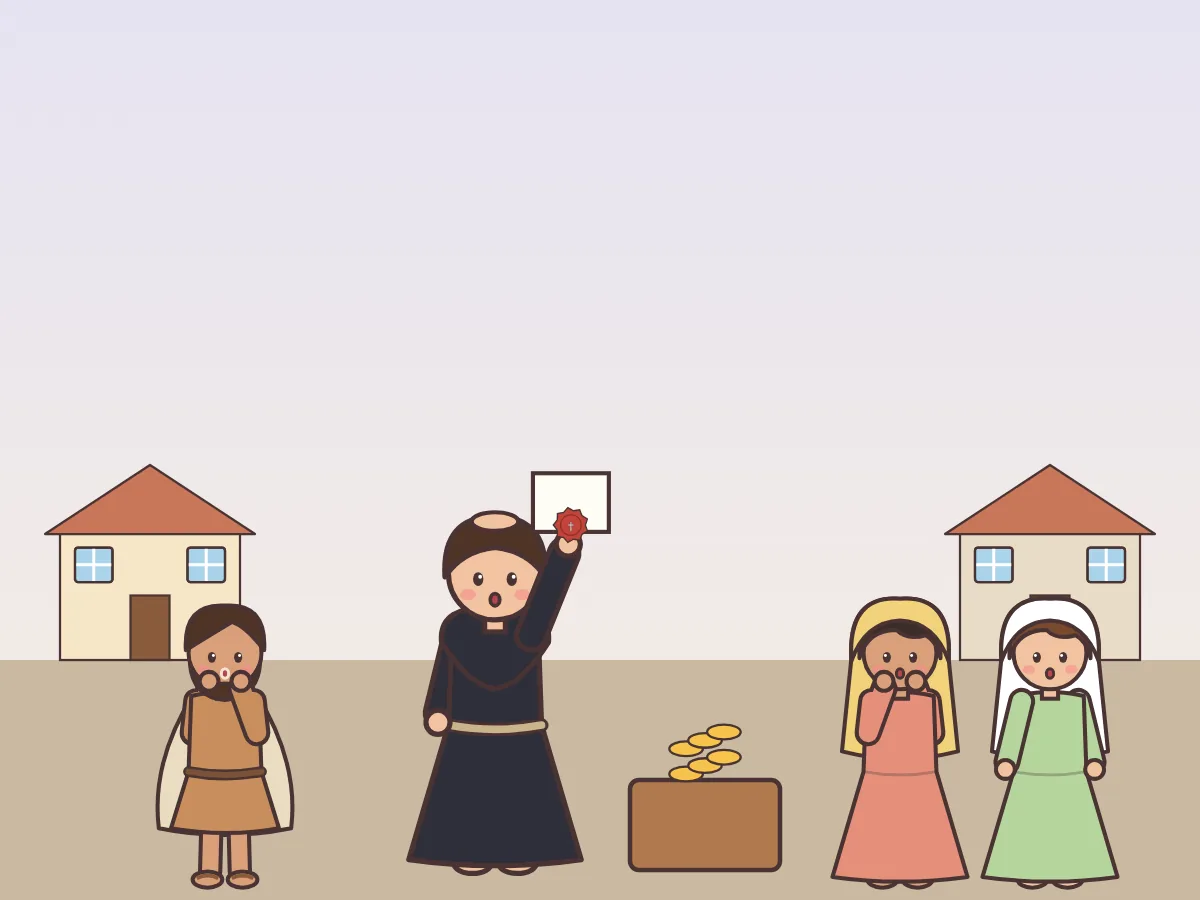
A preacher in a town square holding up a paper beside a chest full of coins, while worried townspeople look on: indulgences were wrongly being sold.

By 1500 the Church badly needed reform. Some bishops lived like princes, many priests were poorly trained, and some preachers sold indulgences as if God's forgiveness could be bought. Many faithful people longed for a holier Church.
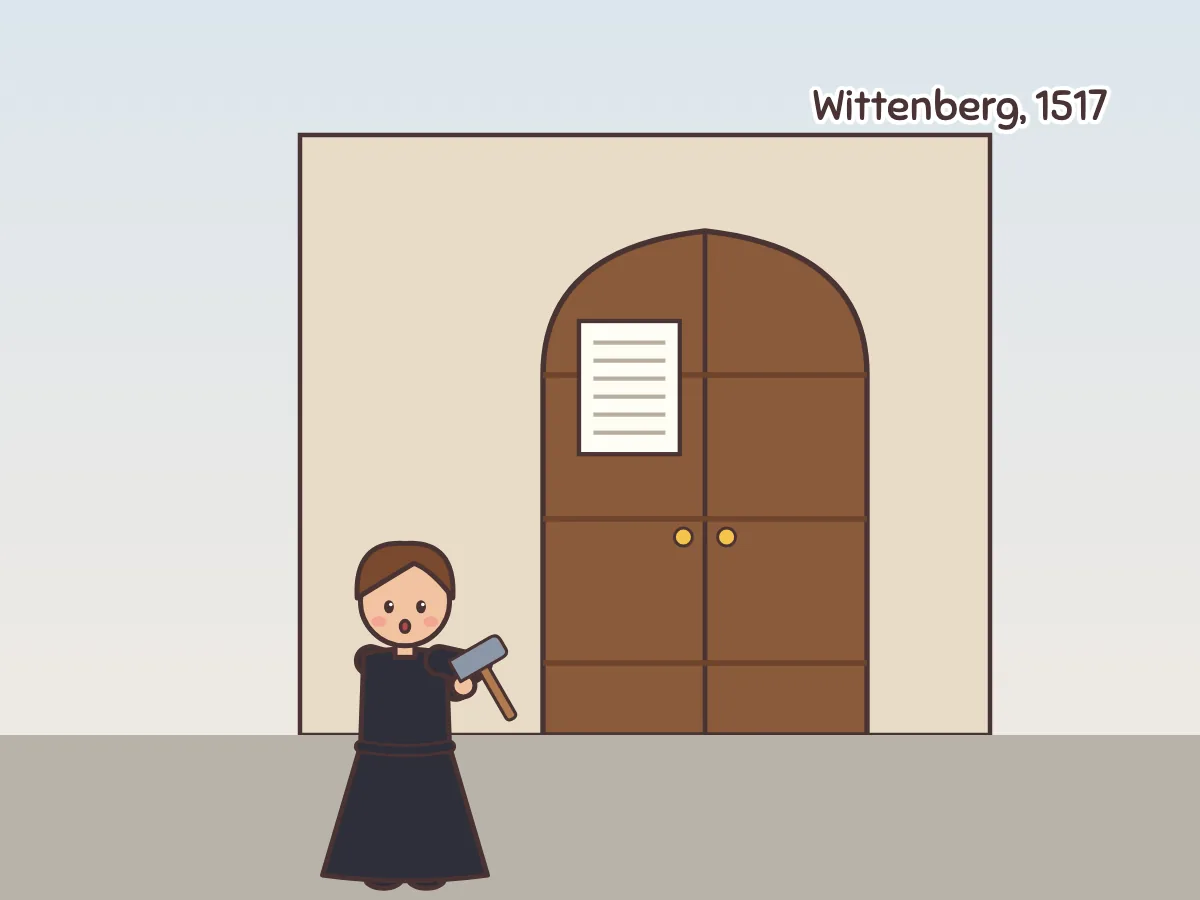
Martin Luther, a German priest and professor, posting his ninety-five theses on the wooden door of the church in Wittenberg in 1517.

In 1517 a German priest and professor, Martin Luther, protested these abuses in his 95 theses. But he went further, rejecting the authority of the Pope, several sacraments and other parts of Catholic teaching. He and other reformers, such as John Calvin, began what became the Protestant churches. In England, King Henry VIII broke away from Rome when the Pope would not let him leave his wife to marry another woman.
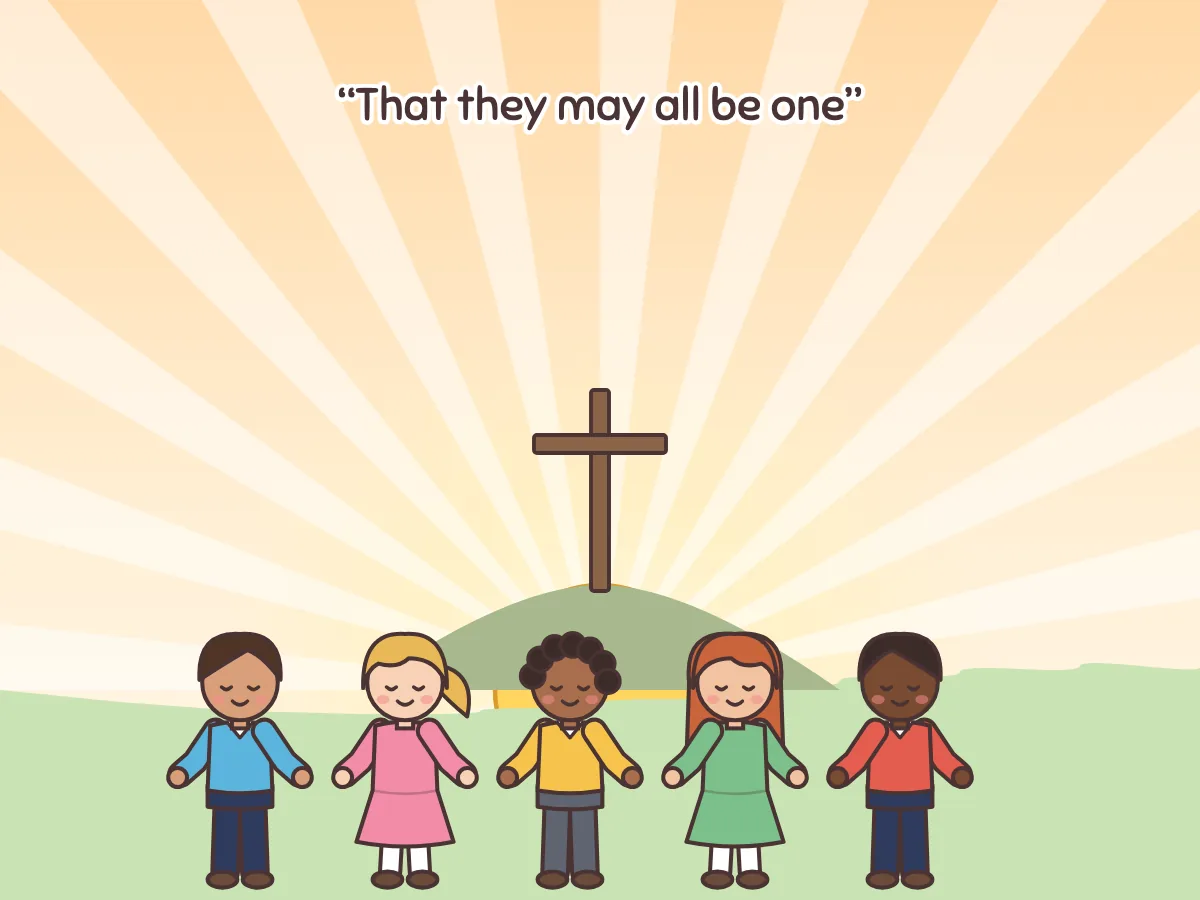
Catholic and Protestant young people praying together beneath a cross, hand in hand: brothers and sisters in Christ.

Western Christianity split apart, and wars of religion followed. Today the Church teaches that people on both sides were to blame for the division, and that Protestant Christians are truly our brothers and sisters in Christ, joined to us by Baptism. Catholics work and pray for Christian unity; this is called ecumenism.
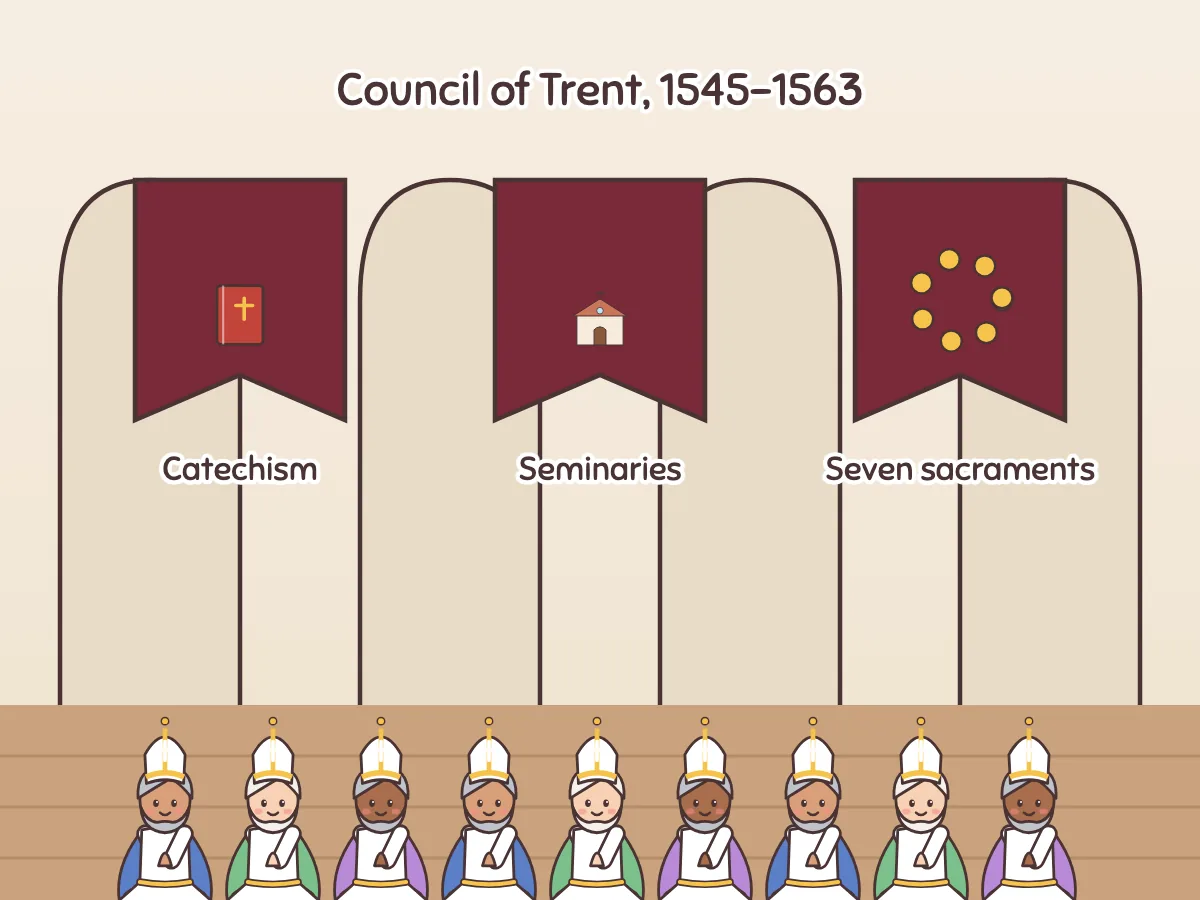
Bishops gathered at the Council of Trent, with three banners above them: a new catechism, a seminary for training priests, and the seven sacraments.

The Catholic Church answered with true reform. The Council of Trent (1545 to 1563) clearly taught Catholic beliefs: Scripture and Tradition, the seven sacraments, the Real Presence of Christ in the Eucharist, and salvation by God's grace, received in faith and lived out in good works. It founded seminaries to train priests and called for a catechism for teaching the faith.
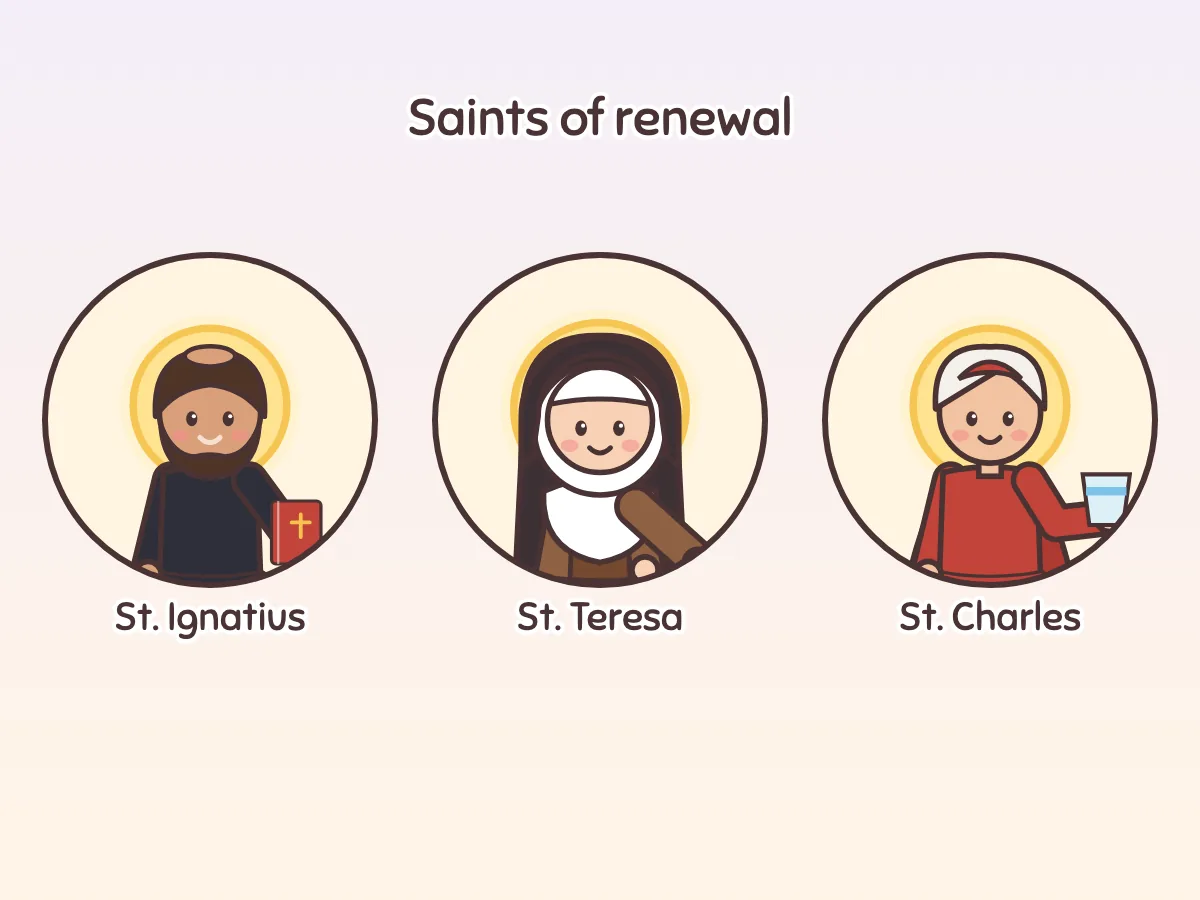
Three saints of the Catholic renewal in round portraits: Saint Ignatius of Loyola with his book, Saint Teresa of Ávila with her quill, and Saint Charles Borromeo caring for the sick.

Saints led the renewal. Saint Ignatius of Loyola, a wounded soldier turned pilgrim, founded the Jesuits, who opened schools and sent missionaries around the world. Saint Teresa of Ávila and Saint John of the Cross renewed the Carmelites and taught the way of prayer. Saint Charles Borromeo reformed his diocese and cared for the sick during a plague.
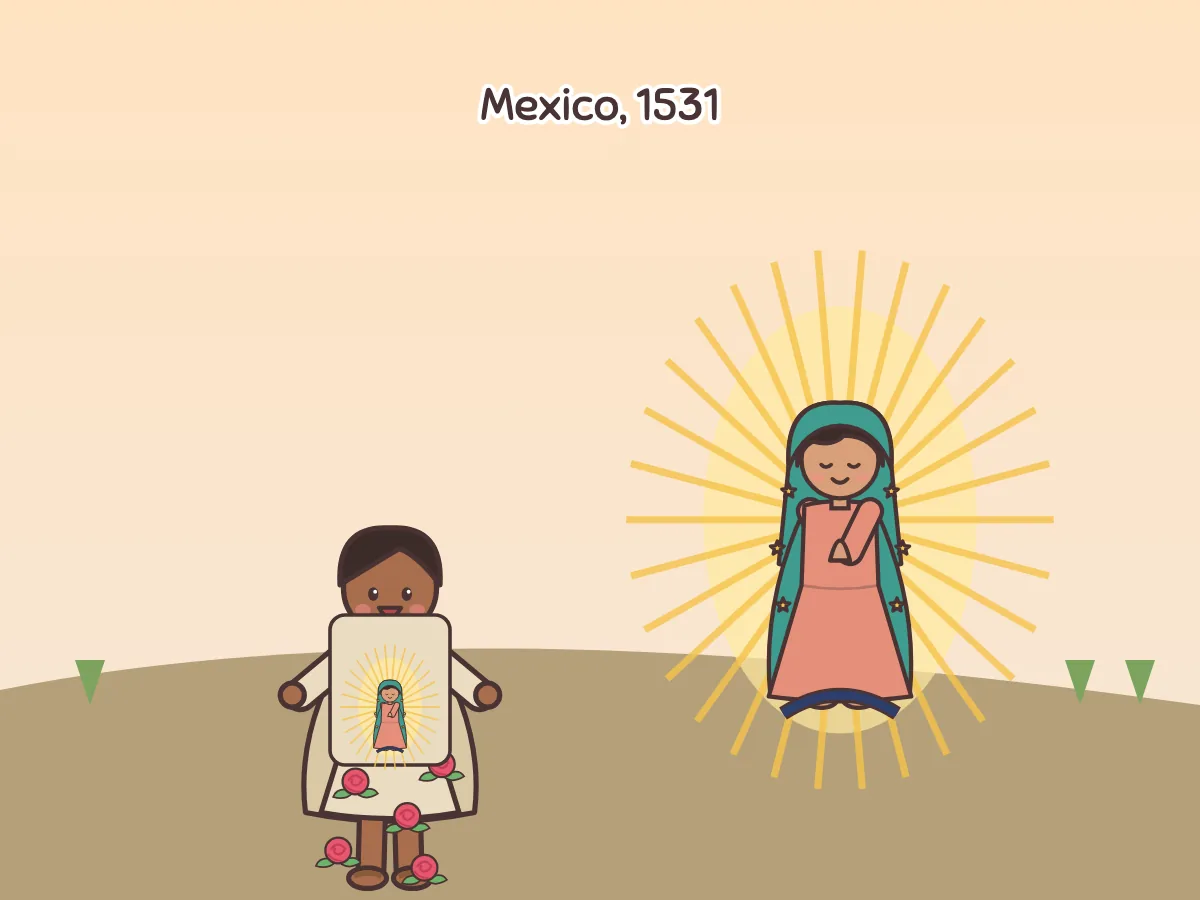
Our Lady of Guadalupe appearing to Saint Juan Diego, who opens his cloak to let roses fall, revealing her image on it.

Meanwhile the Gospel reached new lands. In 1531 Our Lady of Guadalupe appeared to Saint Juan Diego in Mexico, and millions came to believe. Saint Francis Xavier carried the faith to India and Japan. Sometimes missionaries arrived alongside the injustice of colonial powers, and brave Christians such as the friar Bartolomé de las Casas and Saint Peter Claver defended the native peoples and enslaved Africans.

Catechism: CCC 817–822, 838, 1113–1114Scripture: John 17:20–23 · Ephesians 4:1–6

Words to know

Tap a card to flip it
Keep this in your heart
God renews His Church through holy reformers, and we pray and work for all Christians to be one.

Say it out loud three times. Tap a circle each time!

Quiz

  1. What abuse angered many people before the Reformation?
    Answer: Selling indulgences as if forgiveness could be bought
  2. Who began the Protestant Reformation in 1517?
    Answer: Martin Luther
  3. How does the Church see Protestant Christians today?
    Answer: As brothers and sisters in Christ, joined to us by Baptism
  4. What did the Council of Trent found to train priests?
    Answer: Seminaries
  5. Who founded the Jesuits?
    Answer: Saint Ignatius of Loyola

Pray & do

Take, Lord, and receive all my liberty, my memory, my understanding and my entire will, all that I have and possess. You have given all to me; to You, O Lord, I return it. All is Yours; do with it what You will. Give me only Your love and Your grace, for this is enough for me. Amen.

Activity

Make a fact card for a saint of the Catholic renewal: Ignatius of Loyola, Teresa of Ávila, Charles Borromeo or Francis Xavier. Include where they lived, what they did and one lesson for your life.

Family corner

Pray Jesus' prayer for unity together: “that they may all be one” (John 17:21). If you have Protestant friends or relatives, thank God for their faith in Jesus.

Lesson complete!

Today's big idea: The Protestant Reformation divided Western Christians; the Council of Trent and great saints renewed the Catholic Church.