Monks and Missionaries

After Rome fell, monks kept faith and learning alive, and missionaries brought the Gospel to new peoples.

Pray 10 minutes CCC 818–822, 849–856, 914–933

Read the story

Reading voice

Speed

Hello! I will read the story to you.

Voices come from your device. If one sounds odd, choose another.

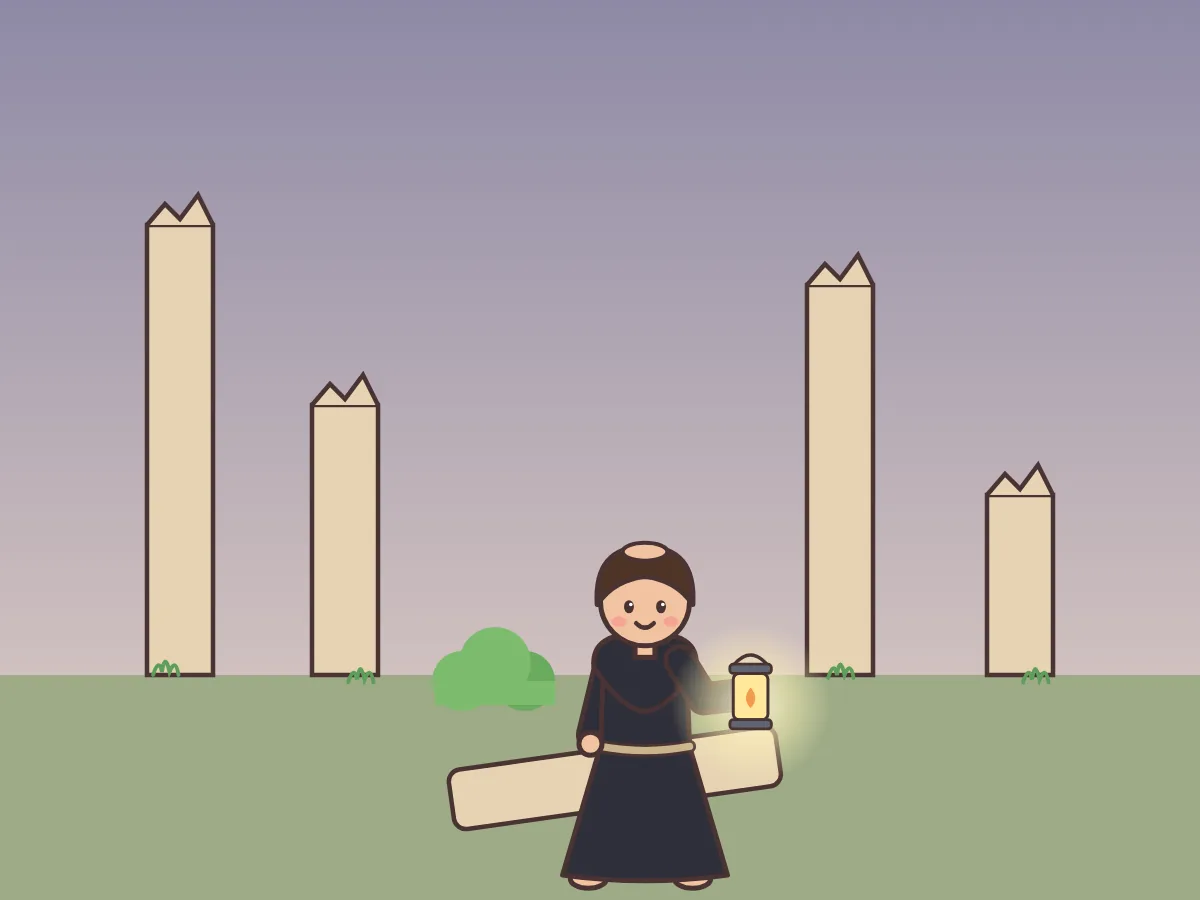
Broken Roman columns and a ruined temple overgrown with weeds after the fall of Rome, as a monk with a lantern walks past.

In the 400s, the Western Roman Empire collapsed under invasions. Cities shrank, schools closed and much learning was lost. Into this darkness God sent men and women who left everything to seek Him in prayer: monks and nuns.
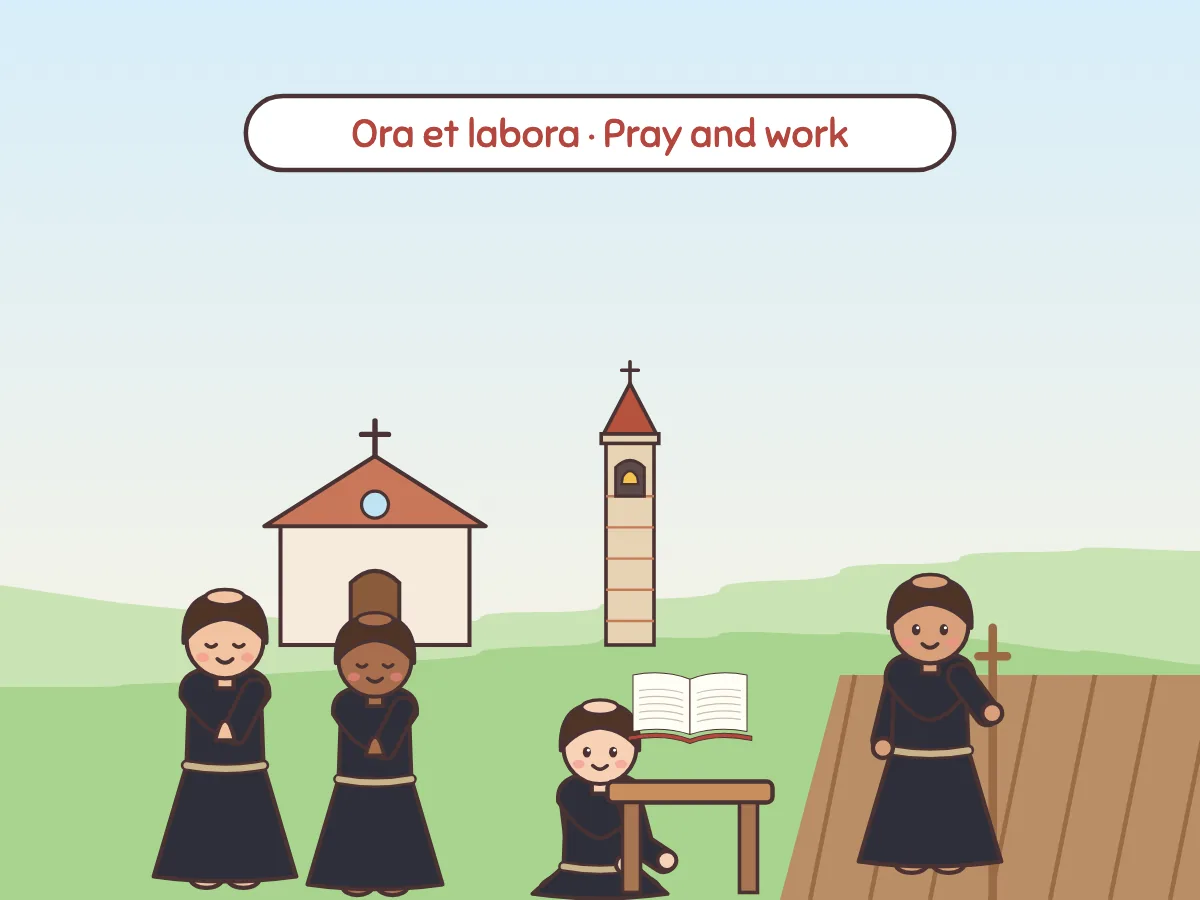
Benedictine monks at their monastery: some praying in the chapel, some working in the fields and one copying a book: ora et labora, pray and work.

Saint Benedict, who lived around 480 to 547, wrote a Rule for monks, summed up in two words: ora et labora, “pray and work.” Monks gathered several times a day to pray the Psalms, worked in fields and workshops, welcomed every guest as Christ and copied books by hand. His sister, Saint Scholastica, led a community of nuns.
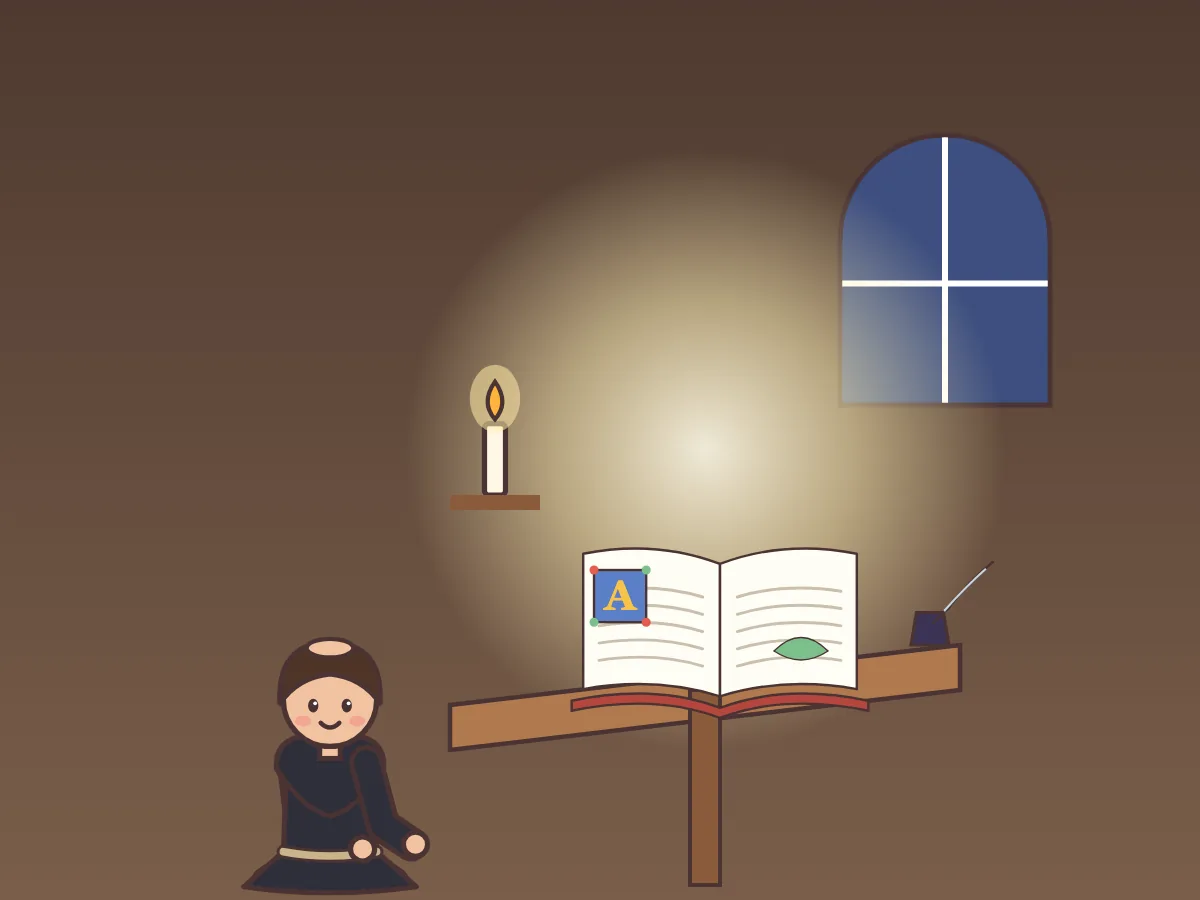
A monk at a slanted desk painting a beautiful illuminated manuscript with golden letters, by candlelight.

Monasteries became centers of faith, farming, medicine and learning. Monks copied the Bible and the works of ancient writers in beautiful illuminated manuscripts. Much of what we know of the ancient world survived because monks copied it.
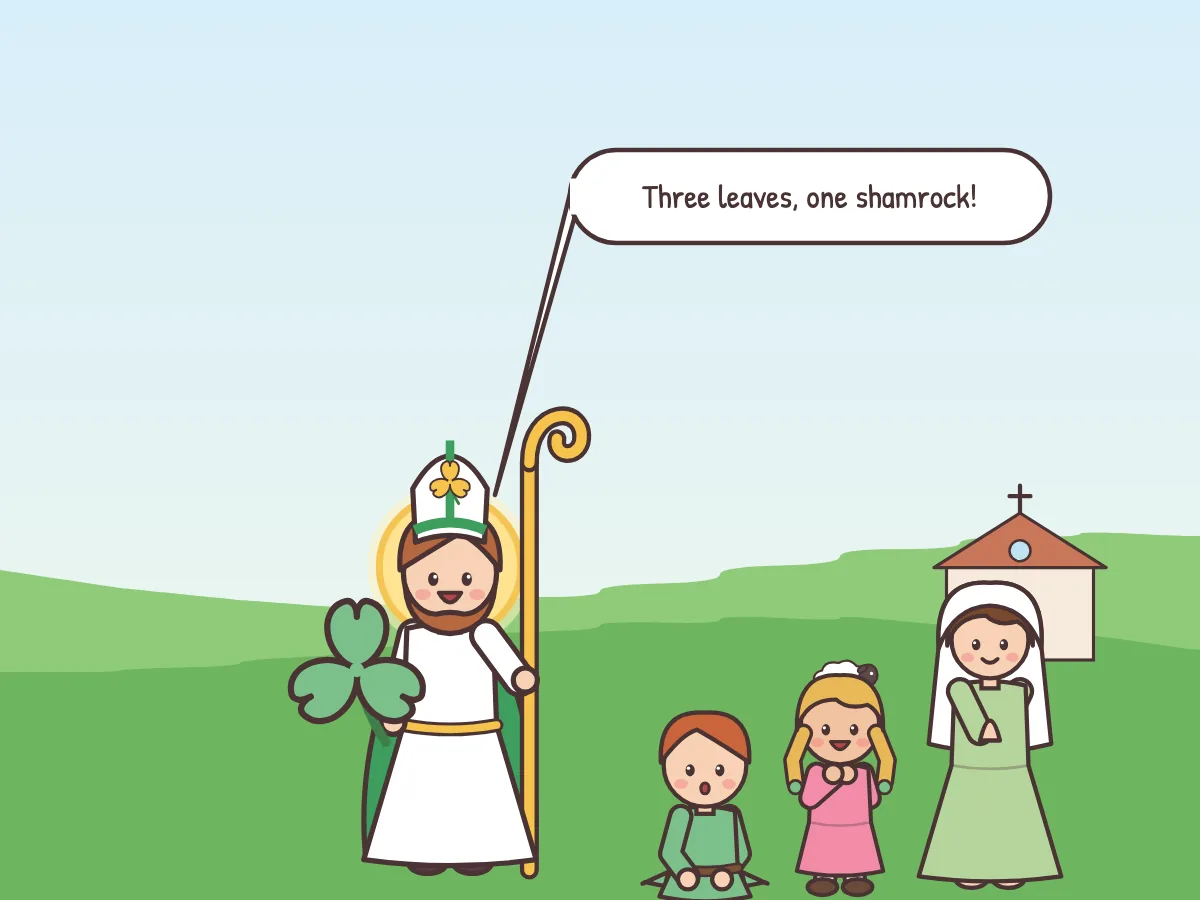
Saint Patrick, in green with his shamrock, teaching a family in Ireland about the Holy Trinity.

Missionaries carried the Gospel to new peoples. Saint Patrick, once a slave in Ireland, returned to bring the faith to the Irish. Saint Augustine of Canterbury went to England and Saint Boniface to Germany. Saints Cyril and Methodius went to the Slavic peoples and invented an alphabet so they could have the Bible and the liturgy in their own language.
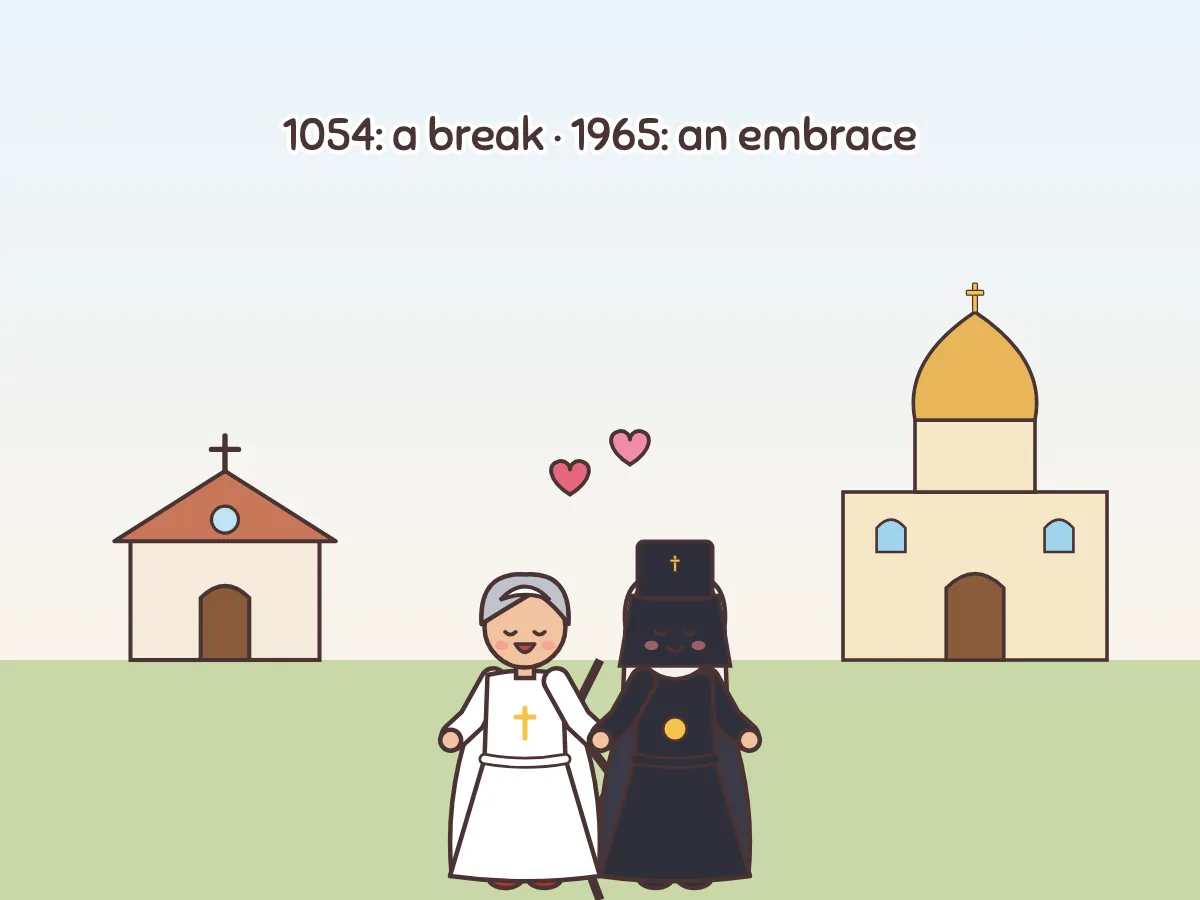
A Latin church and a domed Eastern church with a crack between them, and Pope Paul VI and Patriarch Athenagoras embracing across the gap in 1965.

Sadly, Christians also grew apart. Over centuries, the Greek-speaking East and the Latin-speaking West disagreed about authority, the Creed and customs, and in 1054 they broke communion. This is called the East-West Schism. The Orthodox Churches still share the sacraments and apostolic succession, and in 1965 Pope Saint Paul VI and Patriarch Athenagoras lifted the old excommunications. We pray for full unity.
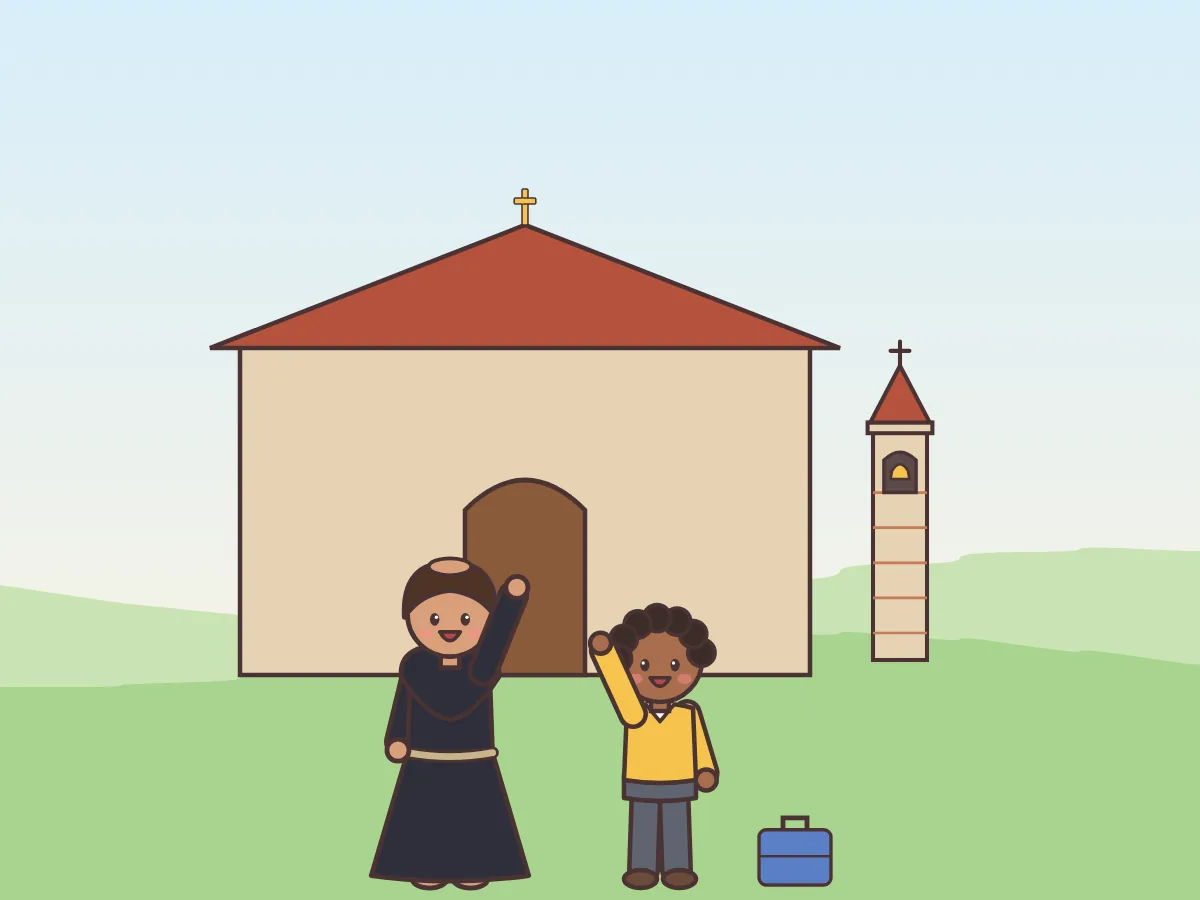
A teenager visiting a monastery today, welcomed at the door by a smiling monk, with the bell tower behind them.

Monastic life continues today. Benedictines, Carmelites and many others still pray the Liturgy of the Hours and welcome guests. Every Christian can learn from them to give God time each day, to work well and to treat every guest as Christ.

Catechism: CCC 818–822, 849–856, 914–933Scripture: Matthew 28:19–20 · Acts 2:42

Words to know

Tap a card to flip it
Keep this in your heart
Monks kept faith and learning alive, and missionaries carried Christ to new peoples.

Say it out loud three times. Tap a circle each time!

Quiz

  1. What was Saint Benedict's motto?
    Answer: Ora et labora: pray and work
  2. Why are monasteries important in history?
    Answer: Monks kept learning alive by copying books
  3. Who brought the faith to the Irish?
    Answer: Saint Patrick
  4. What did Cyril and Methodius create for the Slavic peoples?
    Answer: An alphabet for the Bible and liturgy
  5. What happened in 1054?
    Answer: The East-West Schism

Pray & do

Christ with me, Christ before me, Christ behind me, Christ in me, Christ beneath me, Christ above me, Christ on my right, Christ on my left, Christ when I lie down, Christ when I sit down, Christ when I arise, Christ in the heart of everyone who thinks of me, Christ in the mouth of everyone who speaks of me. Amen.

Activity

Make an illuminated letter: draw the first letter of your name in a decorated box, as the monks did, and write a short Bible verse beside it.

Family corner

Try a family “Rule of Benedict” for one day: set times to pray together (morning, a meal and evening), do a chore together, and welcome a guest or call a relative.

Lesson complete!

Today's big idea: After Rome fell, monks kept faith and learning alive, and missionaries brought the Gospel to new peoples.