
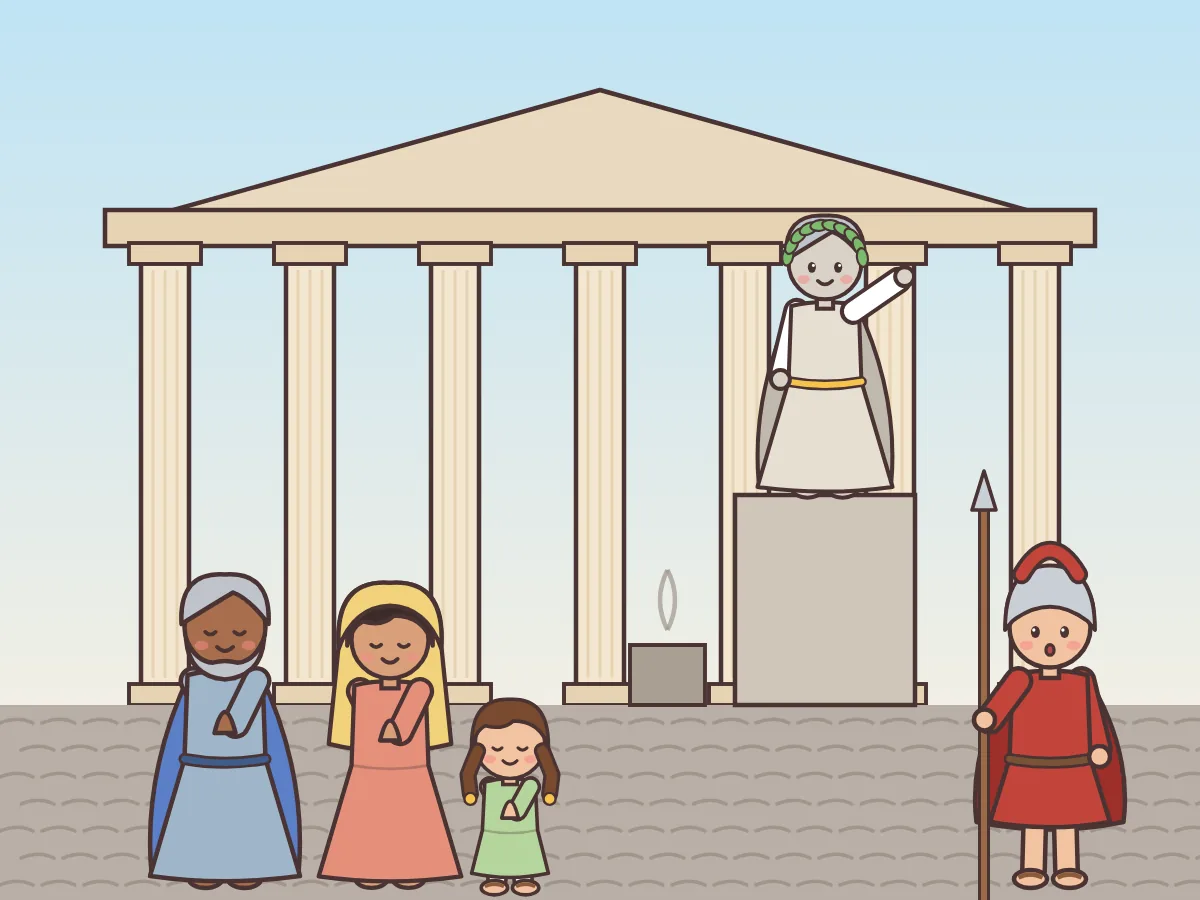
For about 250 years after Nero, being a Christian could cost your life. Christians refused to worship the Roman gods or burn incense to the emperor as a god, so they were seen as disloyal. Persecutions came in waves, and the worst, under Emperor Diocletian, began in 303.
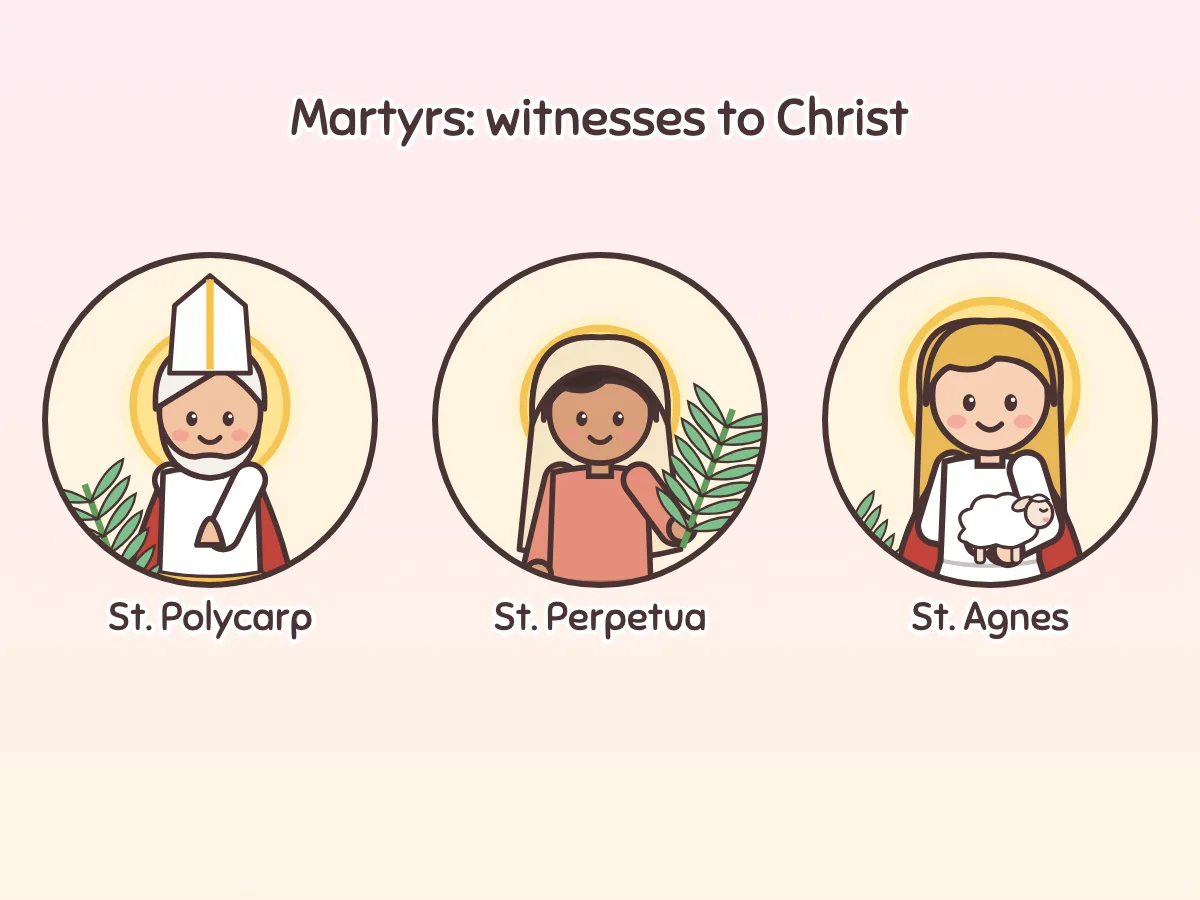
Those who died for their faith are called martyrs, from a Greek word meaning “witnesses.” Saint Polycarp, an old bishop, refused to curse Christ: “Eighty-six years I have served him, and he has done me no wrong.” Saint Perpetua, a young mother, and Saint Felicity, her servant, faced death together. Saint Agnes was only about thirteen.
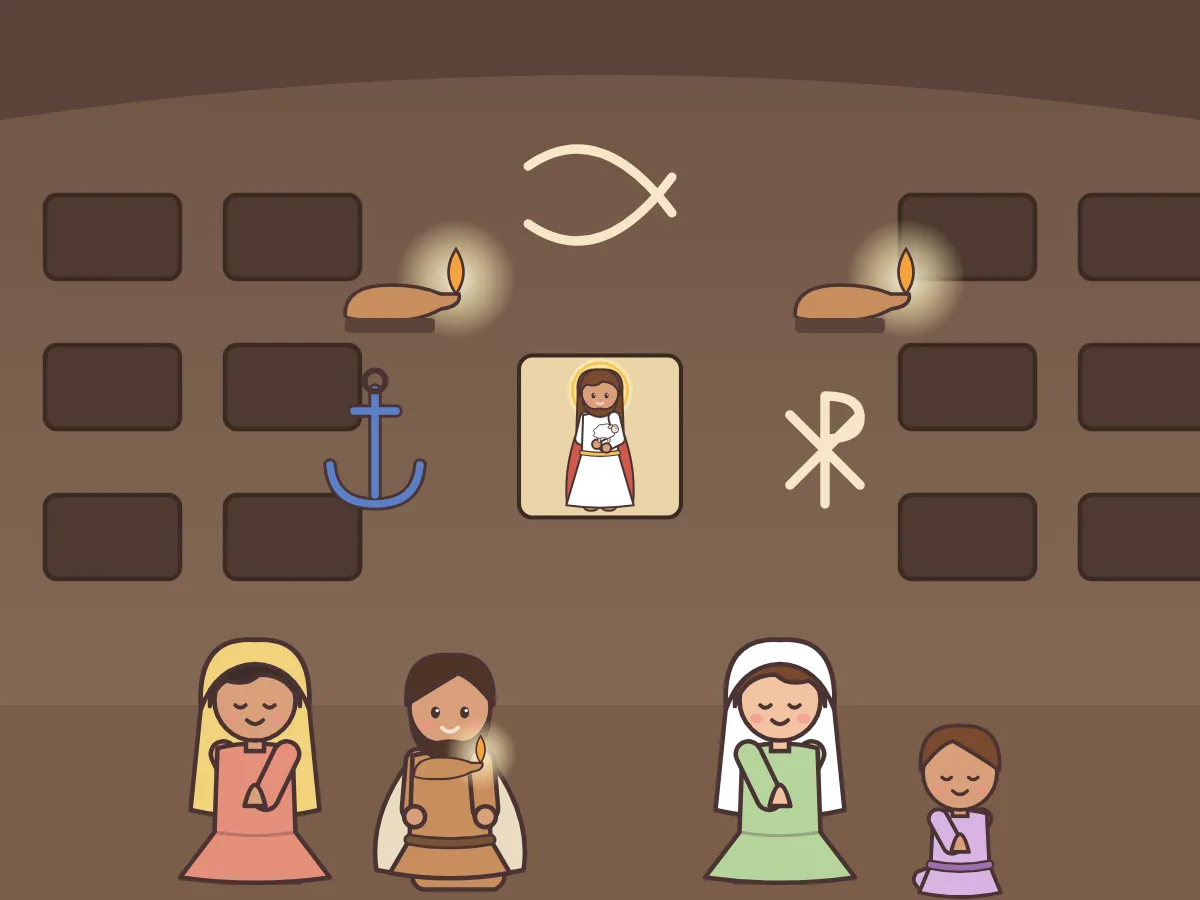
Christians often met in homes and buried their dead in the catacombs, underground passages outside Rome. On the walls they painted symbols such as the fish, the anchor and the Good Shepherd. The Greek word for fish, ICHTHYS, spelled out the first letters of “Jesus Christ, Son of God, Savior.”
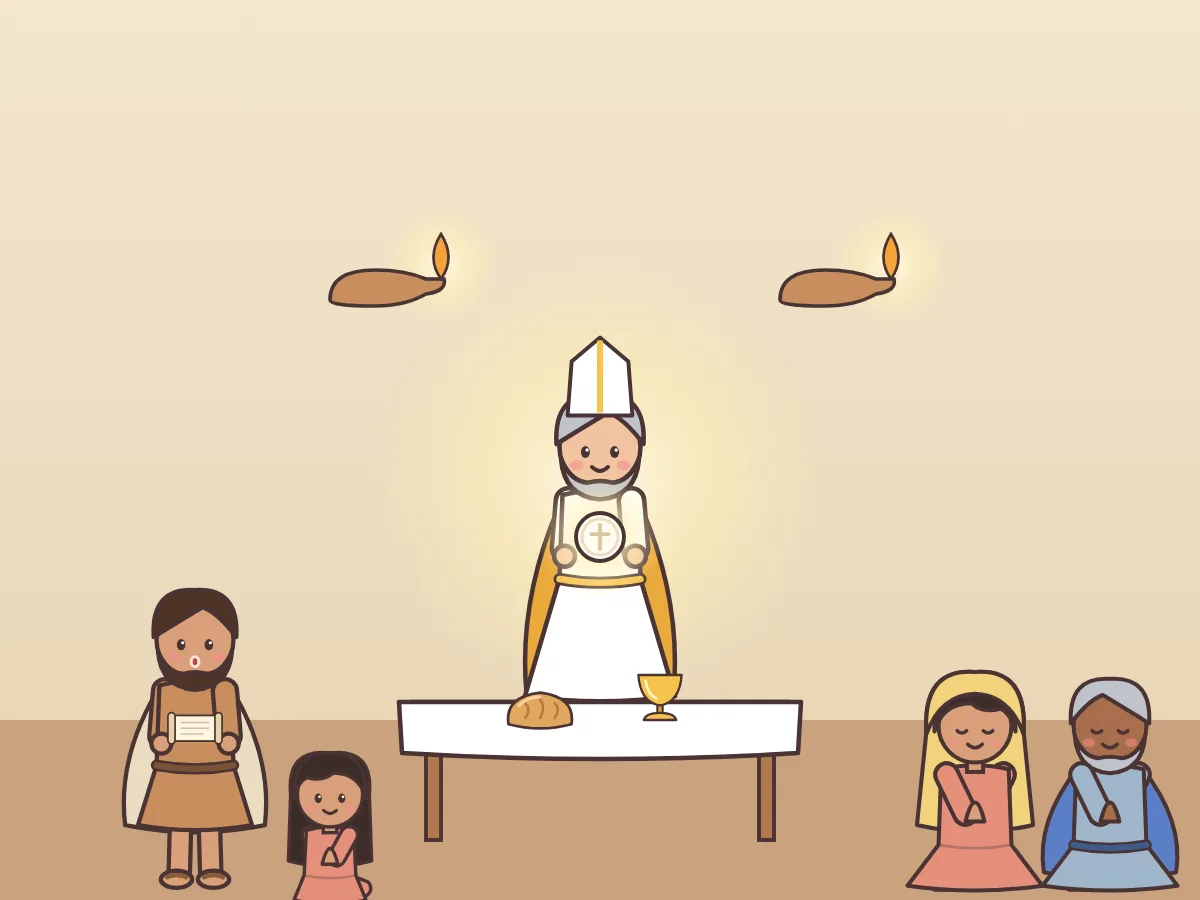
Around the year 155, Saint Justin Martyr described a Sunday Mass to the emperor: readings from the apostles and prophets, a homily, prayers, the offering of bread and wine, a great prayer of thanksgiving and Communion. It sounds very much like the Mass today.
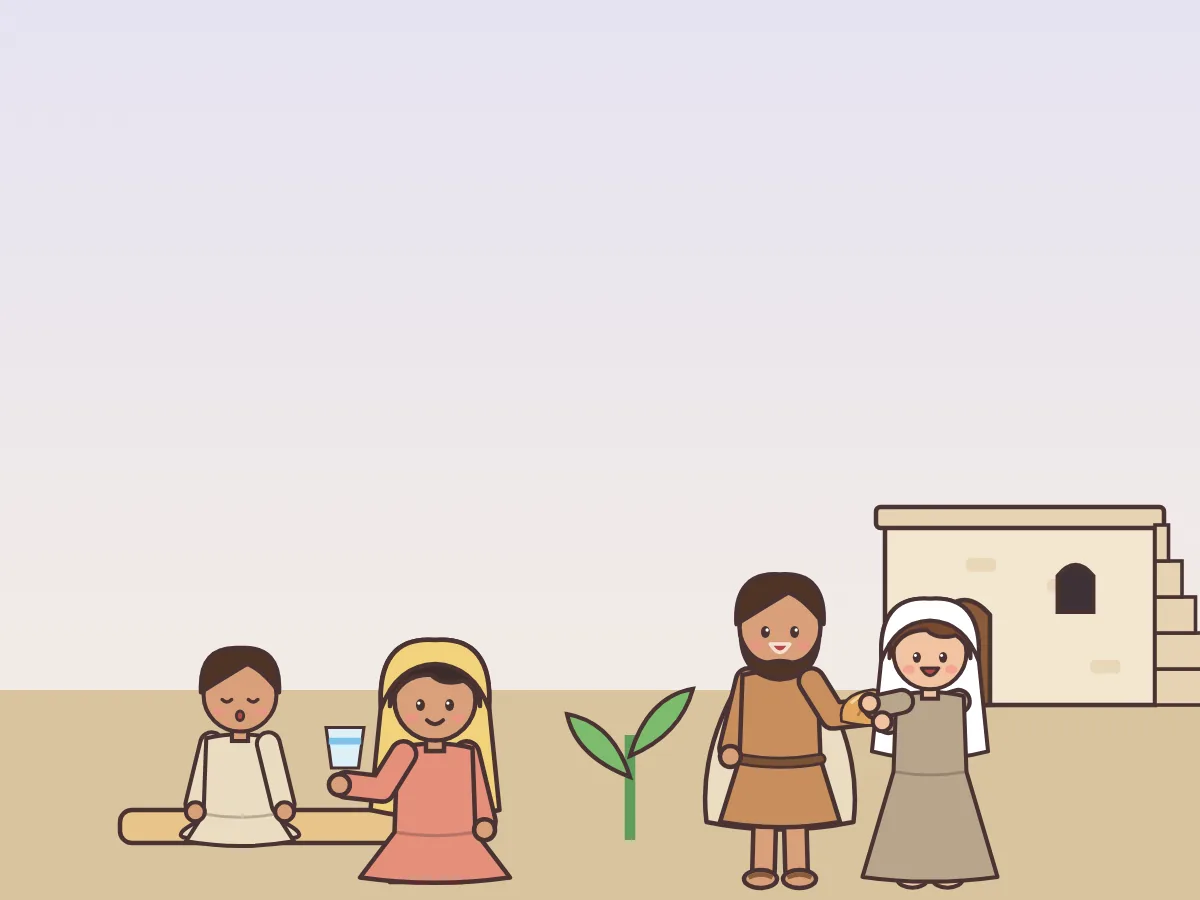
Persecution did not stop the Church; it grew. The writer Tertullian said that the blood of martyrs is the seed of Christians. People were amazed by Christians who forgave their persecutors, nursed the sick during plagues, rescued abandoned babies and treated slaves as brothers and sisters.
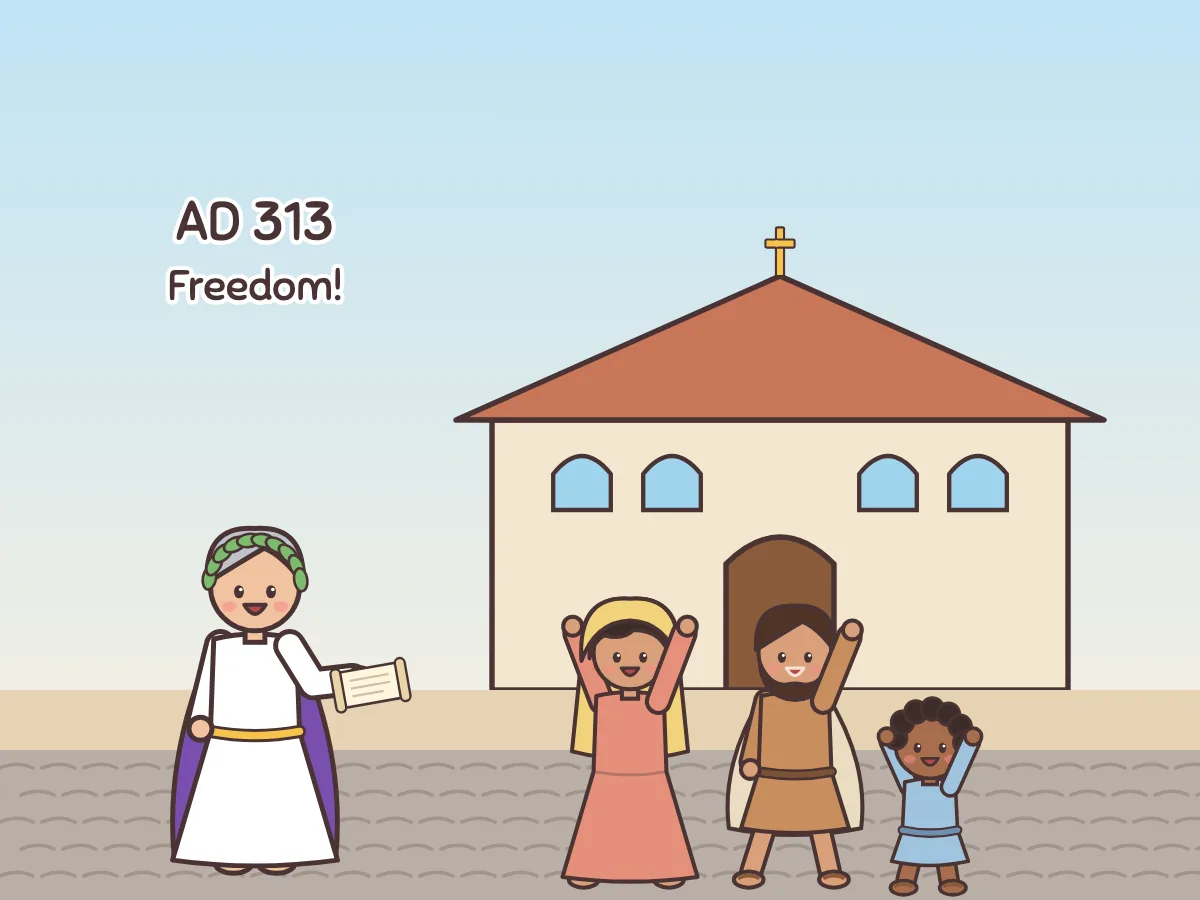
In 313 Emperor Constantine granted Christians freedom of religion in the Edict of Milan. They could worship openly and build churches. But martyrdom has never ended: Saint John Paul II said that at the end of the second millennium the Church had once again become a Church of martyrs.