
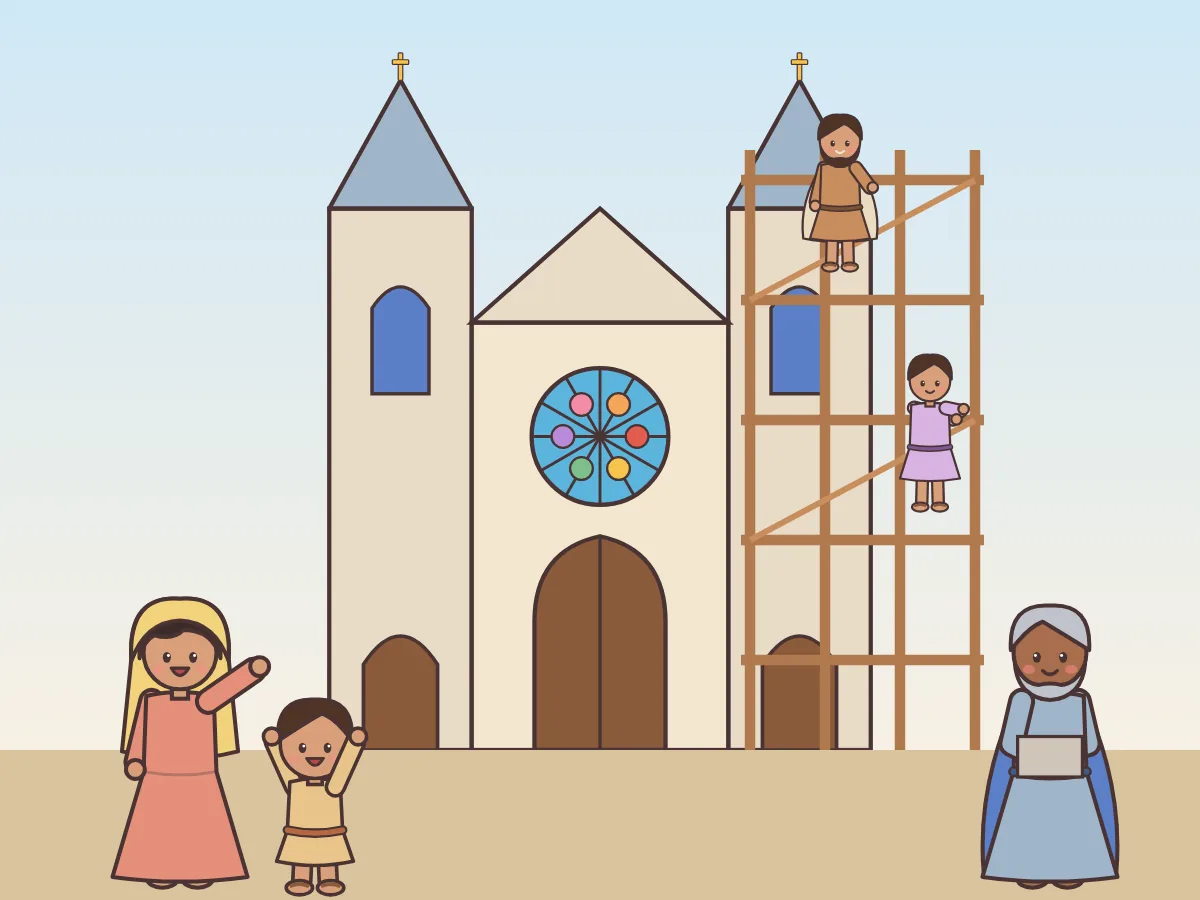
Between about 1000 and 1400, the Catholic faith shaped all of life in Europe. Towns built soaring Gothic cathedrals with stained-glass windows that taught Bible stories to people who could not read. A cathedral could take a hundred years to build: people built for God and for their grandchildren, not for themselves.
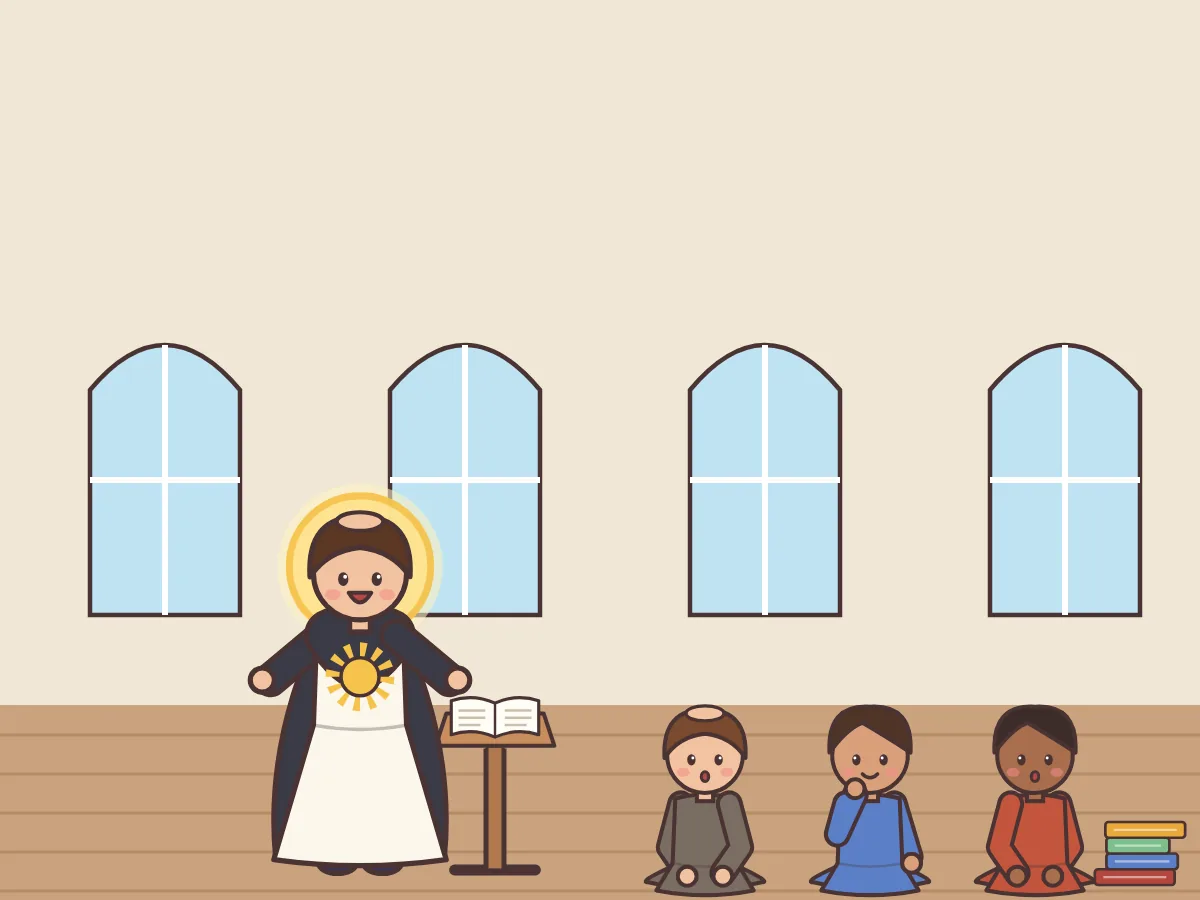
The Church founded the first universities, in cities like Bologna, Paris and Oxford, where students studied theology, law, medicine and philosophy. Saint Thomas Aquinas, the greatest of their teachers, showed that faith and reason work together. His Summa Theologiae is still studied today.
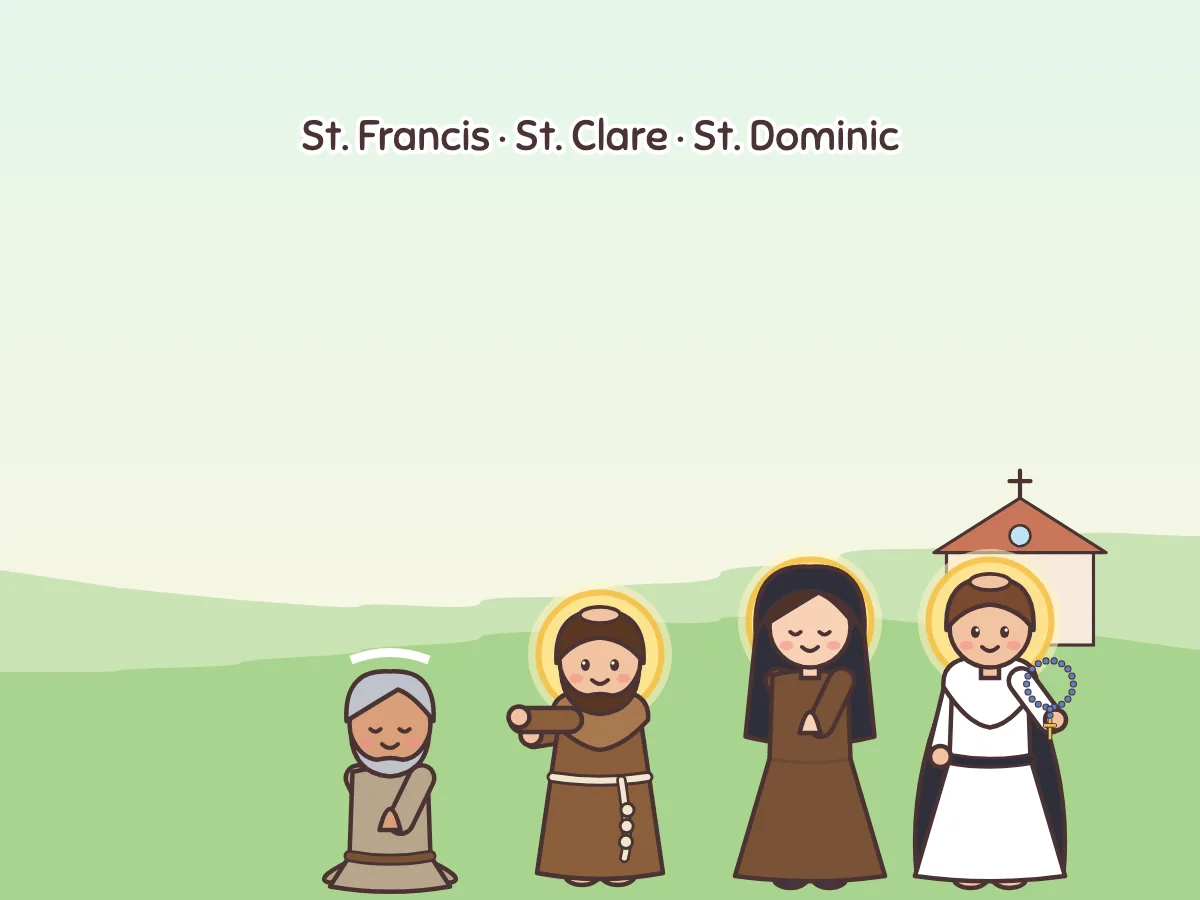
When parts of the Church grew rich and worldly, God raised up saints to renew it. Saint Francis of Assisi gave away everything to live in poverty, preach the Gospel and care for lepers. Saint Clare founded the Poor Clares, and Saint Dominic founded the Order of Preachers to teach the faith. They were called mendicants, “beggars,” because they lived on what people gave them.
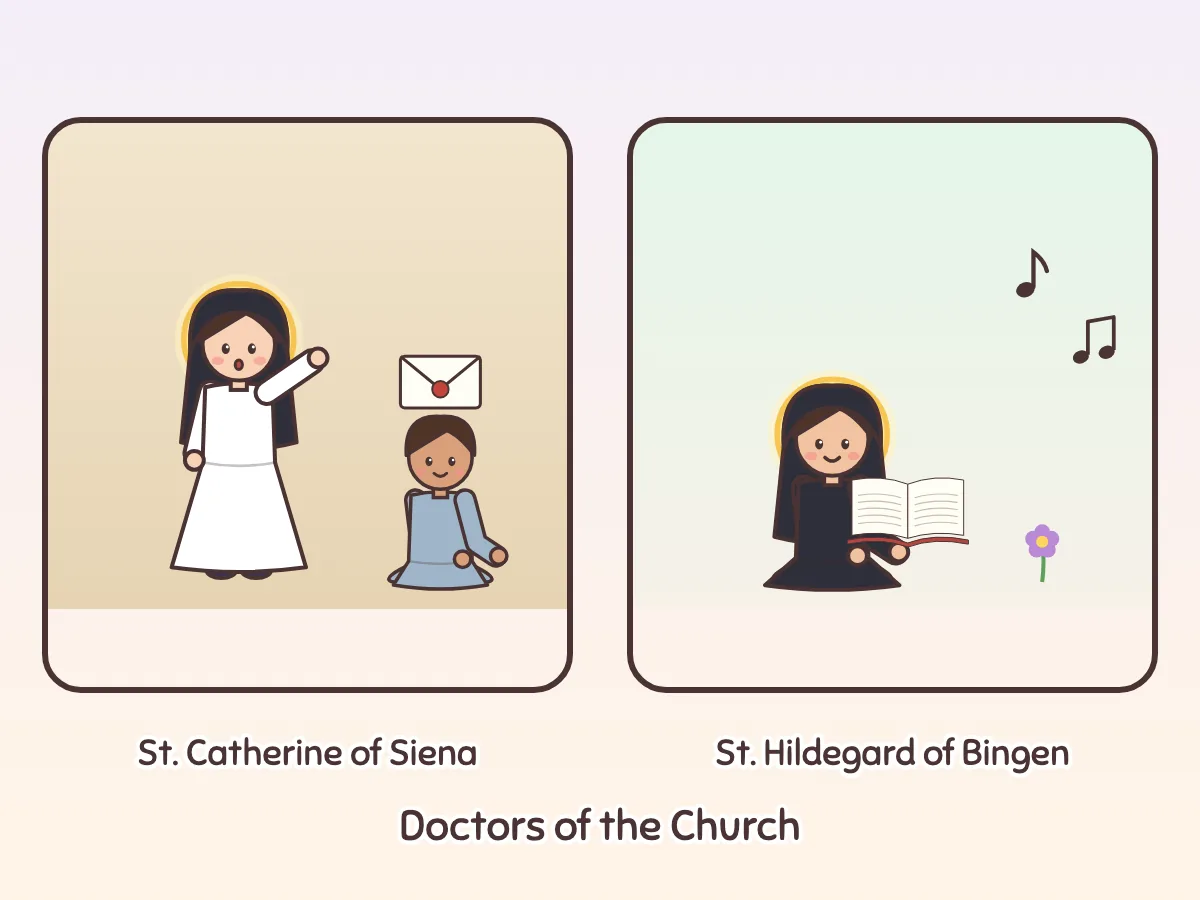
Women saints shaped the Church too. Saint Hildegard of Bingen was an abbess, a composer and a writer on nature and medicine. Saint Catherine of Siena, who had little schooling, dictated bold letters to popes and urged Pope Gregory XI to return to Rome from Avignon in France. Both are Doctors of the Church.
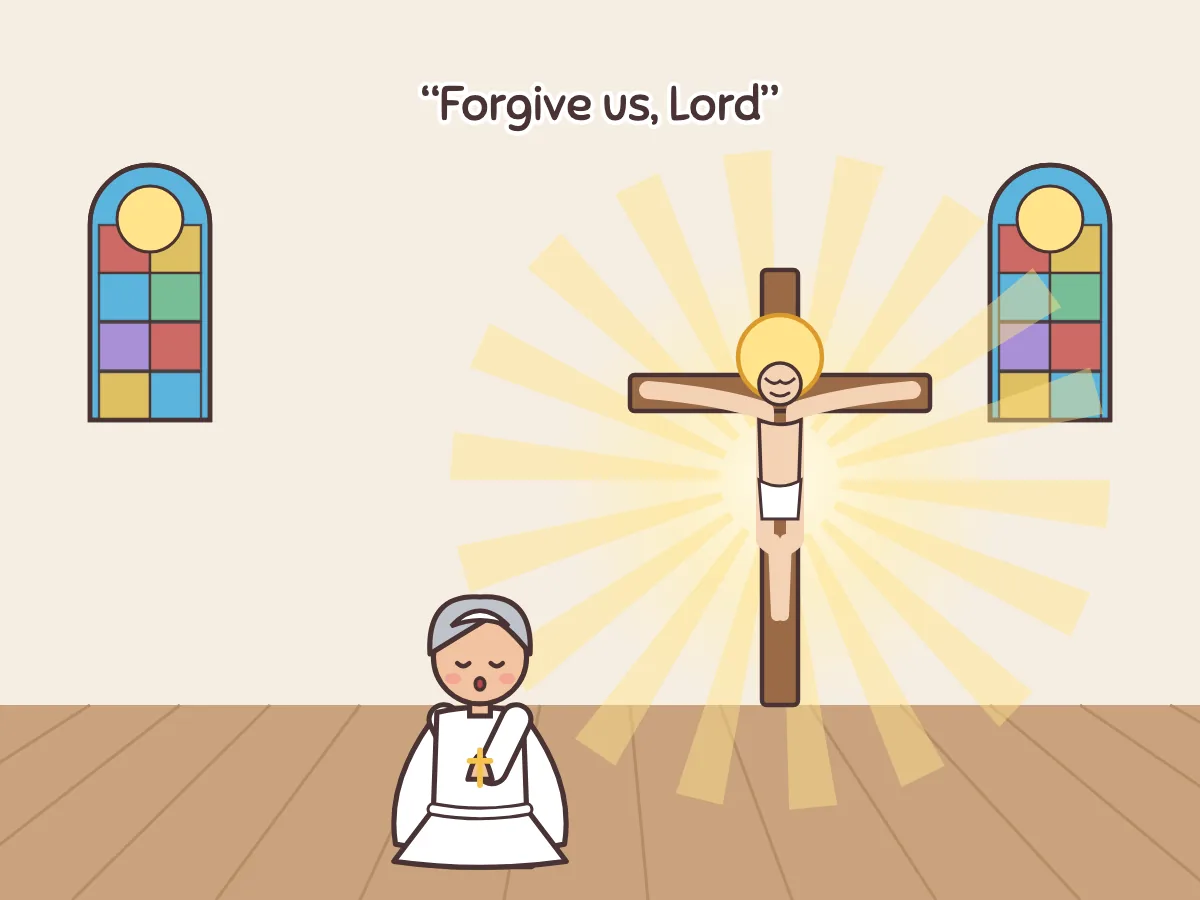
The Middle Ages had real failures too. Some crusades, meant to defend Christians and pilgrims in the Holy Land, turned into cruelty against innocent people, including the sack of the Christian city of Constantinople in 1204. In the year 2000, Saint John Paul II asked God's forgiveness for the sins of Christians in history. Being honest about sin is part of being Catholic.
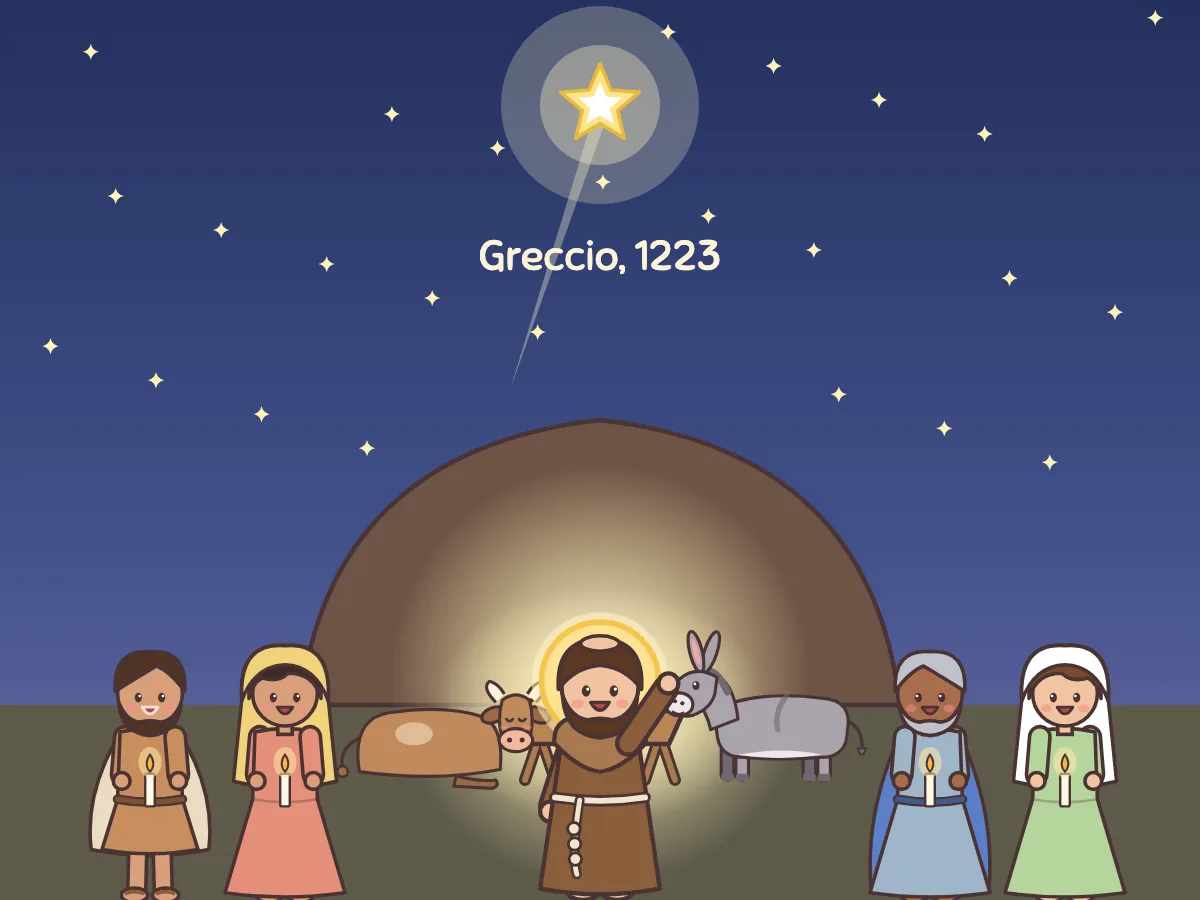
Ordinary people's faith flourished in customs we still have: pilgrimages, the Rosary, feast-day processions, and the Christmas crib, made popular by Saint Francis, who set up a living Nativity scene in Greccio in 1223. Faith was part of everyday life.