
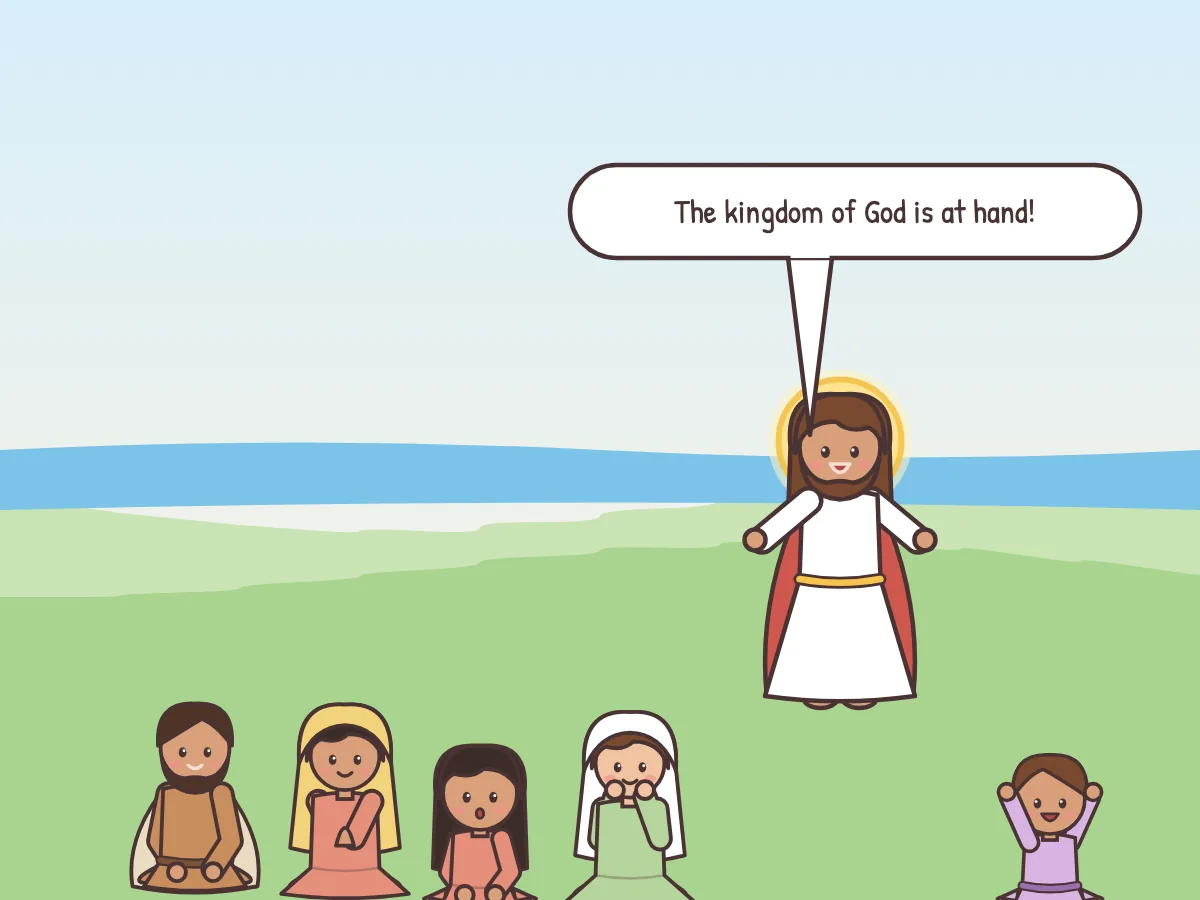
Jesus' first preaching was short: “The kingdom of God is at hand; repent, and believe in the gospel.” The Kingdom of God is not a place on a map. It is God's reign of love, truth and peace. It begins wherever people welcome Jesus, and it will be complete at the end of time.
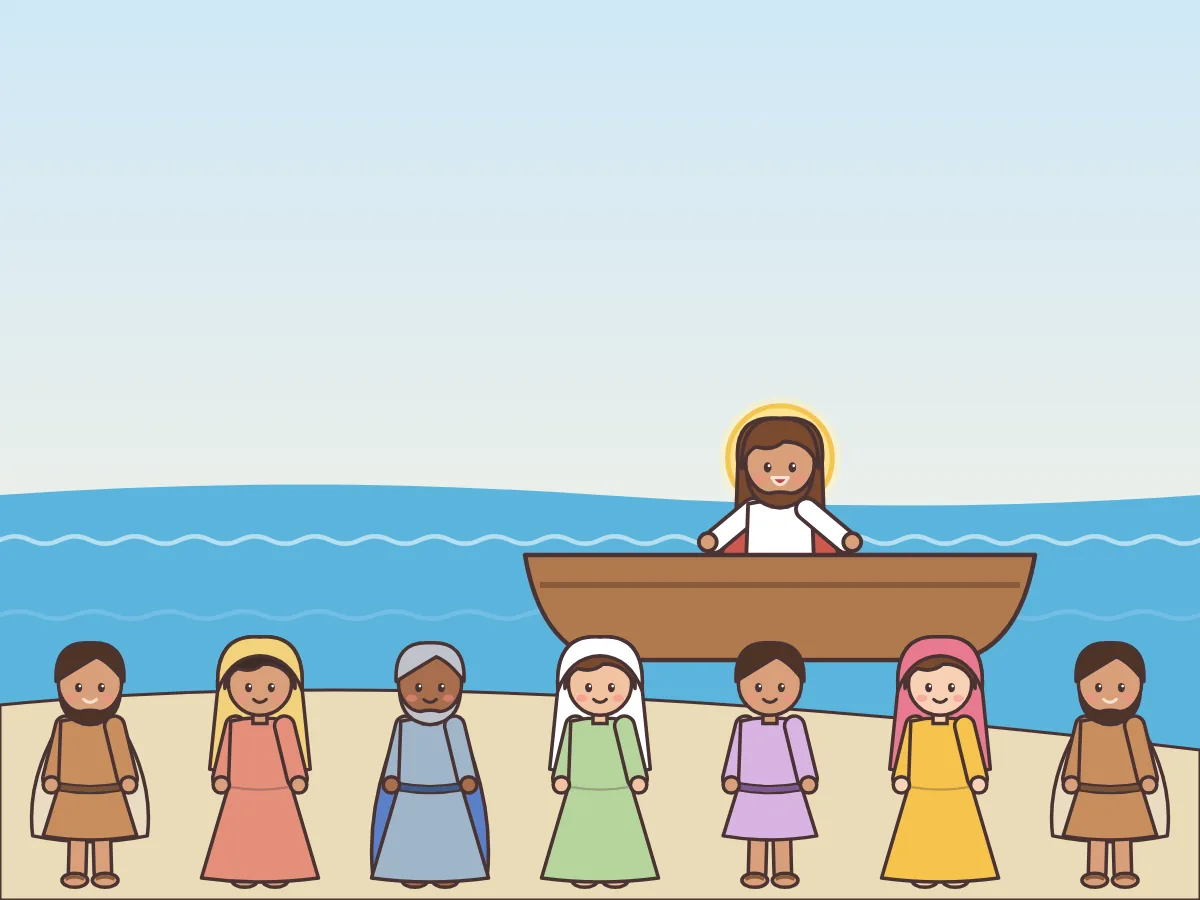
Jesus often taught in parables: short stories from everyday life with a deeper meaning. Farmers, seeds, coins, sheep and banquets were things everyone could picture. But parables also make us think. They ask: Which person in the story am I? Will I welcome the Kingdom?
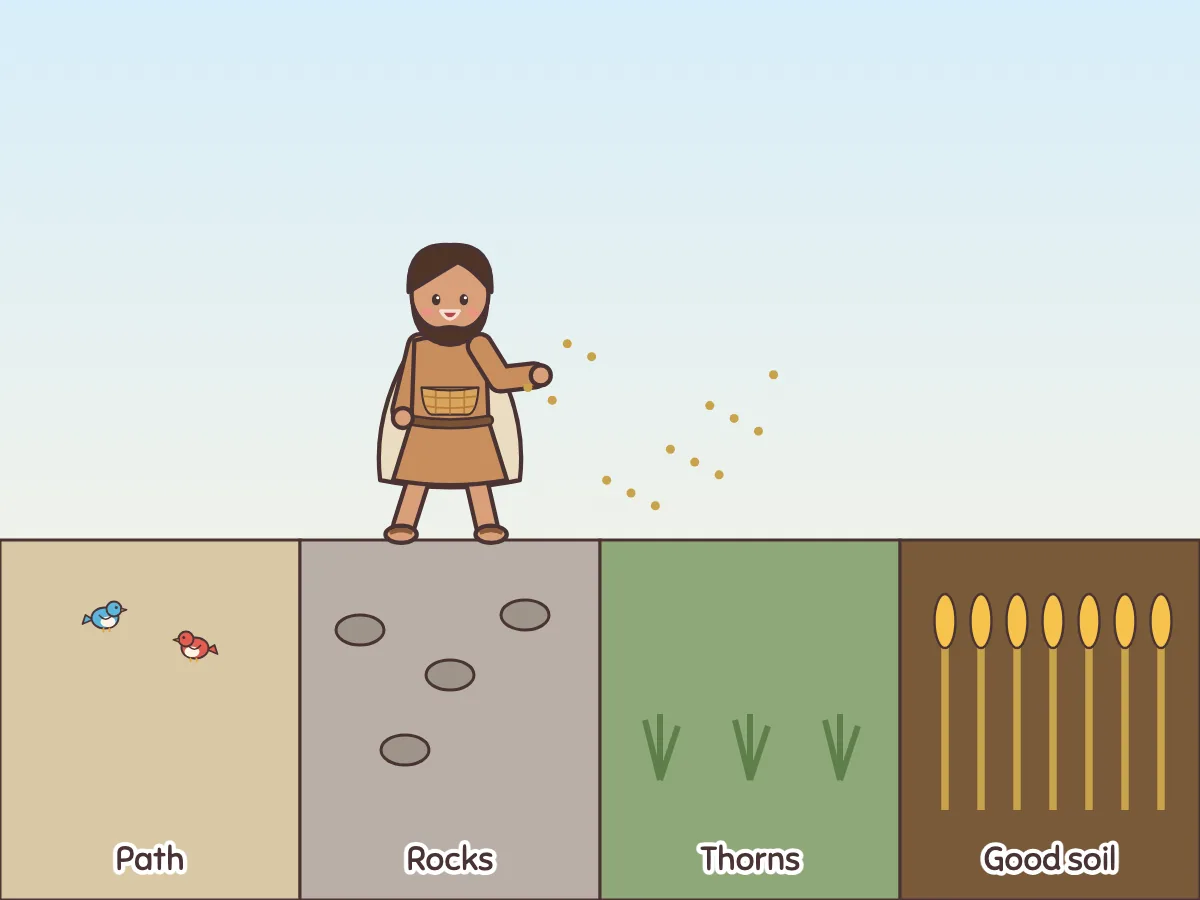
In the parable of the sower, seed falls on a path, on rocky ground, among thorns and on good soil. The seed is God's word, and the kinds of ground are our hearts. Some hear it but forget; some give up when life gets hard; some are choked by worries and riches; and some bear fruit a hundredfold.
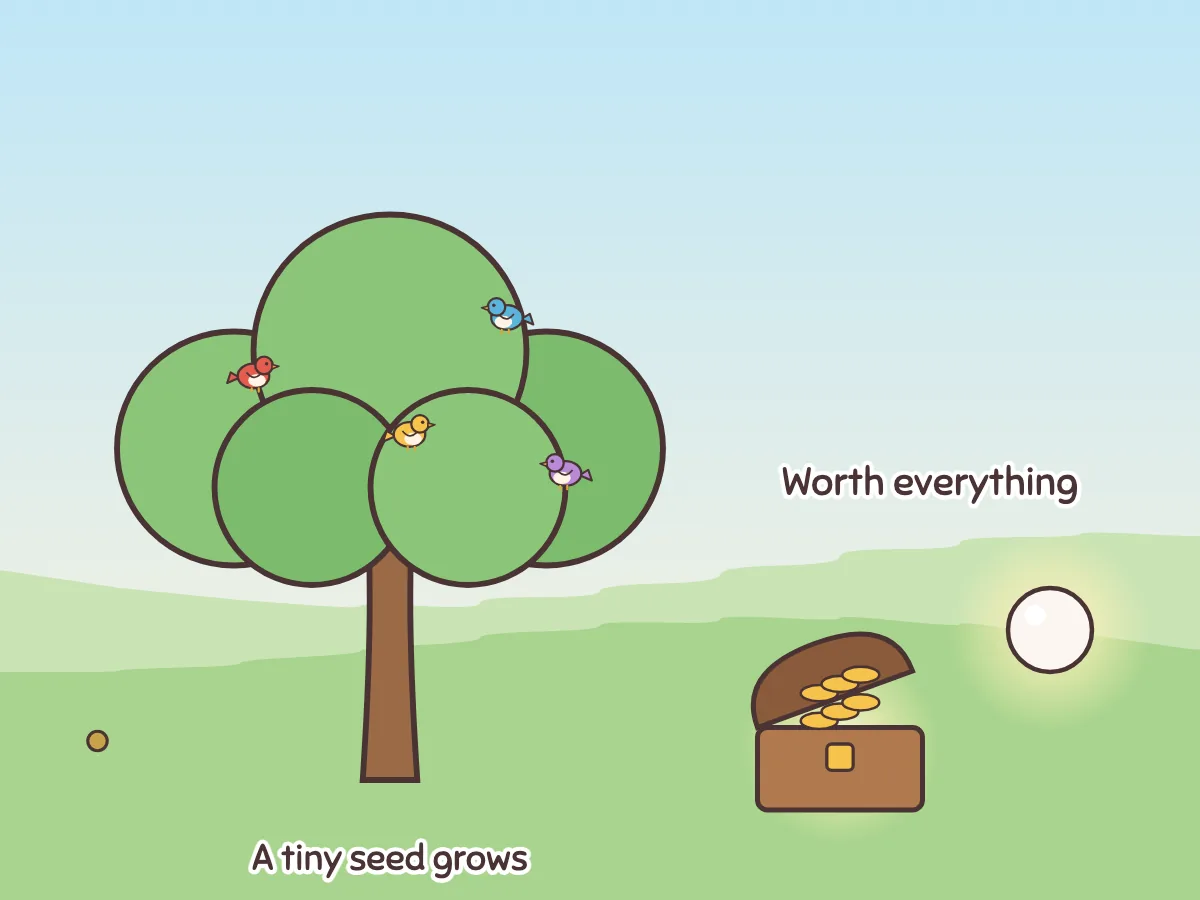
Other parables show how the Kingdom grows: like a tiny mustard seed that becomes a great shrub where birds can nest, or a pinch of yeast that leavens all the dough. Others show what it is worth: a treasure hidden in a field, or a pearl of great price, worth giving up everything for.
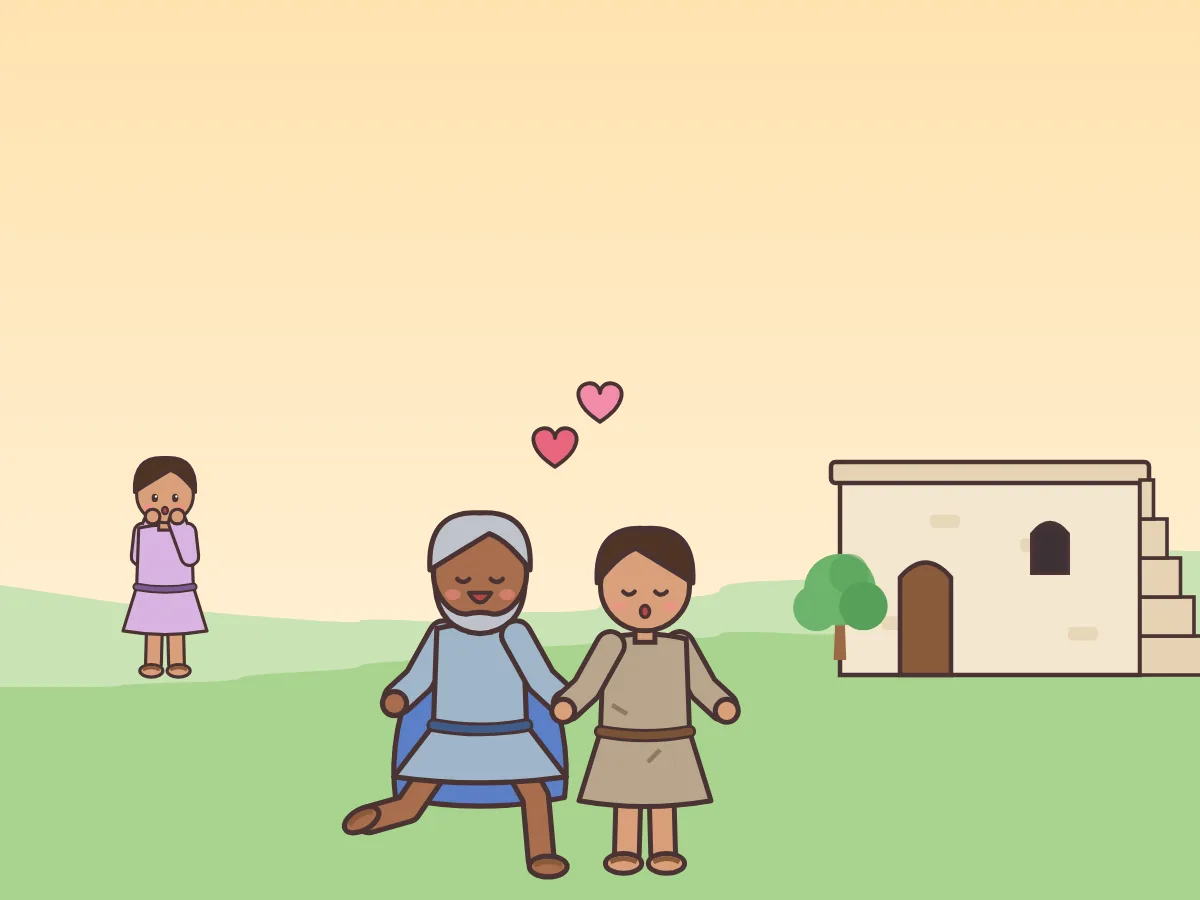
Many of Jesus' best-loved parables are about mercy. A shepherd leaves ninety-nine sheep to find the one that is lost. A father runs to embrace his son who had wasted everything. A Samaritan, an outsider, cares for a wounded stranger. God's Kingdom belongs to those who receive mercy and show it.
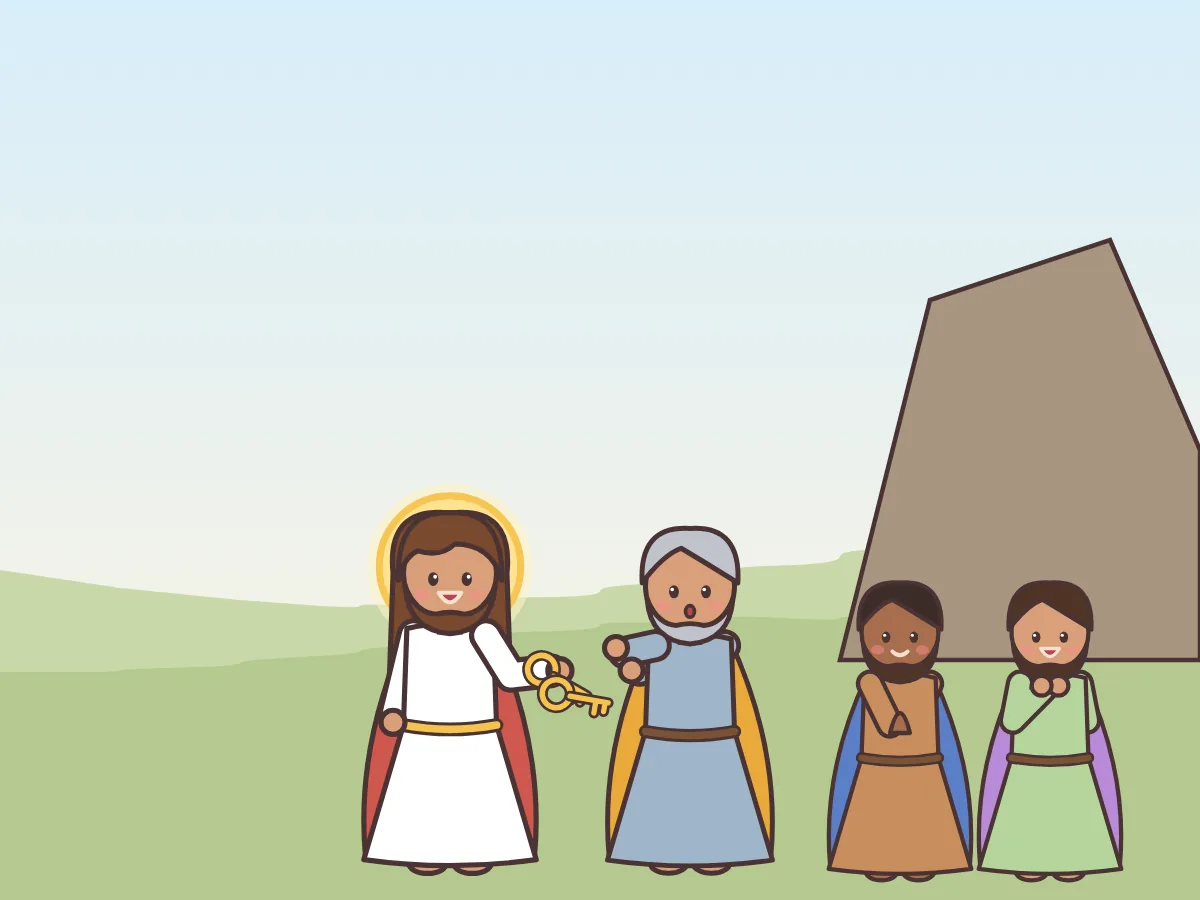
The Kingdom is open to everyone, especially the poor, sinners and the little ones, but it asks for a choice. Jesus gave Peter the keys of the Kingdom, and the Church is the seed and beginning of the Kingdom on earth. Each time we pray “Thy kingdom come,” we ask God to reign in our hearts and in the world.