
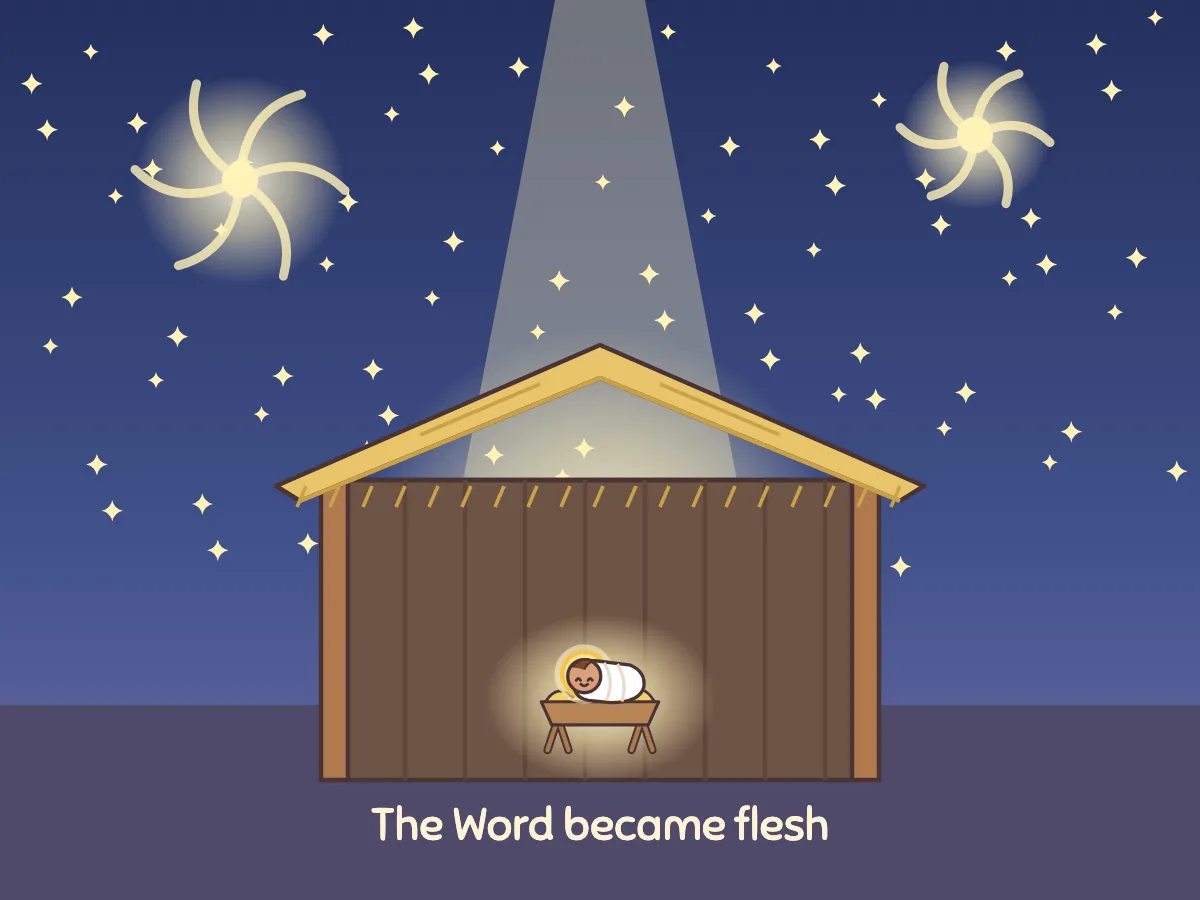
John's Gospel begins before time: “In the beginning was the Word, and the Word was with God, and the Word was God.” Then comes the most astonishing sentence ever written: “And the Word became flesh and dwelt among us.” God the Son became a man. The Church calls this the Incarnation, which means “taking flesh.”
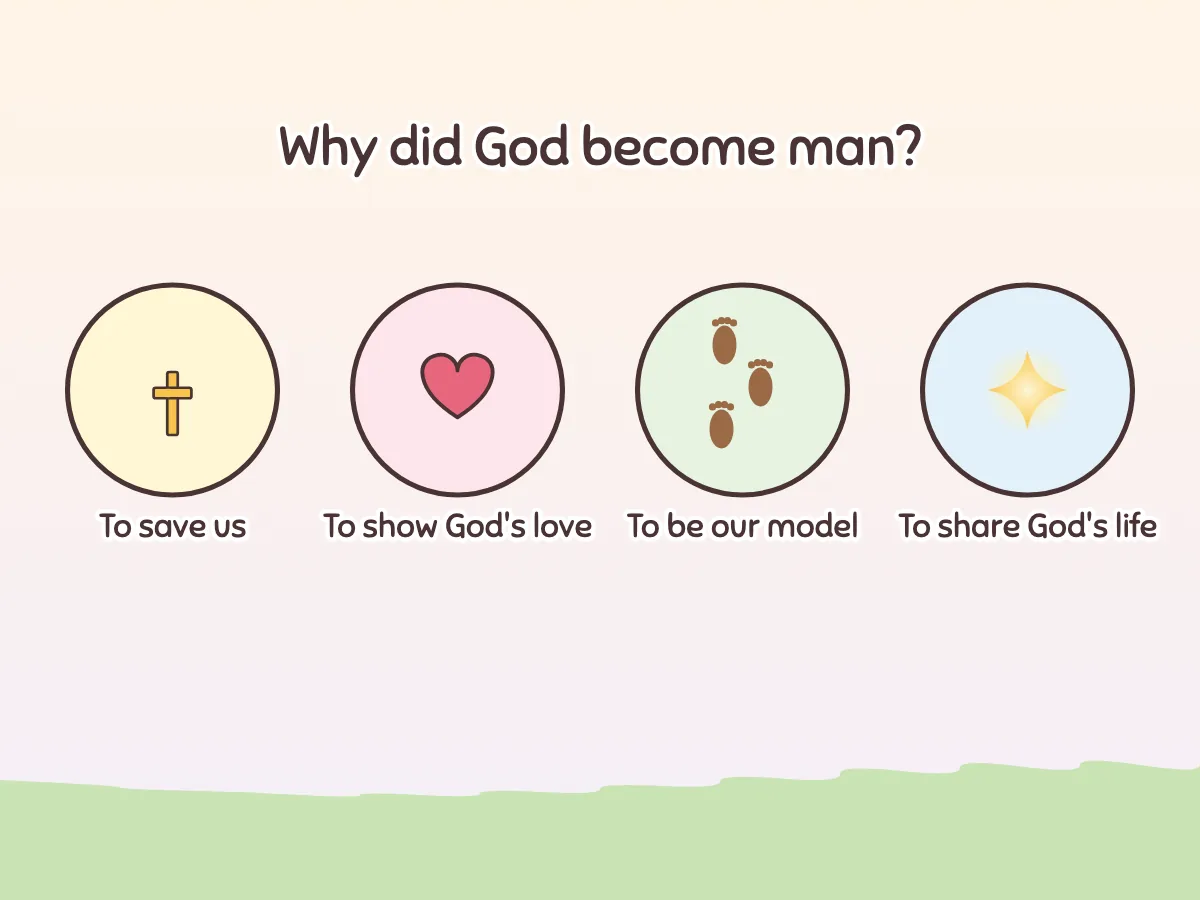
Why did God become man? The Catechism gives four reasons:
- To save us by reconciling us with God.
- So that we might know how much God loves us.
- To be our model of holiness.
- To make us share in God's own life.
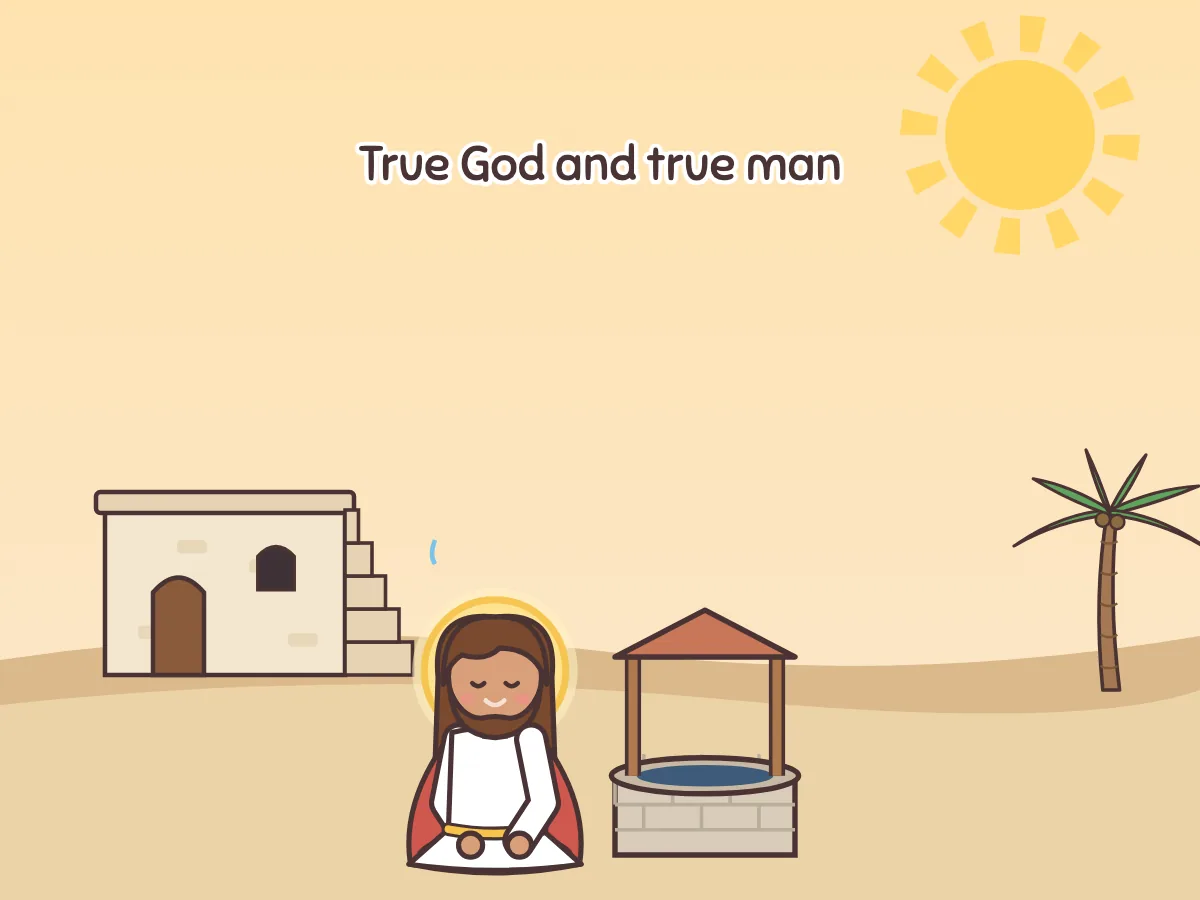
Jesus is not part God and part man, and He is not God pretending to be a man. He is one divine Person with two natures, fully divine and fully human. He has a human body and soul, a human mind and a human will. He felt hunger, tiredness, joy and sorrow. He is like us in all things but sin.
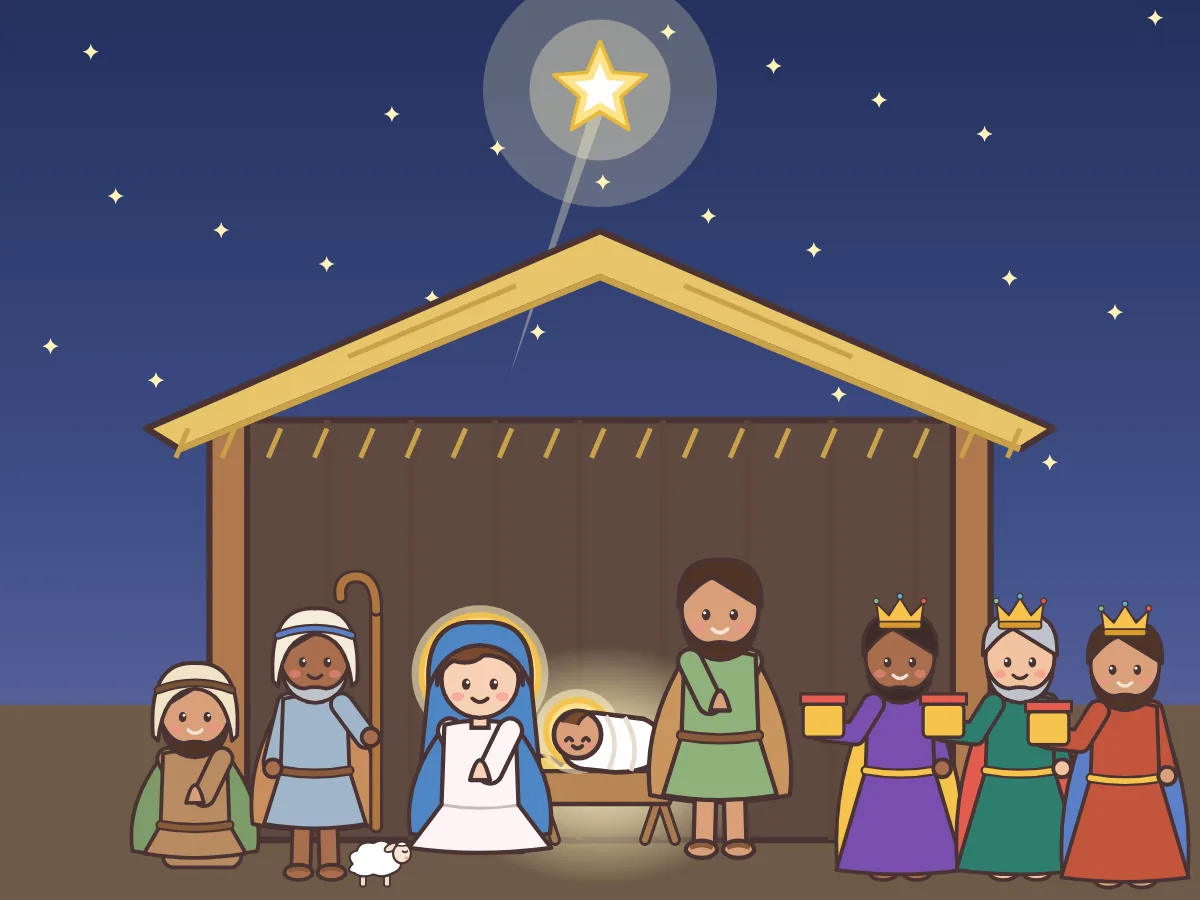
Mary said yes at the Annunciation, and Jesus was conceived by the power of the Holy Spirit. He was born in Bethlehem and laid in a manger, because there was no room for them at the inn. Poor shepherds came first; then the Magi from the East, a sign that Jesus came for all nations.
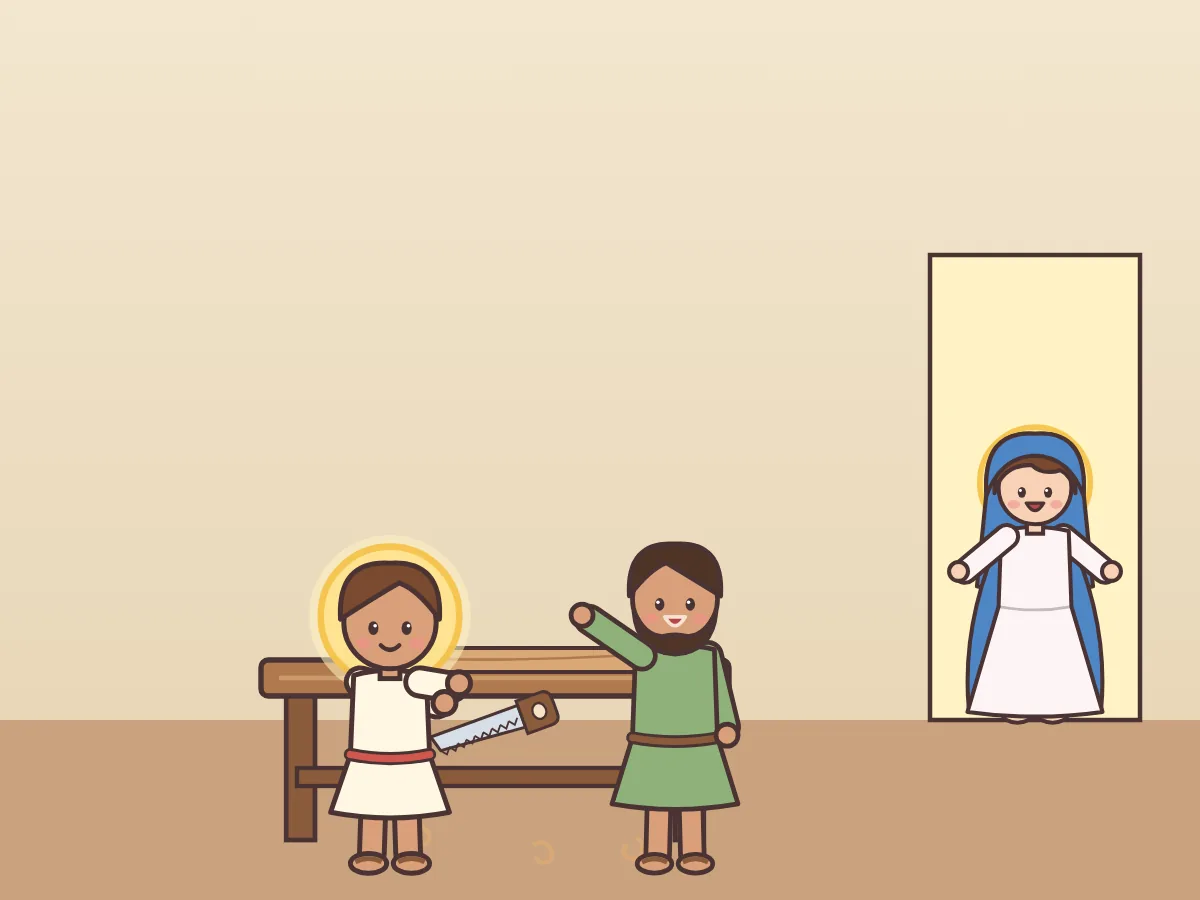
For about thirty years Jesus lived an ordinary life in Nazareth, working with Joseph as a carpenter and obeying Mary and Joseph. The Church calls these the hidden years. They show that ordinary life, with family, work and prayer, can be holy.
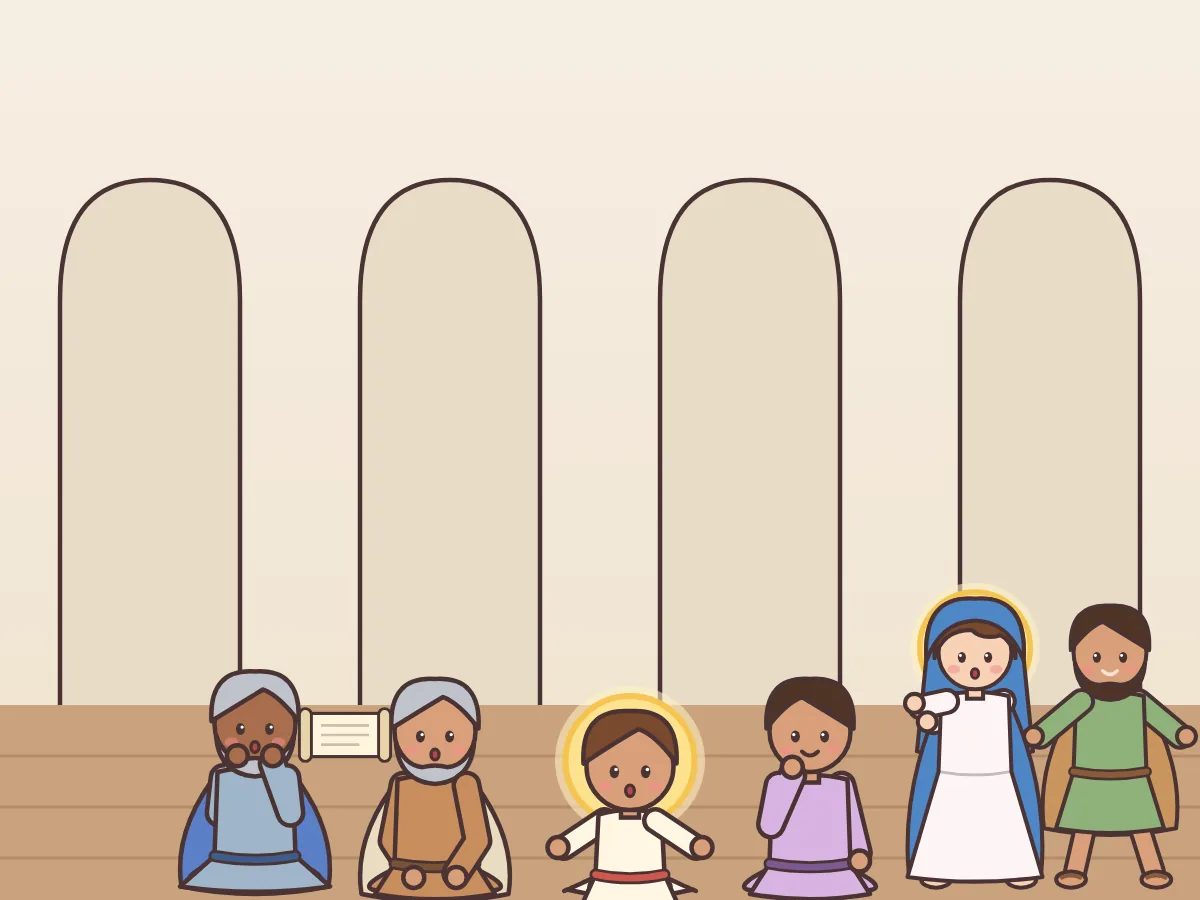
When He was twelve, Jesus stayed behind in the Temple, listening to the teachers and asking questions. When Mary and Joseph found Him after three days, He said, “Did you not know that I must be in my Father's house?” Then He went home with them and grew in wisdom and age and favor before God and people.