
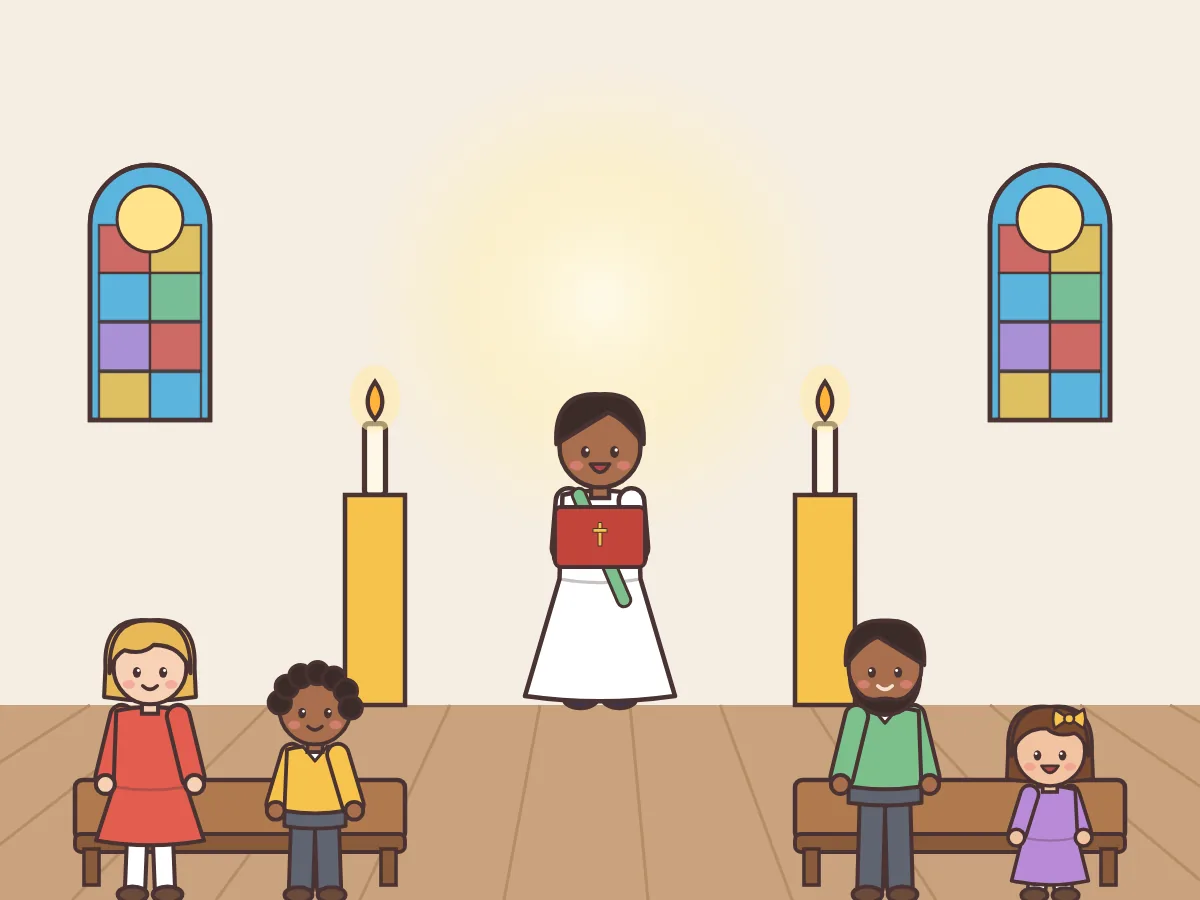
“Gospel” means “good news.” The four Gospels, by Matthew, Mark, Luke and John, are the heart of all the Scriptures, because Jesus is their center. That is why we stand for the Gospel at Mass, and the priest or deacon kisses the book after reading it.
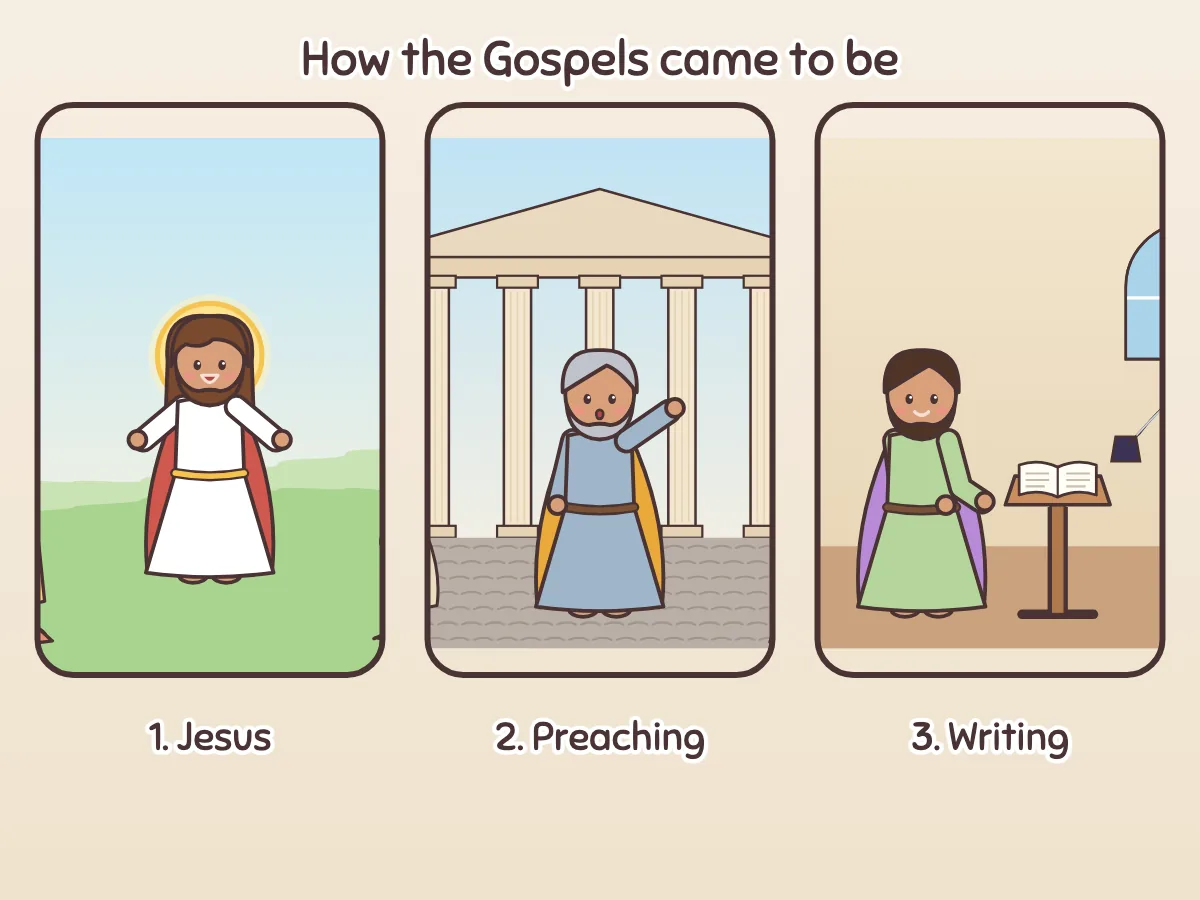
The Gospels were formed in three stages:
- The life and teaching of Jesus: what He really did and taught.
- The preaching of the apostles: after Pentecost they told what they had seen and heard, with the deeper understanding the Holy Spirit gave them.
- The written Gospels: the evangelists, guided by the Holy Spirit, put this preaching into writing for the communities they served.
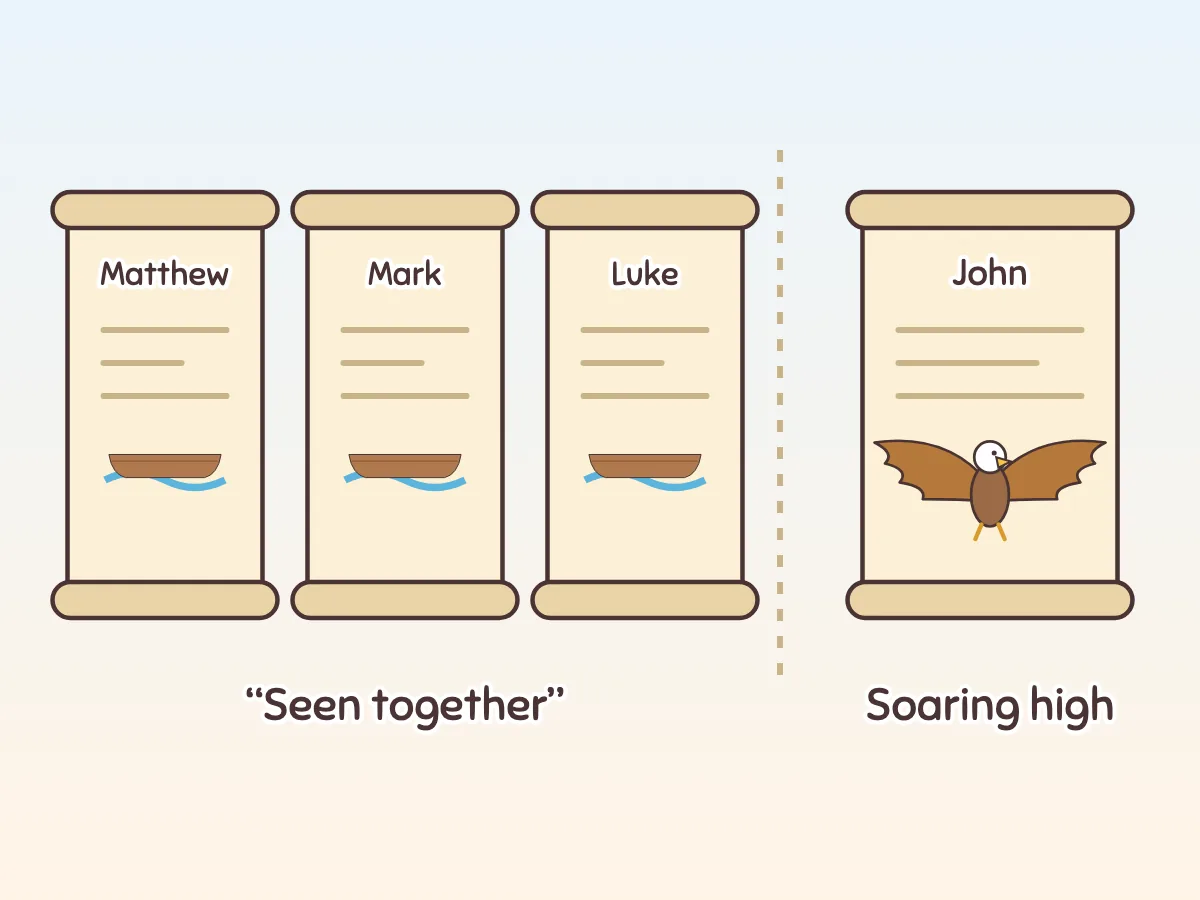
Matthew, Mark and Luke are called the Synoptic Gospels, from a Greek word meaning “seen together,” because they tell many of the same stories in a similar order. John's Gospel is different: it is full of long conversations and deep reflections on who Jesus is. It begins, “In the beginning was the Word.”
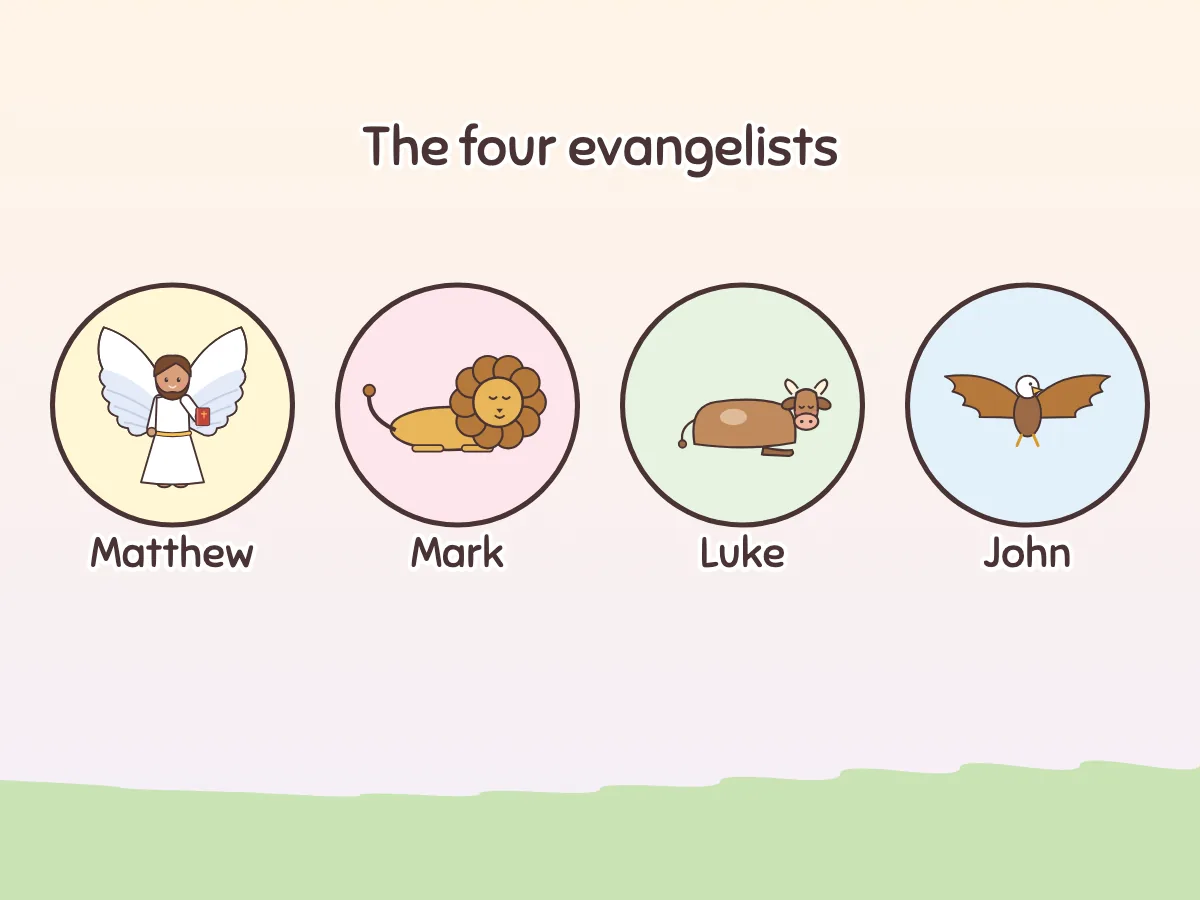
Each evangelist has a symbol. Matthew is a man, because his Gospel begins with Jesus' family tree. Mark is a lion, because it begins with a voice crying out in the wilderness. Luke is an ox, because it begins with a priest offering sacrifice in the Temple. John is an eagle, because his Gospel soars up to heaven.
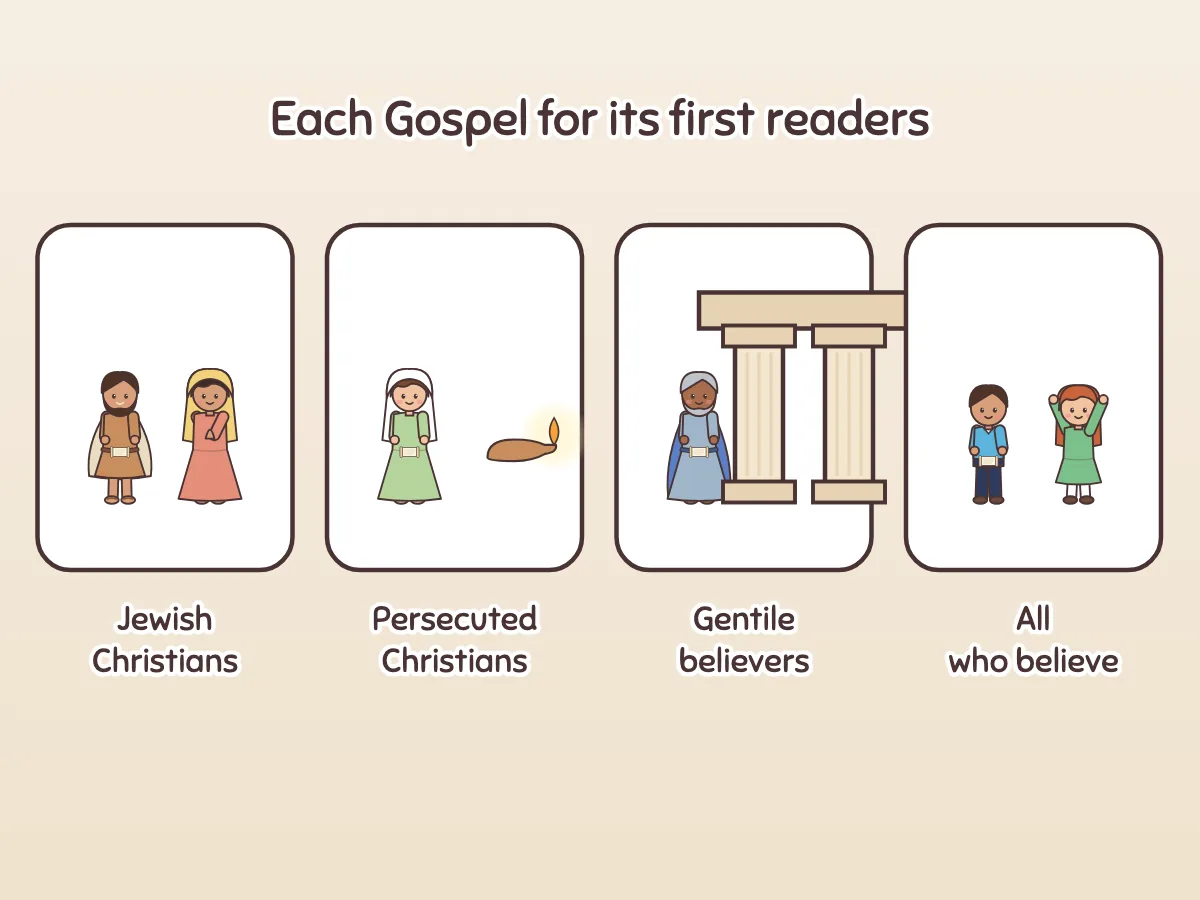
Each Gospel had first readers in mind. Matthew wrote for Jewish Christians, showing that Jesus fulfills the Old Testament. Mark, the shortest, wrote for Christians facing persecution. Luke wrote for Gentiles, showing Jesus' mercy to the poor and to outcasts. John wrote “so that you may believe that Jesus is the Christ, the Son of God.”
The Church teaches that the Gospels faithfully hand on what Jesus really did and taught. They are not legends but the testimony of witnesses, some of whom died rather than deny what they had seen. When we read them, we meet the living Jesus.