
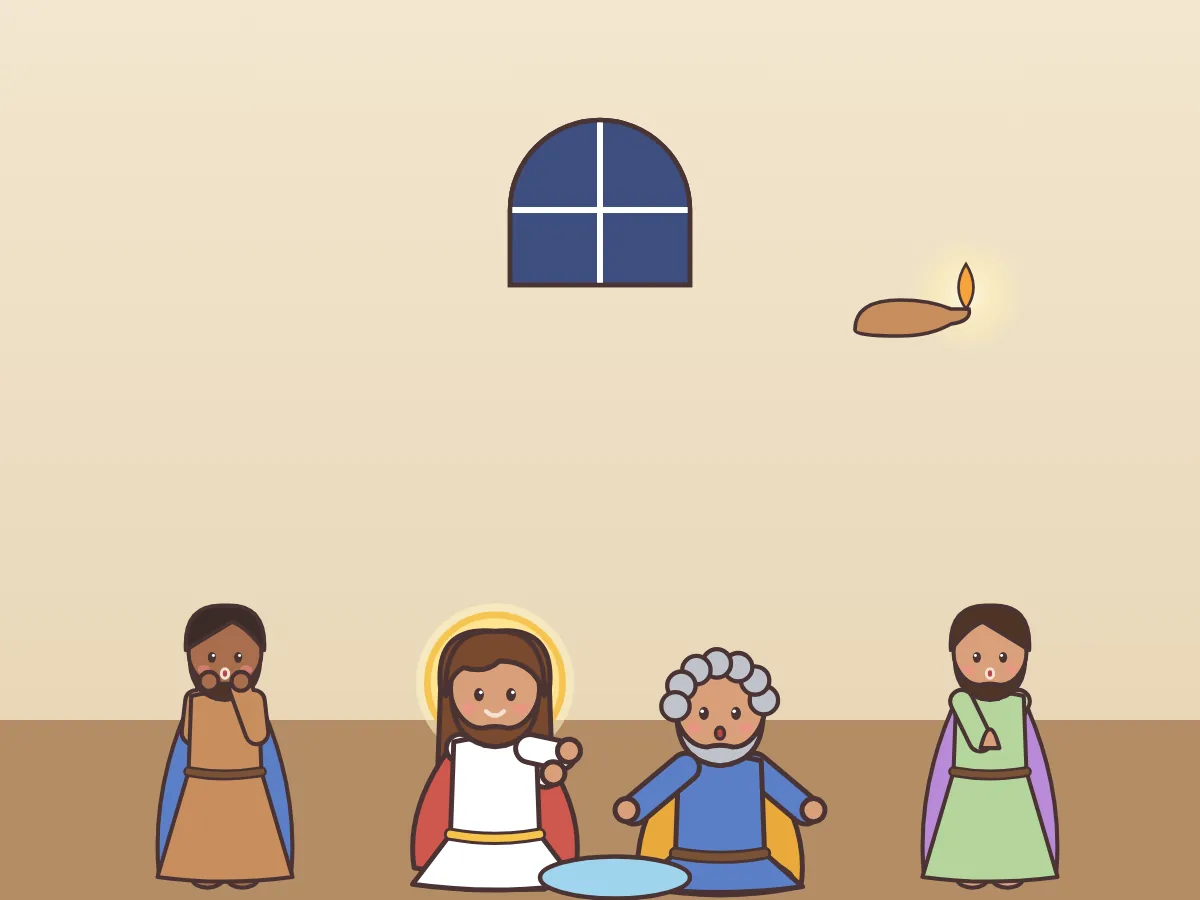
The Church is a communion of all the faithful, with different roles but equal dignity. Christ gave His Church a structure so that it would stay united and faithful. “Hierarchy” means “sacred order,” and in the Church it exists for service, not power: Jesus washed His apostles' feet.
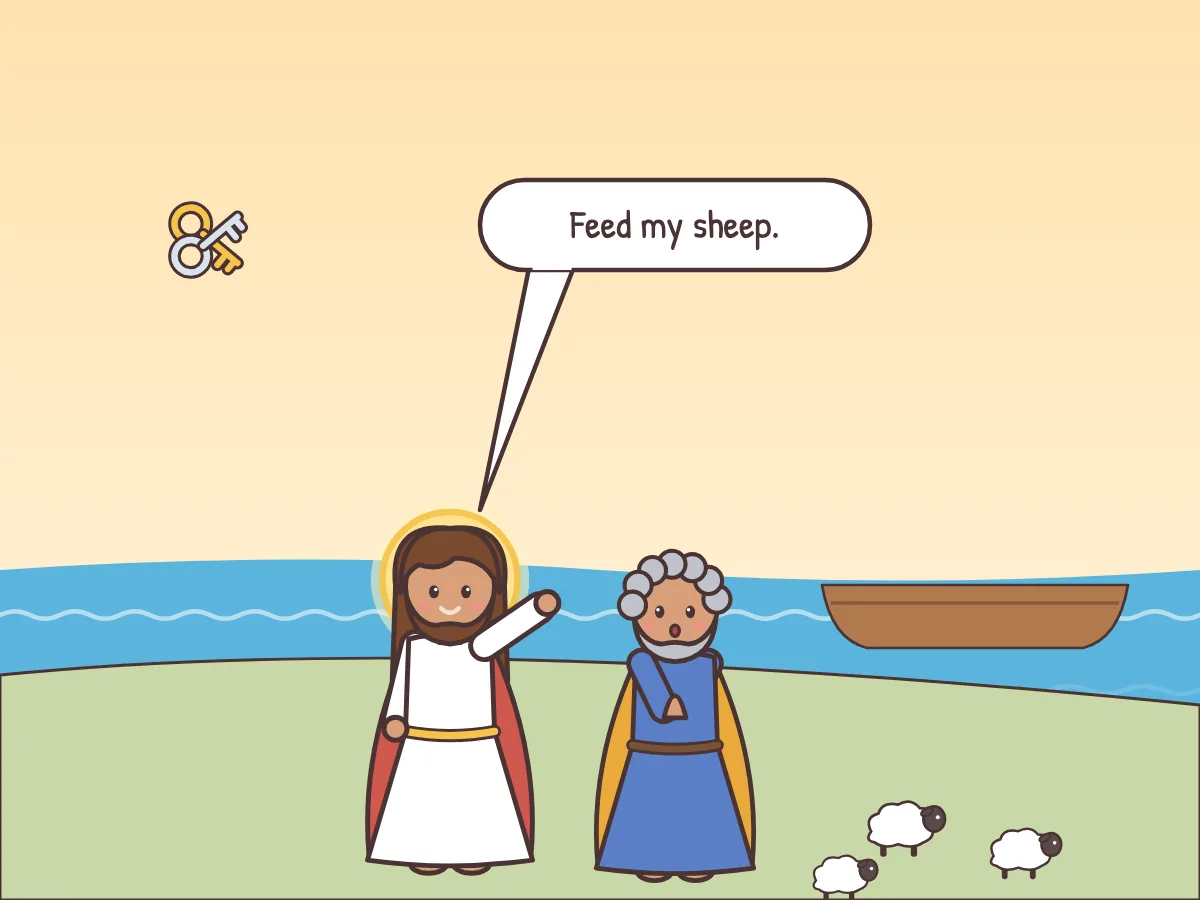
Jesus made Peter the rock, gave him the keys of the Kingdom and, after His Resurrection, told him three times, “Feed my sheep.” The Pope, the Bishop of Rome, is Peter's successor: the visible source of the Church's unity and shepherd of the whole Church. One of his titles is “Servant of the servants of God.”
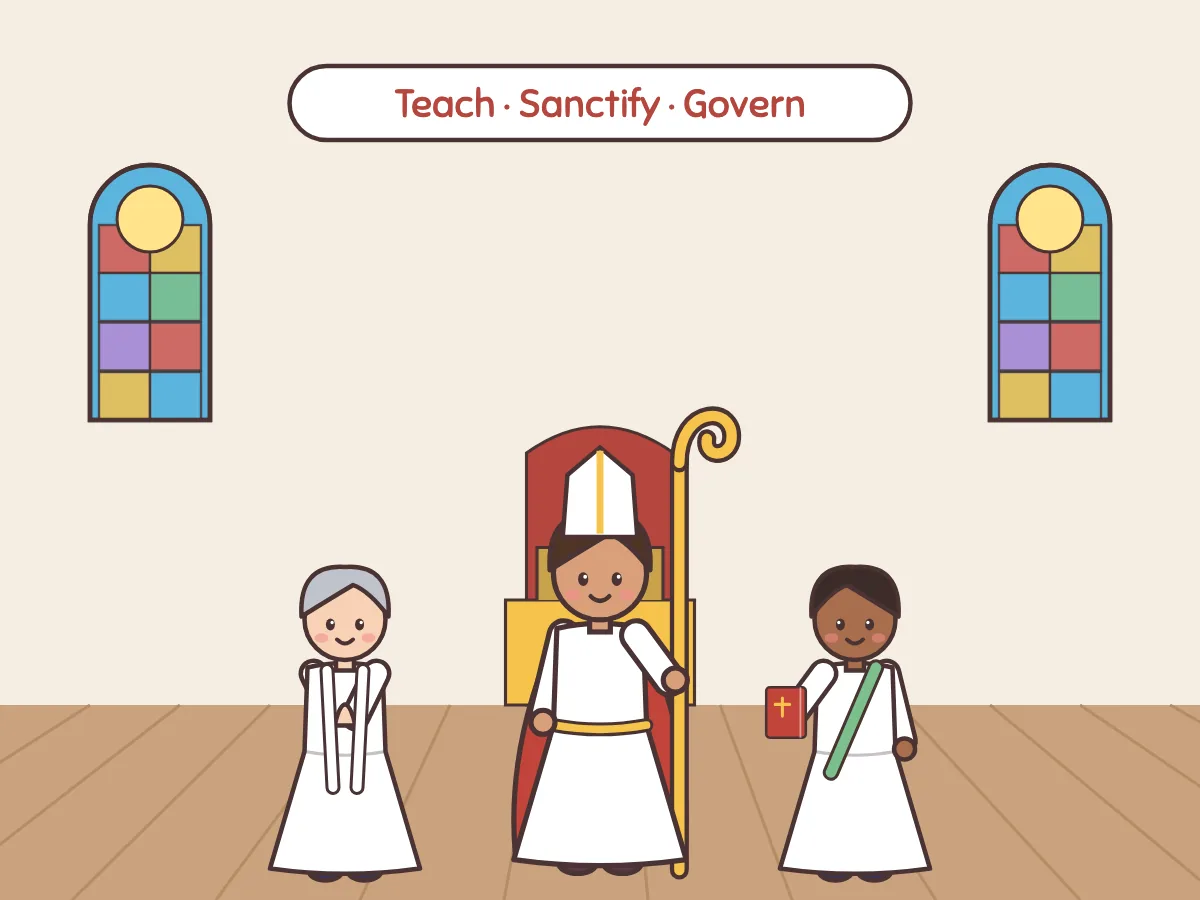
The bishops are the successors of the apostles. Together with the Pope, and never without him, they form the college of bishops. Each bishop leads a local Church, a diocese, with three duties: to teach, to sanctify and to govern. Priests are their co-workers, and deacons serve the Word, the altar and the poor.
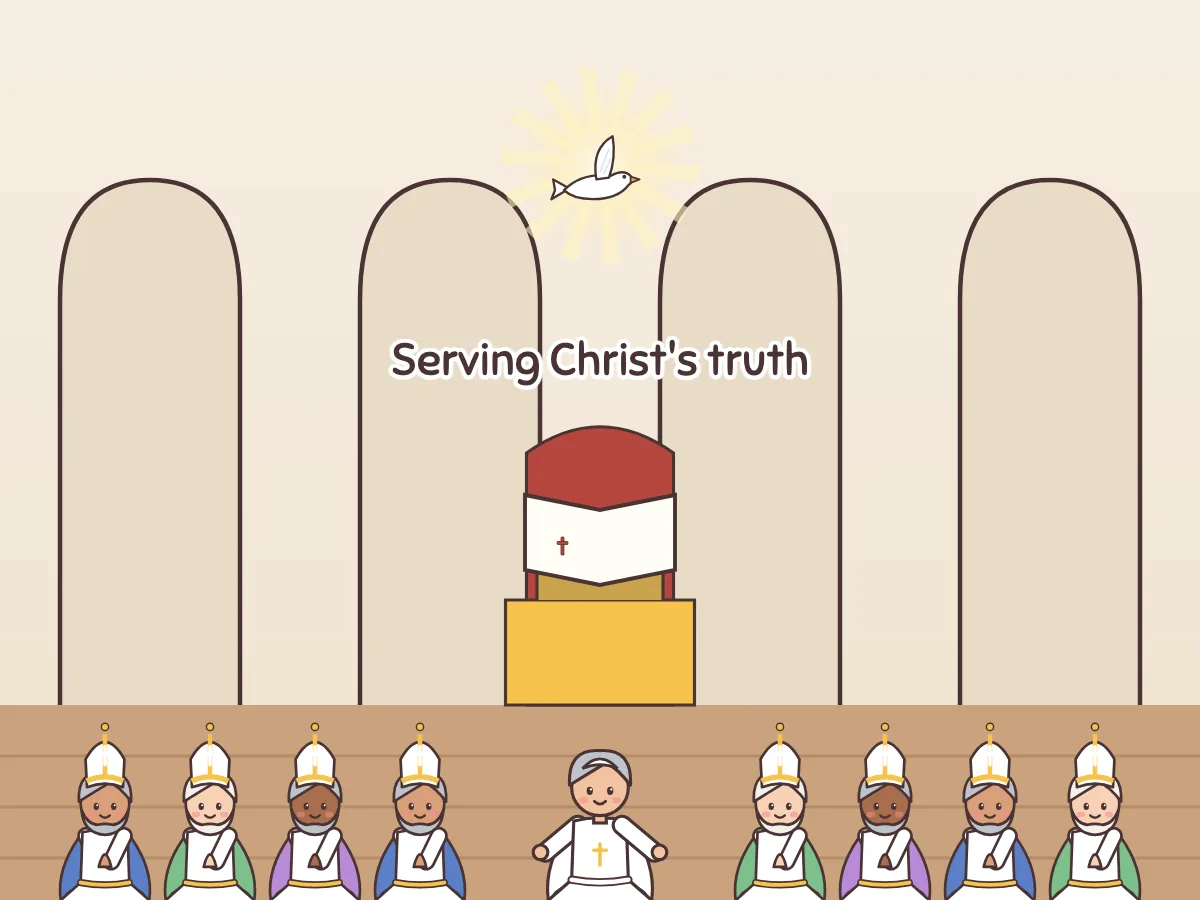
When the Pope, or the bishops together with him, solemnly define a teaching on faith or morals, the Holy Spirit keeps them from error; this is infallibility. Their ordinary teaching also deserves our respect and assent. The Magisterium is not a panel of experts taking a vote; it is a service to Christ's own truth.
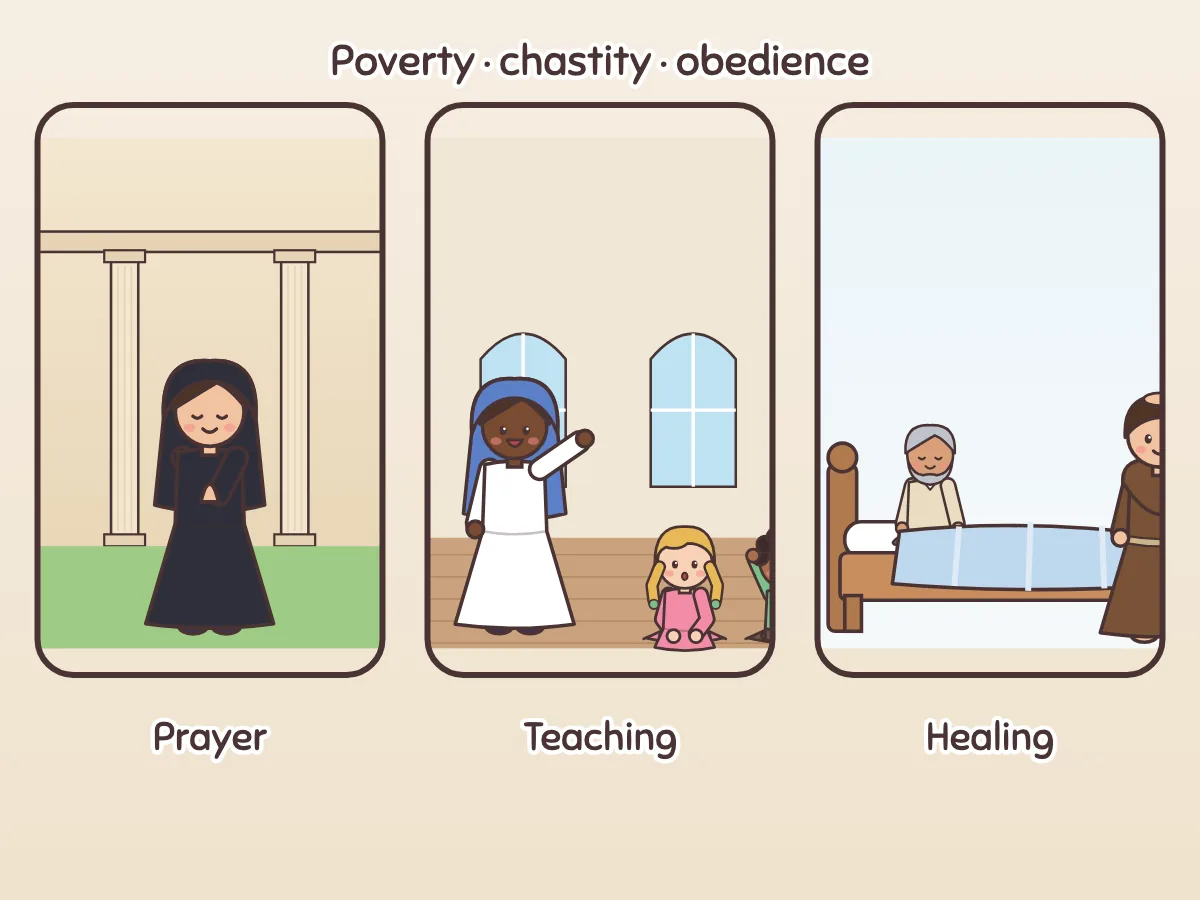
Consecrated men and women, such as religious sisters and brothers, monks and nuns, make vows of poverty, chastity and obedience, giving their whole lives to God. They are a sign of heaven, and they serve in prayer, schools, hospitals and missions. Some are priests, but most religious are not.
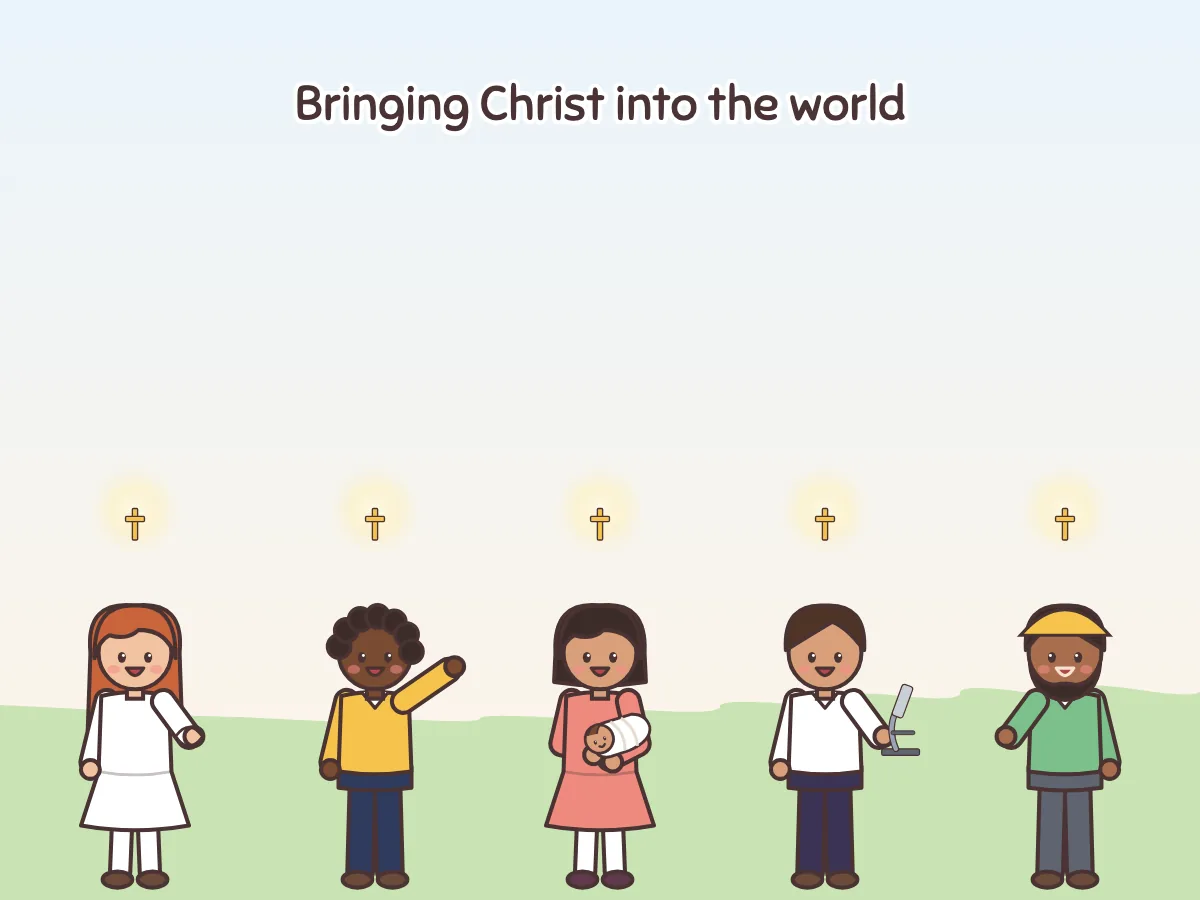
Laypeople are the great majority of the Church. Their special calling is to bring Christ into the world from within: families, work, culture, science, politics and media. They also serve in parishes as catechists, readers, musicians and council members. Pope Francis called all the baptized “missionary disciples.” The Church needs every one of us.