
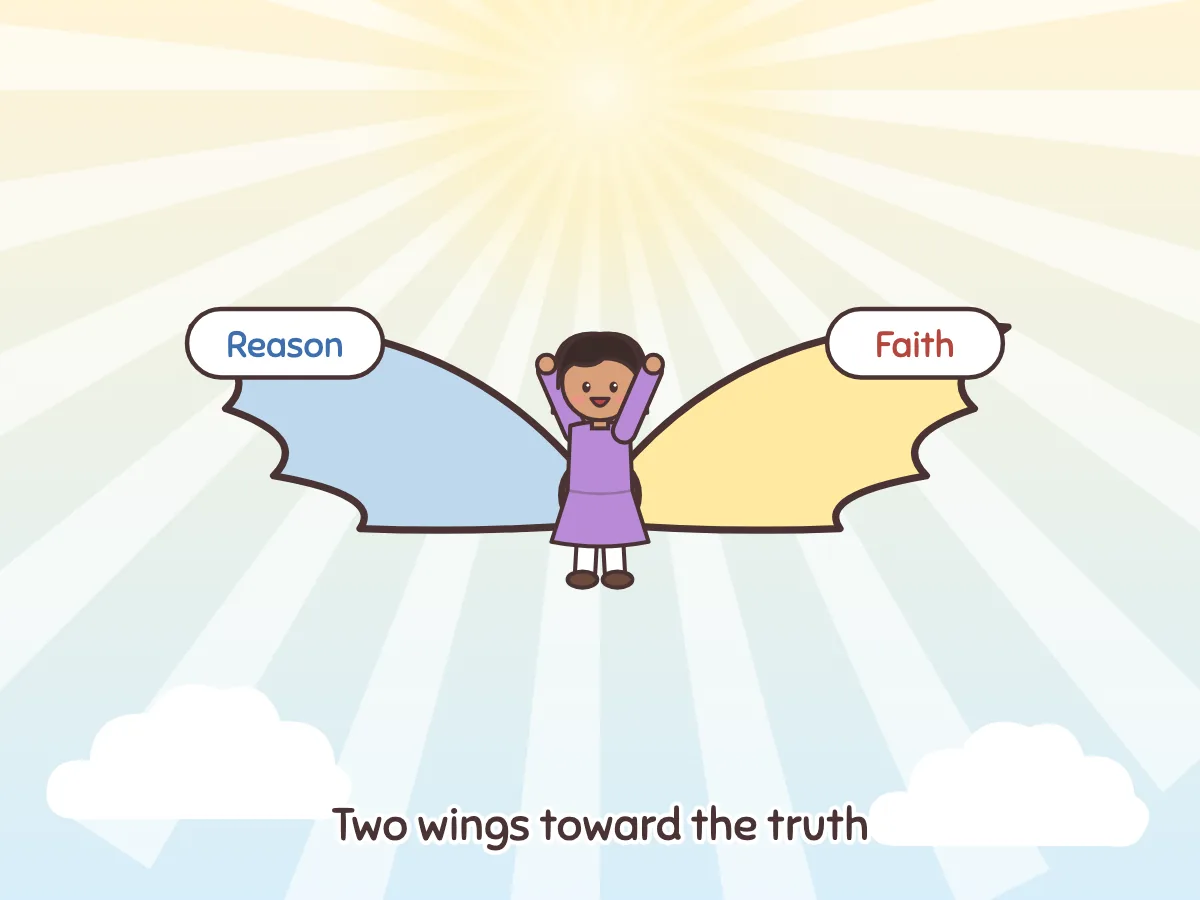
Many people assume that science and religion are at war. The Catholic Church disagrees. Faith and reason both come from the same God, who is Truth itself, so they can never truly contradict each other. Saint John Paul II compared them to two wings on which the human spirit rises toward the truth.
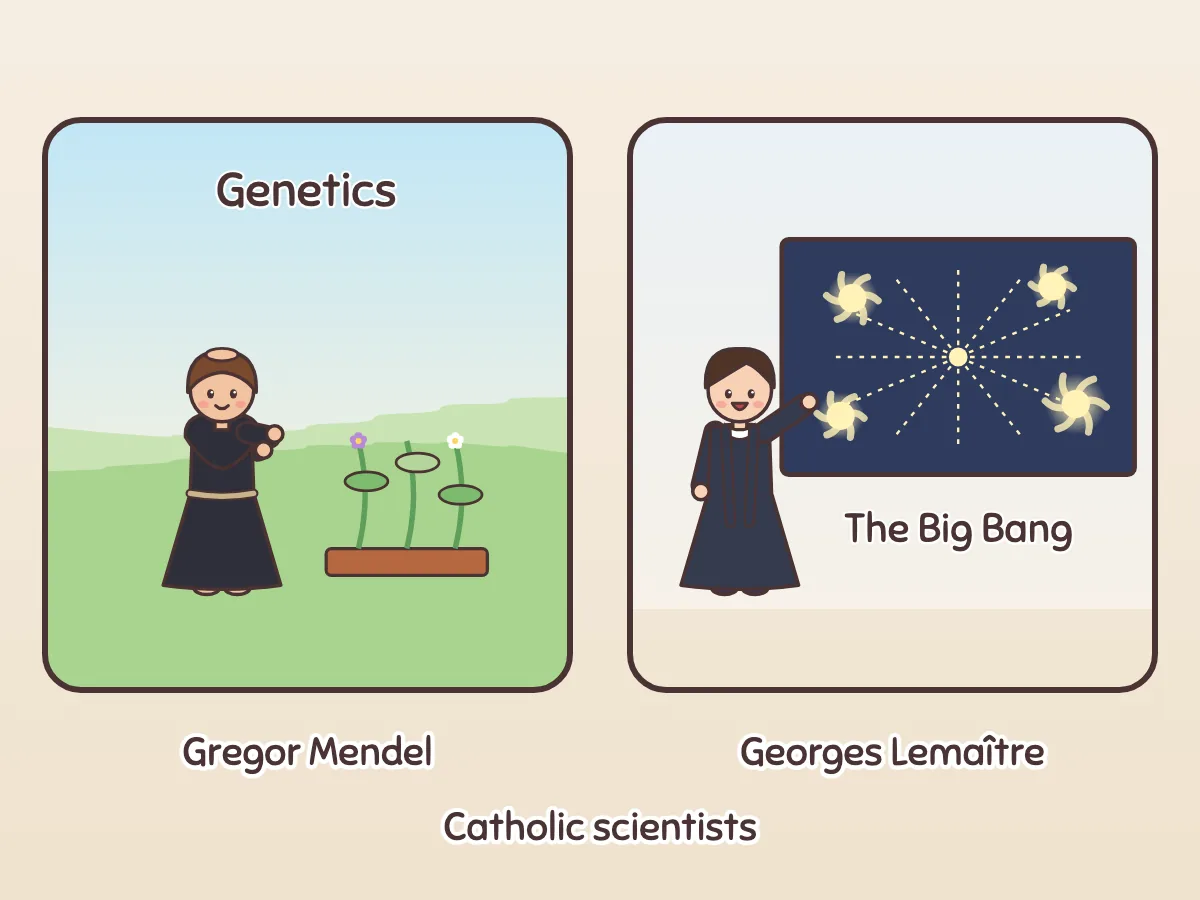
Catholics helped build modern science. Monasteries and universities kept learning alive; the Augustinian friar Gregor Mendel founded genetics; and the Belgian priest Georges Lemaître first proposed the theory now called the Big Bang. The Vatican runs its own astronomical observatory, and many Catholic scientists see their work as reading the book of creation.
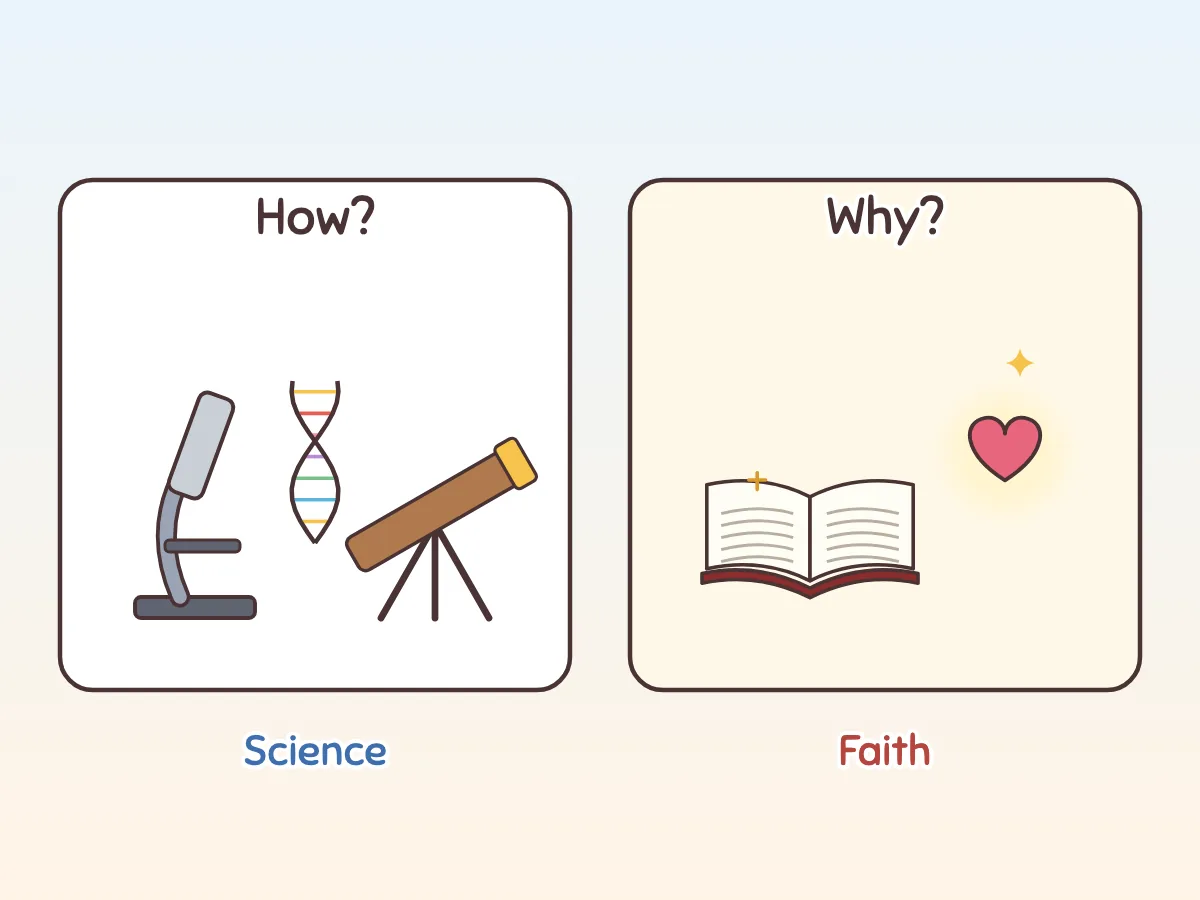
Science asks how the physical world works; faith asks why there is a world at all, what it means and how we should live. Evolution, for example, can describe how living things developed over time; faith adds that God is the Creator of everything and that each human soul is created directly by God. The Church does not oppose the science of evolution, but she rejects the claim that the universe has no Creator and no meaning.
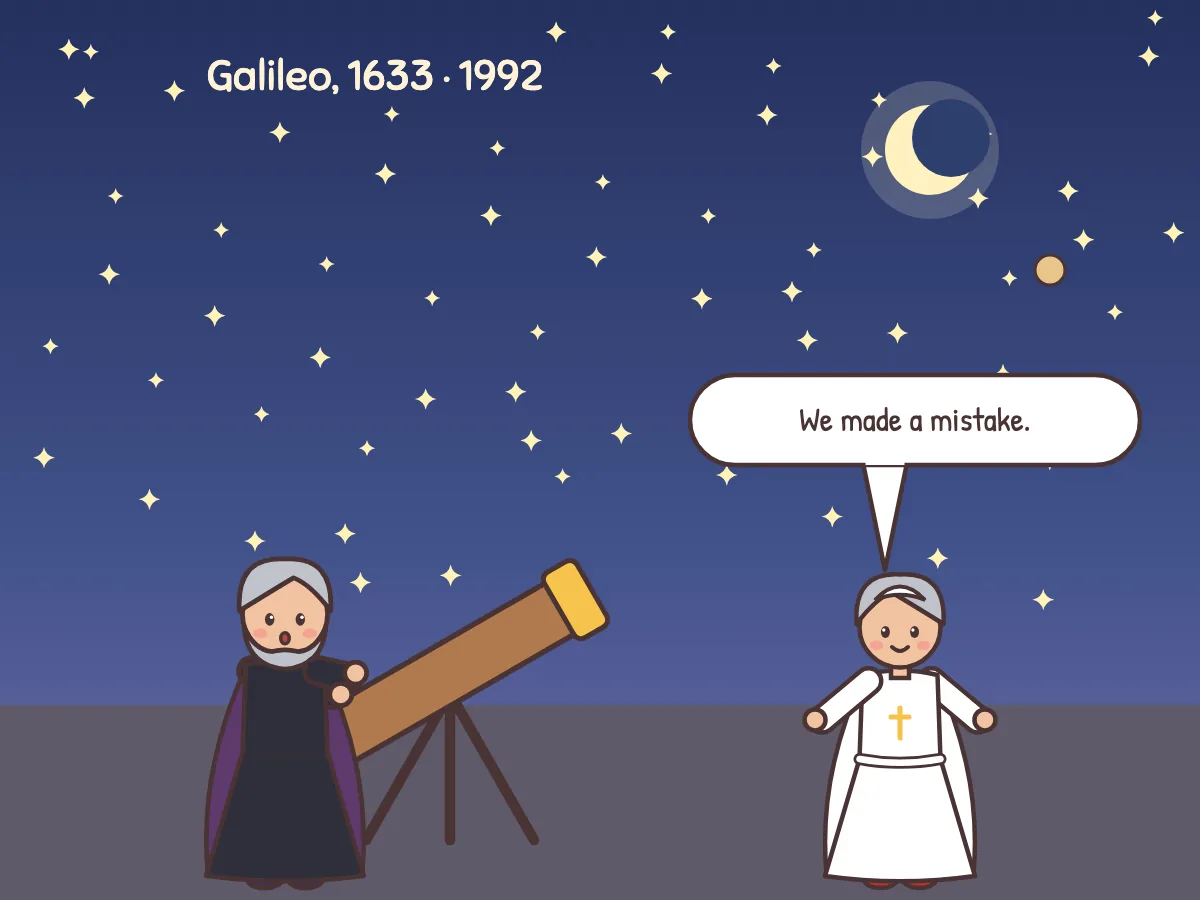
The Galileo case is often used to claim that the Church is against science. In 1633 Church officials wrongly condemned Galileo's teaching that the earth moves around the sun. It was a real mistake, made by people who confused a way of reading Scripture with science. In 1992 Saint John Paul II publicly acknowledged the error. The lesson: faith and science each have their own methods, and both must be humble before the truth.
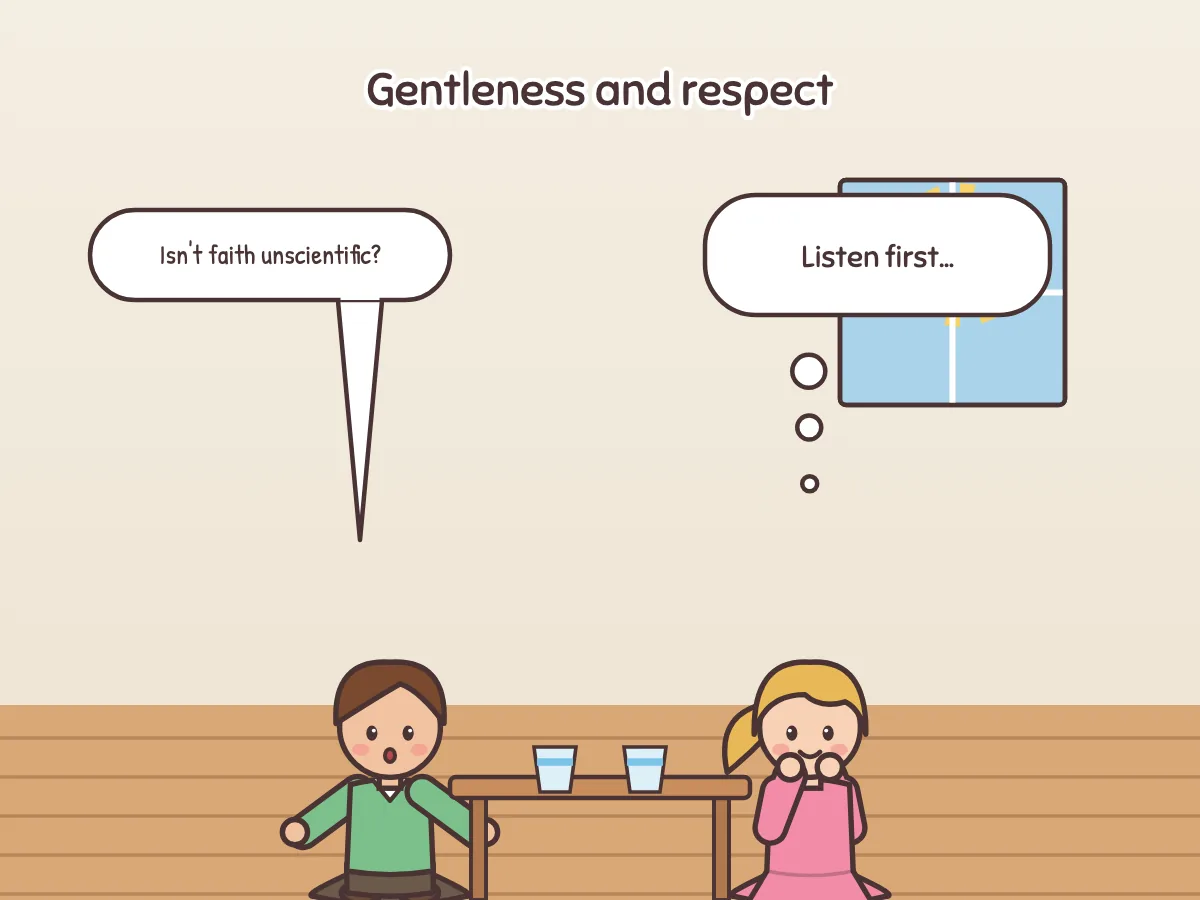
Apologetics means giving reasons for our faith. Saint Peter wrote: “Always be prepared to make a defense to anyone who asks you for a reason for the hope that is in you; yet do it with gentleness and reverence.” You do not need to win every argument. Listen carefully, admit what you don't know, find out, and let your life show that faith makes sense.
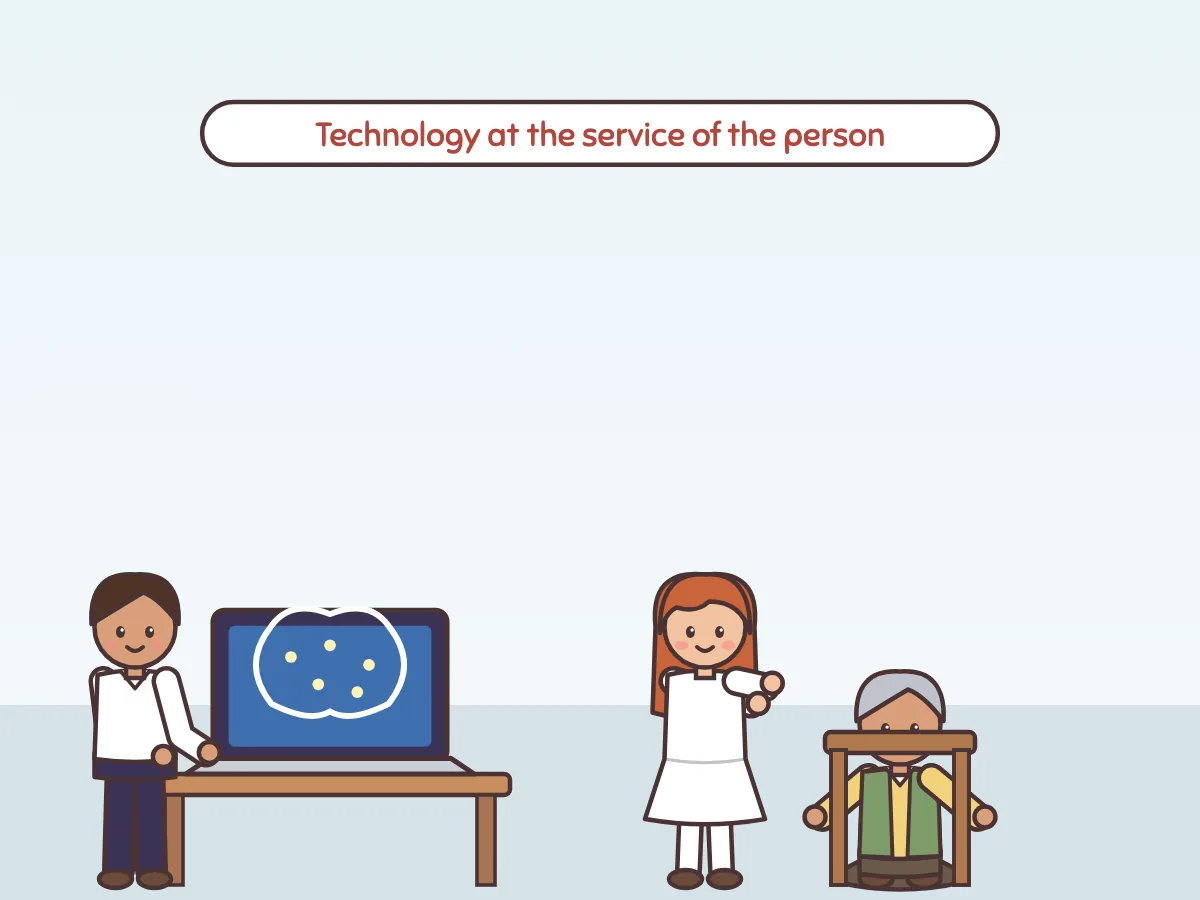
Faith also guides how we use science. Not everything that can be done should be done. The Church welcomes research and technology, including medicine and artificial intelligence, when they serve human dignity. She warns against uses that treat people as things, such as experiments that destroy human embryos, or technology that takes the place of real human relationships.